 Breeds
Differences Between the Apple Head and Deer Head Chihuahua
Native to Mexico, the Chihuahua is the smallest dog in the world. It was domesticated by the Toltec people, who left behind decorative objects depicting this breed. As you probably know, it's known for its small size, large ears, and bulging eyes, but is there more than one type of Chihuahua?
Within the breed, you can find different coat types in terms of length and color, but you'll also find variations in head shape. With that in mind, we've put together this article on the differences between the apple head and deer head Chihuahua. Want to know everything about them? Let's go!
General Characteristics of the Chihuahua
The Chihuahua is a small dog. Rather than relying on height, international kennel clubs like the American Kennel Club (AKC) and the Fédération Cynologique Internationale (FCI) use weight as the guide for the breed standard. In that sense, dogs should weigh between 1 and 3 kilos.
They have a compact, slender body. The nose is short and upturned, while the ears are long, pointed, and large, similar to a desert fox's. The Chihuahua's eyes are very distinctive, being round and protruding.
The breed's coat can be long or short; in both cases, the texture is smooth and silky. The coat comes in a wide range of colors, either solid or in combinations of several shades.
The Chihuahua is a lively, energetic little dog, though its tiny size calls for caution when letting it play with children and larger dogs. It tends to be restless and very confident, even protective and possessive over its owners and toys.
 Apple Head Chihuahua
Apple Head Chihuahua
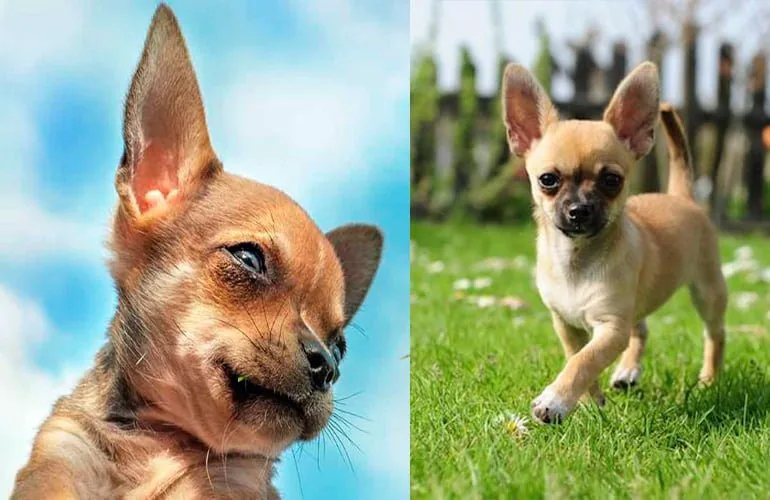
The AKC and FCI standards, the two most widely recognized kennel clubs in the world, describe the Chihuahua's head as apple-shaped. This means that, viewed from the front, the skull resembles an apple, with a rounded shape toward the muzzle, while the forehead bulges out slightly.
This description matches the breed's official standard — the traits the clubs consider the norm. However, as we well know, dogs don't always fit this strict standard, and that's not a problem at all.
 Deer Head Chihuahua
Deer Head Chihuahua
The FCI considers the deer head a "fault," meaning a dog with these traits can't be entered in competitions. Chihuahuas with this shape have a finer, more streamlined head, paired with a long neck, small eyes, and a slightly leaner body than the apple head Chihuahua.
Even so, if you have a deer head dog, don't worry — they're completely healthy and can live just as happily as any other. There are other traits, like weighing above the standard, that these clubs also don't "accept," but this isn't a problem for your pet. Everything else — coat, personality, and life expectancy — is the same across the breed.
In short, the differences between the apple head and deer head Chihuahua come down to the fact that some kennel clubs don't include deer-head traits in their standards.
Are There Other Types of Chihuahua?
Besides the apple head and deer head varieties mentioned, there are other types of Chihuahua. All of them are small, but they're set apart by coat variety:
- Long-haired Chihuahua: the coat has a soft, silky texture. It's usually smooth, though some dogs have wavy tips. The undercoat is very dense. This type of Chihuahua has feather-like tufts on the ears, neck, inner legs, and tail.
- Short-haired Chihuahua: the coat lies close to the body. Some individuals have a double coat, giving it a fluffier texture. The coat is sparse around the throat and belly, but fuller on the neck and tail. It's also very short on the face and ears.
- Hairless Chihuahua: this variety isn't accepted by international kennel clubs. Hairless dogs of this breed result from genetic mutations, so it's not recommended to encourage this trait by purchasing dogs bred for it.
How to Care for the Apple Head and Deer Head Chihuahua
Both varieties need similar care: a diet suited to their age and activity level, plus moderate exercise and time with their owners.
Chihuahuas are known for their small size. Because of this, extra care is needed during their growth stage. Otherwise, they could get hurt going up and down stairs, jumping, or playing roughly with other dogs and children.
IMPORTANT: This article is for informational purposes only and does not constitute veterinary, nutritional or behavioural advice. Every dog is different, and only your trusted vet can advise you on its specific needs.