 Care
Care
Are All Dogs Ticklish?
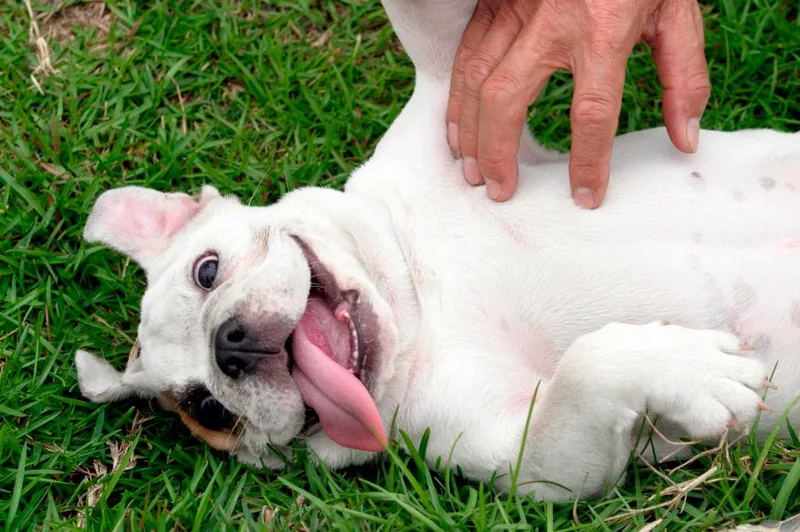
Between play and petting, you've probably noticed your dog has some involuntary reactions when you touch certain parts of its body. For example, your furry friend likely repeatedly kicks its leg as if pawing or scratching at the air every time you pet its belly. Watching this behavior, you've probably wondered more than once whether dogs get ticklish like we do, right?
Well, I'm happy to tell you this article has the explanations you're looking for. Below, we'll tell you whether dogs feel ticklish and, if so, whether this sensation feels good or uncomfortable to them. Keep reading and find out!
Scratch Reflex: An Important Defense for the Canine Body
If your dog moves its leg when you pet it, you should know this is called the "scratch reflex," and it's a natural, involuntary reaction that usually shows up when we stimulate areas of its body with a higher concentration of nerve endings — meaning when we pet, scratch, or brush the more sensitive parts of its body.
This happens because its brain, after identifying some foreign stimulus in these regions, sends a command that automatically triggers a response causing your dog to energetically move its leg. This reflex plays an important role in preventing health problems, since when dogs enjoy outdoor activities or live in nature, they frequently come into contact with parasites, dirt, insects, and a variety of debris — natural or not — that can stick to their skin and fur.
The large number of nerve endings in more exposed or vulnerable areas lets the brain quickly identify these "foreign" stimuli and act accordingly, immediately issuing a command for the dog to try to free itself of elements that could cause illness, allergies, wounds, or irritation.
So, Is It True That Dogs Are Ticklish?
Well, to understand whether dogs feel ticklish or not, first we need to be clear on what we mean by this concept. In this sense, it seems fair to say that ticklishness is an involuntary response that appears when certain sensitive parts of our body receive stimulation or excitement, causing us to experience a very particular sensation that can come with involuntary laughter.
This peculiar sensation tied to being ticklish can feel pleasant for some people and unpleasant for others. It generally depends on which part of the body is stimulated, how it's stimulated, and each individual's sensitivity level.
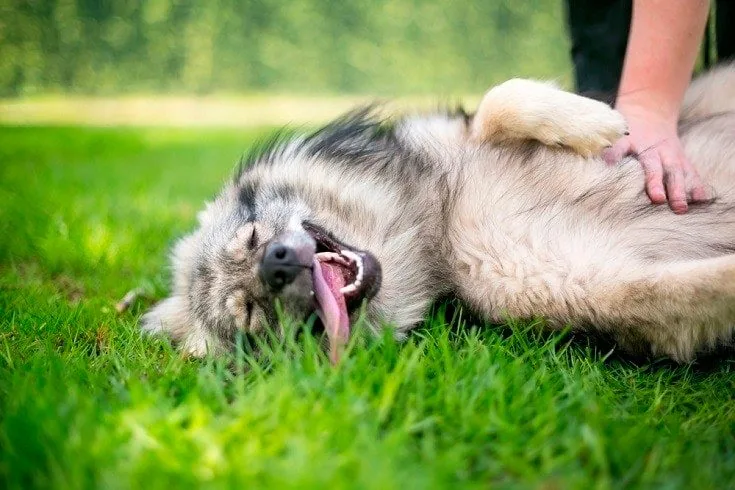
Well, the same logic applies to our best friends... Considering the concept of "ticklish" describes quite well what a dog experiences when its body triggers the scratch reflex, we can say dogs are indeed ticklish, but there's no way to know beforehand whether this sensation will feel pleasant to them.
In other words, some dogs may enjoy being tickled, while others will prefer to avoid it. On top of that, the same dog might feel fine being tickled when we pet a certain part of its body, but seem a bit uncomfortable when we stimulate another area. For example, your dog might love pets on its back and belly, but not enjoy it as much when you touch its paws or tail.
So, if you're wondering whether it's bad to tickle dogs, you should understand the answer depends on how each dog experiences this sensation. The best approach is to pay attention to your furry friend's body language and behavior every time you pet it, to identify which types of stimulation feel pleasant to it (and in which areas of its body), and which cause it some discomfort.
Ticklishness in Dogs Is Natural, But Itching Isn't
Dogs do feel ticklish, and that's completely natural, but we can't always treat scratching as natural either. The scratch reflex, which happens briefly when certain sensitive areas are stimulated, isn't the same as an itch, characterized by an intense and/or constant urge to scratch to relieve an itchy or otherwise bothersome sensation.
Fortunately, it's very easy to tell these circumstances apart, and it's usually enough to observe how long the scratching lasts. When a dog feels ticklish, the leg movement mimicking scratching in the air usually stops once we stop petting or stimulating a certain area of its body. On the other hand, when we're talking about an itch, this scratching behavior goes on longer and is usually paired with other signs of discomfort or stress.
Itching in dogs can have different causes, including allergies, parasites, and various illnesses. So, if you notice your furry friend scratching very intensely or frequently, don't hesitate to see a vet quickly to check on its health.
IMPORTANT: This article is for informational purposes only and does not constitute veterinary, nutritional or behavioural advice. Every dog is different, and only your trusted vet can advise you on its specific needs.