 Breeds
Beauceron
Strong and loyal, the Beauceron is a great option for active people with experience raising dogs. Well trained, these big guys will obey without hesitation, but fair warning: they can be difficult to manage if not properly trained.
This is a breed little known outside France, where shepherds and farmers put its remarkable stamina to work handling all sorts of tasks; it also excels as a guard dog. Want to know everything about this breed?
Physical Characteristics of the Beauceron
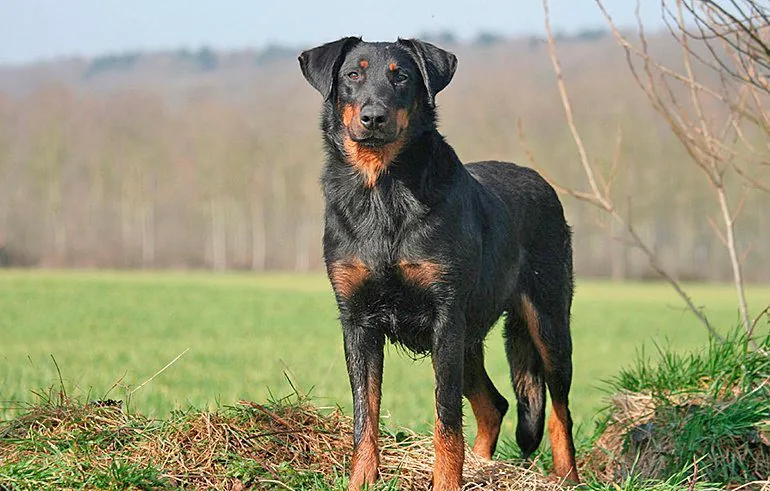
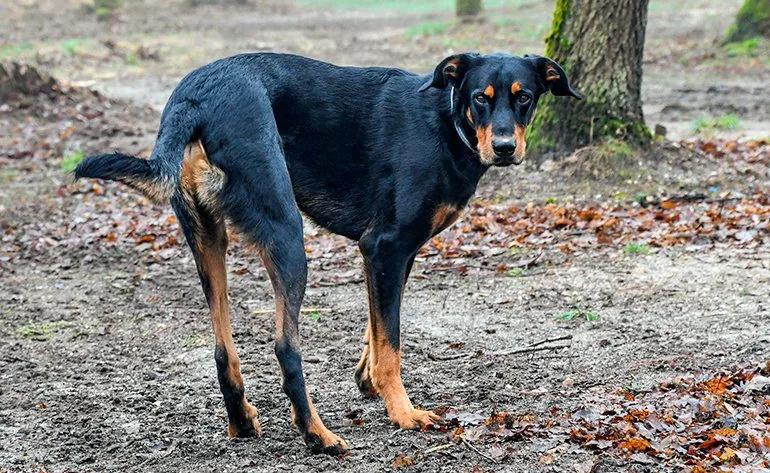
The Beauceron has a powerful, athletic body with a muscular build that never feels heavy or bulky. It carries itself with the typical bearing of a herding dog: sturdy, agile, and strong. It's slightly longer than tall, giving it a streamlined look. The back is straight and the chest wide and deep. The front legs are straight and muscular, while the hind legs have a distinctive double dewclaw.
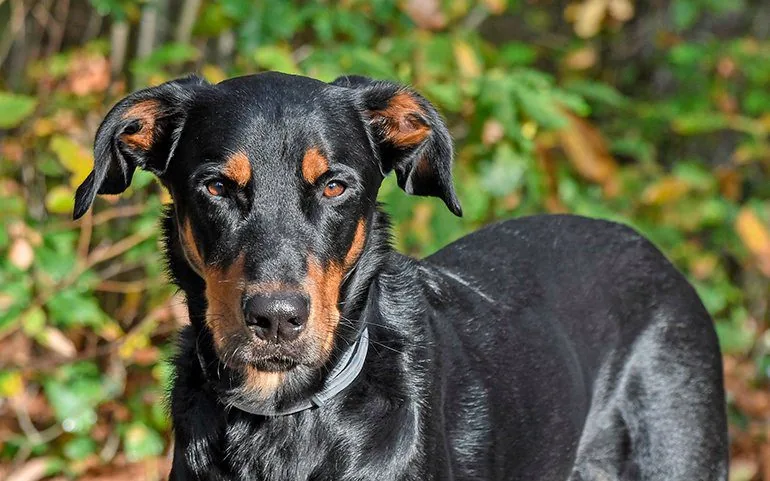
The head in this breed is fairly elongated, always in proportion to the rest of the body, resting on a long, muscular neck. The skull is the same length as the muzzle, which is medium in width, not too pointed, with a black nose. The eyes are oval-shaped and also dark in color. The expression is alert and confident. The ears are medium-sized, flat, and usually carried half-dropped. The tail, meanwhile, is long, set low, and J-shaped.
The Beauceron's coat is double, with a coarse outer layer that can grow up to 4 cm and lies close to the body. The undercoat is gray, fine, and dense. On the legs, the reddish-tan hair gives them the nickname "red stockings" in France. Harlequin Beaucerons have a coat combining black and blue-gray.
 Height between 65 and 70 cm in males and between 61 and 68 cm in females
 Weight between 31 and 50 kg in both males and females
 Abundant, medium-length coat that lies close to the body. The most common colors are black and tan (with tan eyebrows, legs, muzzle, and chest) and harlequin, a combination of black and blue-gray
 Friendly, obedient, energetic temperament
 Health — prone to bloat and hip dysplasia. Frequent injuries to the dewclaws on the hind legs
 Estimated life expectancy of between 10 and 12 years
Beauceron Standard
The presence of the double dewclaw is an essential trait of this breed, and a single dewclaw is not accepted. Another fault judges look for is overly light or yellow eyes.
A nose of any color other than black, or with unpigmented spots, is also not accepted. As for the coat, white patches on black-and-tan dogs are disqualifying, as is excessive gray in Harlequins, including dogs with a fully blue-gray head. Likewise, an overly wiry or matted coat isn't tolerated.
Temperament of the Beauceron
Very affectionate and loyal to its inner circle, the Beauceron is warm and friendly at home. It gets along well with both adults and children, though play between the two should always be supervised to prevent accidents. Its protective instinct keeps it constantly watching over its people. That's why it excels as a guide dog or as a companion for elderly people.
It also makes a good watchdog, very brave and with a strong sense of duty. Its temperament makes it naturally wary, though without a tendency to attack strangers. These are dogs with great self-confidence, and when well trained, they'll behave in a balanced way with both family and strangers. They'll form good relationships with other dogs or cats too. For that, though, early socialization is key.
They're somewhat impulsive dogs, prone to jumping on people during play and to mouthing (without biting). Training a Beauceron needs to be firm to keep these dominant tendencies in check.
These aren't dogs for inexperienced owners or people with little time to devote to them. Patience and consistency are essential too, since they respond very poorly to harsh training methods, especially physical correction.
Care This Breed Needs
Physical exercise is essential for a Beauceron. They have huge reserves of strength and power that you'll need to redirect to avoid excessive exuberance at home. These aren't dogs suited to a city apartment or a house without a yard.
Outings need to be daily and lengthy, and activities need to be varied, or they'll get bored. They also need physical and mental challenges, so dog sports can be a great help. Carting, Schutzhund, agility, and herding are all good options for burning off energy and tiring out these little whirlwinds.
Another thing to keep in mind is that Beaucerons shed a lot throughout the year, and even more during their two annual coat blows. Brushing should happen at least once a week under normal circumstances, and daily during shedding season. Baths only every 6 weeks or when truly dirty; otherwise you'll weaken its undercoat.
Nail care, especially around the double dewclaws on the hind legs, is essential, since it's a particularly sensitive area of the body. Check them often, especially after long walks or intense activity.
Finally, keep in mind these dogs are famous for their voracious appetite, so you'll need to watch their diet to prevent weight gain. As large working dogs, they need a diet high in protein and regular mealtimes. Dog treats should be kept to an absolute minimum.
Beauceron Health Problems
Bloat is a condition that can appear in dogs of this breed. To prevent it, avoid letting your canine companion eat too fast or exercise shortly after eating. Bloat can be fatal if not treated in time.
Other conditions with some incidence in Beaucerons include hip dysplasia (a congenital disease that limits mobility), allergies, and heart failure, especially dilated cardiomyopathy.
History and Fun Facts About the Beauceron Breed
The Beauceron emerged in the Middle Ages, in the farming region of Beauce, a plain southwest of Paris known as "the granary of France." Originally, it was used alongside another French breed, the Briard, to look after sheep and cattle.
Both varieties were bred interchangeably until 1896, when they were standardized. From that point, long-coated dogs began to be identified as Briards, while the short-coated ones were called Beaucerons.
These dogs work differently from other skilled herding breeds like the Australian Shepherd or the German Shepherd. Instead of moving tirelessly and barking to guide the flock, they circle it silently and drive it along in a much calmer way.
Like many European breeds, they also served in wartime, especially in the First World War, thanks to their great skill and agility navigating the trenches. This breed was officially recognized in 1963.
IMPORTANT: This article is for informational purposes only and does not constitute veterinary, nutritional or behavioural advice. Every dog is different, and only your trusted vet can advise you on its specific needs.