 Breeds
Best Medium-Sized Dog Breeds
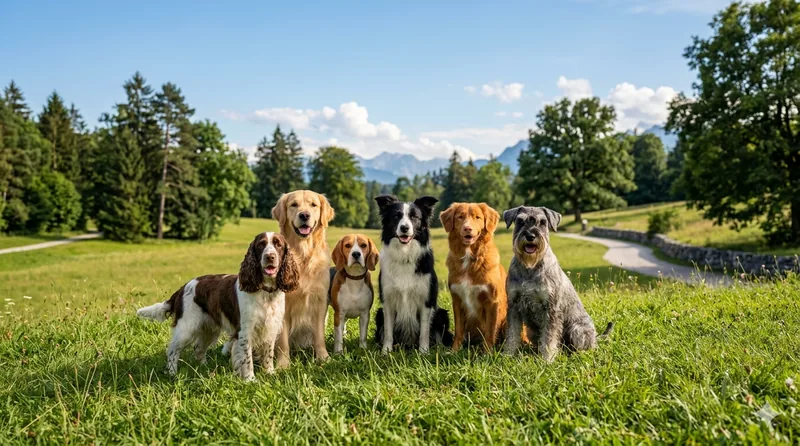
Medium-sized dogs tend to be well-balanced, able to adapt to both an apartment and a house with a yard. They tend to be active and have a good disposition toward the people they share their lives with. That's why they're well suited to families. Interested in adopting one? Discover some of the best medium-sized dog breeds below.
Golden Retriever
They emerged in Scotland in the mid-19th century, thanks to the work of a lord who crossed different types of Retriever to produce a dog combining hunting skills with being a household companion. Retrievers are one of the most popular breeds, especially for their excellent temperament with family and strangers alike. These dogs are easily recognizable by their intelligent gaze and thick coat in various shades of gold.
They're also great household companions and very affectionate. They especially get along well with children, whom they love to play with. They have a slow maturation process, which can take up to 3 years. They're always looking to please, which makes them easy to train. They need intense daily exercise and love going for a swim.
Cocker Spaniel
Although associated with England, these dogs have Spanish origins. Their first job was hunting birds, hence their name, which comes from the English word "cock" (rooster). Cocker Spaniels have a compact but well-balanced body. Their long, fur-covered ears and wavy coat in golden and ochre tones are unmistakable.
They also have a very gentle, affectionate personality with their family. They build good relationships with children of all ages, as well as with dogs of other breeds or cats. They're easy to train, though they have a stubborn streak when it comes to following instructions. They tend to get nervous when strangers are around and tend to bark a lot. Early socialization will help better control these impulses.
English Bulldog
They descend from dogs that, in the Middle Ages, took part in public fights against bulls and bears. Over time, the breed's temperament became much gentler, and today they stand out as good companion dogs. Their flat face, waddling walk, and protruding jaw are recognized around the world. Despite their medium size, they're very compact, heavy dogs.
Far from the ring, today they only think about making the people they share their lives with happy. They're very affectionate and loyal. They tend to be great companions and get along well with other pets, including cats. That said, they can be a bit stubborn to train, but very obedient once they've learned the lesson. They suffer quite a bit in the heat, so you should always make sure they have a cool spot to retreat to.
Bull Terrier
This variety is believed to have emerged in the 18th century as a result of crossing Bulldogs with the now-extinct English Terriers. Although its first job was dogfighting, the breed's temperament has softened over the years. Bull Terriers stand out for their distinctive head shape and muscular body. Solid white is the typical color, though other colors are also accepted.
These are very cheerful, fun-loving dogs, with endless energy and unmatched affection for their family. They can be a bit rough, so adopting one isn't recommended if there are very young children at home. They're generally territorial and can become aggressive with other dogs if not properly socialized. They're not built for cold climates, and if bored or left alone for long periods, they'll show destructive behavior.
Collie
Collies have been used for centuries as herding dogs in the Scottish Highlands. Their name comes from the sheep breed they used to herd: the Colley. Their body has extremely harmonious proportions. They're graceful and athletic, with a fine, well-proportioned head and an abundant coat that fits their size perfectly. There are two varieties of this breed, distinguished by coat length: the Smooth Collie and the Rough Collie.
Their personality is ideal for family life, since they're sweet, gentle, and protective of children. Thanks to their attentive nature, they'll always be on the lookout for any risk. They can also share a home with other dogs or animals. They have great vitality and need plenty of daily activity to stay in shape.
Border Collie
This variety, typical of Scotland and Wales, descends from a cross of Viking and Roman breeds, so it's no surprise it's a natural charmer. Border Collies have well-proportioned lines and a light, muscular build. Their eyes reveal an expression of great intelligence and confidence. The coat is dense, double-layered, usually in combinations of black and white, blue and white, or red and white.
Borders form very close bonds with people and instantly obey any command given to them. They need plenty of exercise every day to be happy, along with open spaces to release all their energy. They're perfect dogs for living on a farm or in the countryside.
Ibizan Podenco
These dogs' heritage dates back to ancient Egypt, where they were used to chase gazelles. In fact, their body shows the traits of a natural sprinter, with a light build and sleek lines. They have long, muscular legs. The head is fine and the ears long and pointed. The coat can be very short, in fawn shades or combined with white.
Despite their energy reserves, Ibizan Podencos behave calmly at home. They build good relationships with children, though they're not recommended for families with very young kids, since they might chase them and knock them over. They're good companions for other dogs, but less so for other animals like cats or rabbits, since they see them as prey. They tend to be reserved with strangers and take a while to warm up. They make good watchdogs and alert dogs.
Airedale Terrier
Versatility defines this dog of English roots. It played a leading role in World War I, but also in maritime rescue work and as a police dog. In the U.S., the Airedale Terrier was also used to hunt game. Its chiseled head resembles the Bull Terrier's, though it has a distinctive beard and a very particular curly coat. They're athletic, muscular, well-balanced dogs.
While they're good at work, they also enjoy relaxing with their family. They're considered great household companions, who enjoy playing with children and going for frequent walks. They're also protective and loyal to their family. Like good Terriers, they need firm, effective training to keep their stubbornness in check.
Dutch Shepherd
They share many genes with other European shepherd breeds, like the German, Belgian, or Swiss Shepherd, though they're less bulky. Generally, they're elegant with harmonious proportions, and an intelligent, alert gaze.
The Dutch Shepherd's energy is endless. They're very easy to live with and train, since they have a very pleasant personality. These all-purpose dogs are perfect for active families who prefer outdoor living. Lastly, it's important that they don't spend too much time alone, since otherwise they'll develop an unfriendly character and undesirable destructive behavior.
IMPORTANT: This article is for informational purposes only and does not constitute veterinary, nutritional or behavioural advice. Every dog is different, and only your trusted vet can advise you on its specific needs.