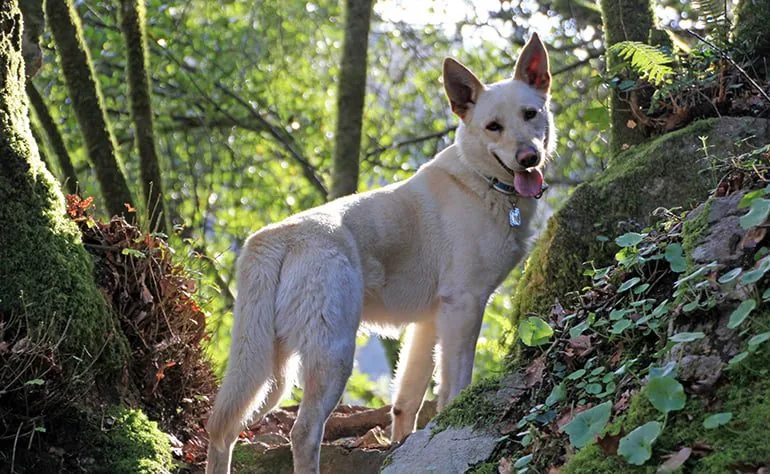
 Breeds
Can de Palleiro, or Galician Shepherd
This Galician breed is related to the German, Belgian, and Dutch Shepherds, as well as the Portuguese Castro Laboreiro dog, since they're believed to share an Indo-European origin. The Can de Palleiro is lively, intelligent, and highly protective, and enjoys the company of its family. Its build stands out for being athletic, wrinkle-free, and wolf-like.
Both its body and head are reminiscent of a wolf. Although it lacks official recognition from the main organizations that regulate breed standards, in 2001 Spain's Ministry of the Environment and the Xunta de Galicia established an official standard. If you'd like to know more about this ancient breed, keep reading.
Characteristics of the Can de Palleiro
The Can de Palleiro — literally "haystack dog" translated from Galician — is large, lean, and very agile. It has a deep chest, a powerful neck, and muscular legs with visibly defined joints. Its tail is medium-length, wide at the base, and thickly coated.
Its head is triangular, with an elongated muzzle like a wolf's, and a subtle stop. The ears are triangular and always erect. The eyes are slightly slanted and brown. The coat is short and thick. During the winter coat change, it grows even thicker to protect the dog from low temperatures.
 Height between 59 and 65 cm in males and between 57 and 63 cm in females
 Weight between 32 and 38 kg in males and between 30 and 35 kg in females
 Short, dense coat, somewhat coarse to the touch. The most common colors are beige, cinnamon, chestnut, chocolate, and black. White coats or white patches aren't accepted. Some dogs can show lighter roots with black or darker tips
 Affectionate, active, protective temperament
 Strong health
 Estimated life expectancy of between 12 and 15 years
 Black-coated Can de Palleiro - Image: clubcandepalleiro.com
Temperament of the Can de Palleiro
Can de Palleiro dogs are very intelligent. With consistency and positive reinforcement, training them is straightforward. They form a strong attachment to their family and show all their warmth and sweetness with the youngest members of the household. They love playing with them.
They have a sensitive side that, combined with their protective instinct, makes them an excellent pet. They'll feel useful protecting you and will appreciate your company and attention. With strangers, on the other hand, they're not as friendly, though they're rarely aggressive. They're active dogs that do better in rural homes or with access to the countryside.
What Care Does the Can de Palleiro Need?
As mentioned, physical exercise is essential. You should aim for 3 to 4 walks a day, alternating active moments, like running, with more relaxed ones (sniffing, marking territory). Obedience and scent exercises will serve as great mental stimulation. Its coat doesn't demand excessive care.
Brushing it a couple of times a week to remove dead hair and check for parasites is enough. Bathe it at least every three months, and never trim its coat, since this could cause skin or respiratory problems. Its diet is just as important as physical activity for keeping its muscle tone in optimal shape.
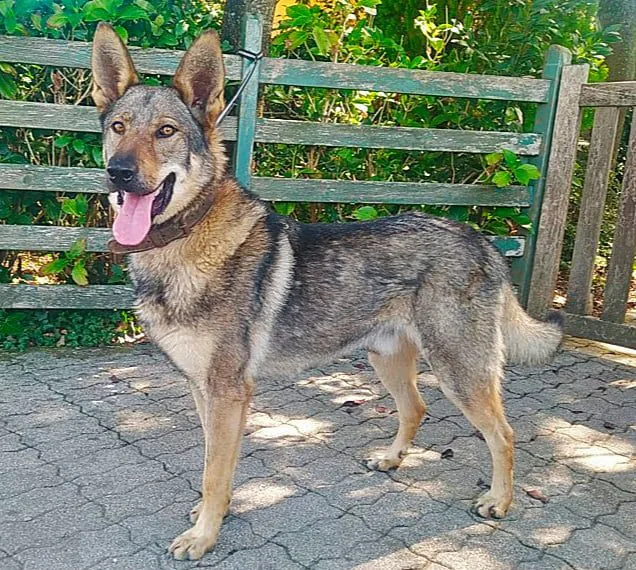 Wolf-gray-coated Can de Palleiro - Image: clubcandepalleiro.com
History of the Breed
Some experts claim these dogs already existed in the Paleolithic era. However, the most widely accepted theory points to the Visigoths, Celts, and Normans as responsible for introducing them to Galicia. They've always been used to herd flocks of goats and sheep and to guard rural farms.
After both world wars, they began being crossed with other herding breeds. It's estimated that only around 1,300 dogs exist today, according to official figures. To prevent its extinction, the Xunta de Galicia supports the Can de Palleiro Breed Club by organizing, for example, adoption programs.
Fun Facts About the Can de Palleiro
Some dogs have a dewclaw, or fifth toe, on their hind legs. Did you know the Can de Palleiro is a cousin of the German Shepherd? Without a doubt, this is a breed well worth all the effort being put into preserving it.
Acknowledgments:
Images provided by the Can de Palleiro club https://www.clubcandepalleiro.com/
IMPORTANT: This article is for informational purposes only and does not constitute veterinary, nutritional or behavioural advice. Every dog is different, and only your trusted vet can advise you on its specific needs.