 Nutrition
Can Dogs Eat Sausages?
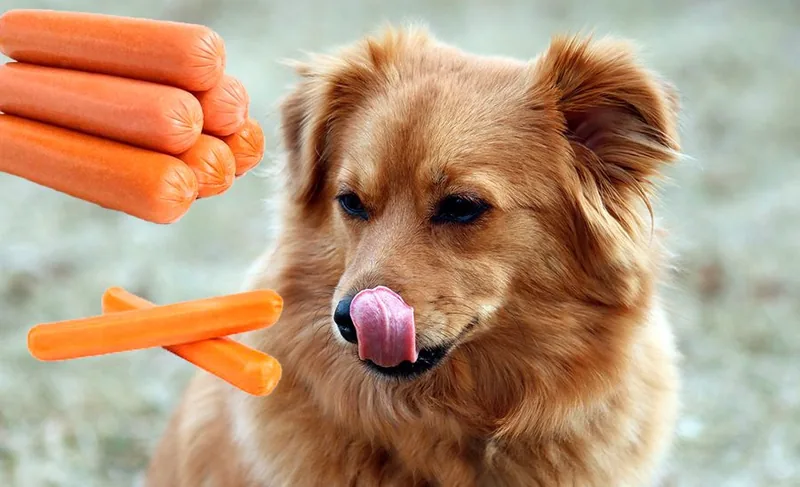
Sausages are our great allies when it comes to hiding a medication pill, or as treats, to strengthen positive reinforcement when they do something right, obey a command, or are simply learning.
But sausages are, after all, processed food. So are they really healthy for them? Can dogs eat sausages, or are they harmful to their health? Let's take a detailed look at all these aspects about the ever-useful sausage.
Different Types of Sausages for Dogs
Generally, the well-known frankfurter sausage is used as a treat or to hide a pill from our dog's medication. We can find these at ridiculously low prices at any supermarket or food store. This type of sausage is made with unspecified processed meat (manufacturers don't say which part of the animal it is).
On the other hand, we have the classic artisan sausages we can find at any butcher shop, which are made with ground meat from different animals. Sometimes from a single animal, or a mix, to our taste. These are more natural than the previous ones but, on the downside, they usually contain more fat.
Finally, we can use sausages specifically made for dogs, which are only sold at pet food stores. Generally, these are very large, thick sausages, which are sometimes cut into pieces and given as treats. They're more of a food supplement of questionable quality.
In summary, the healthiest are the homemade ones, but the fat they contain doesn't always sit well with our dogs, so from our own experience, we recommend the classic frankfurter sausages — processed, yes, but lighter on fat.
It goes without saying we should avoid any type of sausage containing salt or spices, since these ingredients aren't suitable for dogs. The classic frankfurters or Vienna sausages are the best options in this regard.
What Are the Best Sausages for Dogs?
There aren't better ones, just make sure they contain no salt or spices. So don't think branded ones are the best — you can buy sausages from Carrefour, Mercadona, or Día at a very low price, and they're just as good as branded ones. We recommend the frankfurters, for being an optimal size and not containing excess additives.

Can Dogs Eat Sausages, or Are They Harmful to Their Health?
Obviously they can eat sausages, and in fact, they really enjoy eating them. But since they're not a completely natural or balanced food, we should always give them in moderation. We can't base its diet on sausages, nor give it large amounts daily.
Including too many sausages in a dog's diet will be harmful to its health, possibly causing mild gastrointestinal problems at first and, in the medium term, more complex and serious health problems.
How Many Sausages Can a Dog Eat?
It all depends on its size and, of course, its health. A large, healthy dog (around forty kilos) can comfortably eat a couple of small sausages a day. Whole or cut into pieces as a treat. However, a small dog (under ten kilos) shouldn't eat more than half a sausage a day, and always cut into pieces to prevent choking.
Moderation is the trick — if we stuff our dog with sausages, it will definitely upset it and harm its health. But if we give them in moderation, small amounts as a treat when needed, at first there shouldn't be anything harmful to its health.
How to Properly Give Sausages to a Dog
Regardless of its size, we recommend always giving them cut into pieces. If our dog is tiny, in very small pieces. If it's large, in bigger pieces with no problem. Avoid giving them whole, since they could cause choking — sometimes they eat with such eagerness it's no problem, but if you prefer, you can also boil them or steam them a bit. Always with water, no salt or any other additive.
It goes without saying you should never give your dog what you wouldn't eat yourself. In other words, if you have spoiled sausages you were going to throw away, throw them away. They could upset your dog just as much as they would you.
What Happens If a Dog Stuffs Itself With Sausages?
It will most likely suffer indigestion resulting in vomiting or diarrhea. However, to be on the safe side, it's recommended to see your trusted vet and explain what happened. Based on your dog's characteristics and health, they'll know the best way to proceed.
IMPORTANT: This article is for informational purposes only and does not constitute veterinary, nutritional or behavioural advice. Every dog is different, and only your trusted vet can advise you on its specific needs.