 Nutrition
Can I Give My Dog Cheese?
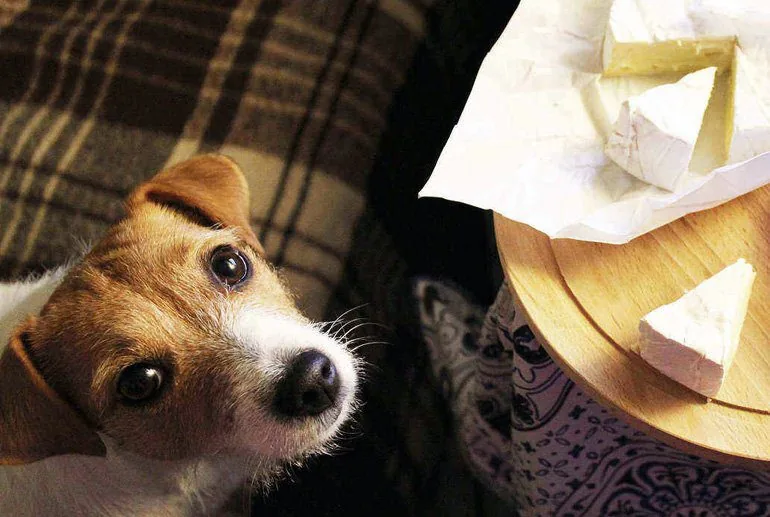
Cheese is one of dogs' favorite foods, very likely due to its intense smell and taste. Many of us use the classic little cheese cube (a portion of fresh cheese) to give our dog its medication or simply as a treat.
But is cheese a recommendable food for dogs? It's not an easy question to answer, though generally we could say yes, it's a nutritious, healthy food, though in small portions.
Can Any Dog Eat Cheese?
No, cheese has, to a greater or lesser extent, lactose. Lactose is a disaccharide formed by the union of a glucose molecule and a galactose molecule. Humans can digest it with no problem, but dogs can't.
So not every dog can eat cheese — many dogs are lactose intolerant and get mildly poisoned when eating cheese. However, there are also many dogs that tolerate small amounts of lactose better and can eat cheese with no problems.
Symptoms of Lactose Intolerance in Dogs
If we give our dog a small portion of cheese and notice any of these symptoms, it's very likely it's intolerant and should never eat products with lactose again. Including, obviously, cow's milk, ice cream, and cheese.
These are the main symptoms a dog with lactose intolerance shows:
- Stomach inflammation
- General discomfort
- Diarrhea
- Vomiting
- Gas/flatulence
What Are the Best Cheeses for a Dog?
If our dog has no lactose intolerance, we can give it cheese as a treat or nutritional supplement, but never as its only protein source.
The best cheese we can give our dog is the one with the least lactose content, since whether intolerant or not, dogs don't digest it well.
These are the cheeses that, due to their composition and production, have minimal lactose amounts:
- Gruyère cheese: Made with cow's milk — during the aging process, lactose is completely metabolized into lactic acid by lactic bacteria. So its lactose content is minimal, especially if aged (there's also semi-aged and fresh).
- Cheddar cheese: Also made with cow's milk but with very little lactose content thanks to the aging process.
- Mozzarella cheese: Made with buffalo milk, and although it's a fresh cheese, its lactose content is very low.
- Idiazábal cheese: Made with sheep's milk. With very little lactose thanks to the aging process.
- Manchego cheese: Look for the aged version, which has the least lactose content. Also made with sheep's milk.
We can also give our dog any other type of cheese, always checking that its lactose content is low or none, to prevent digestive problems.
Can a Dog Eat Cheese Cubes?
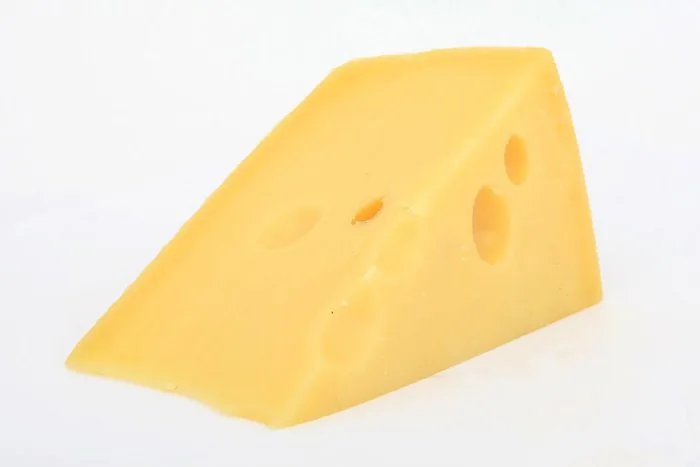
The famous little cheese cubes are small portions of semi-fresh cheese with a higher lactose content than aged cheese. It's best to give a very small portion and assess how it sits.
Of the two dogs living with us, one eats cheese cubes with no problem, which is great for us to disguise its pills when it needs them. However, the other dog doesn't tolerate them well, getting diarrhea or too-soft stool when it eats it.
Nutritional Benefits of Cheese for a Dog
We all know the biggest benefit cheese gives us as caretakers is being able to disguise pills our dog needs to take (by vet prescription, obviously) in it. Cheese is undoubtedly a great ally.
But besides this, it also offers nutritional benefits, such as:
- Calcium: Cheese is rich in calcium and phosphorus, minerals needed to keep its bones strong.
- Conjugated linoleic acid: Cheese contains at least twenty-eight isomers of linoleic acid, which helps prevent various types of cancer.
- Vitamins: Cheese is rich in vitamins A, B, D, and E.
- Essential protein and fat: Cheese contains a large amount of protein and beneficial fats such as Omega 3.
So remember, as long as your dog tolerates it, a bit is beneficial, but too much can be harmful.
IMPORTANT: This article is for informational purposes only and does not constitute veterinary, nutritional or behavioural advice. Every dog is different, and only your trusted vet can advise you on its specific needs.