 Care
Care
Canine Acne: Causes and Treatment
Just like people, dogs can develop acne during puberty. This stage occurs between three and eight months of age, when acne may appear and, in most cases, will clear up once the dog reaches adulthood.
Canine acne is a fairly common condition, and it generally affects a dog's lips and chin. Cases can range from mild to severe, and it is important that we know how to recognise the signs so we can see a vet if it appears.
Below we explain why canine acne occurs, how to identify it and how it is treated.
What is canine acne?
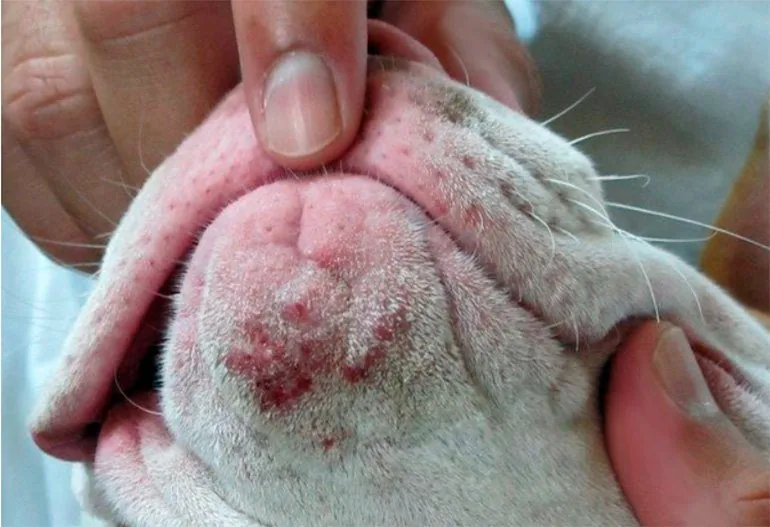
Canine acne is an inflammatory skin disorder affecting the hair follicles and the dermis, mainly in the area of the dog's chin and lips. It presents in a similar way to human acne.
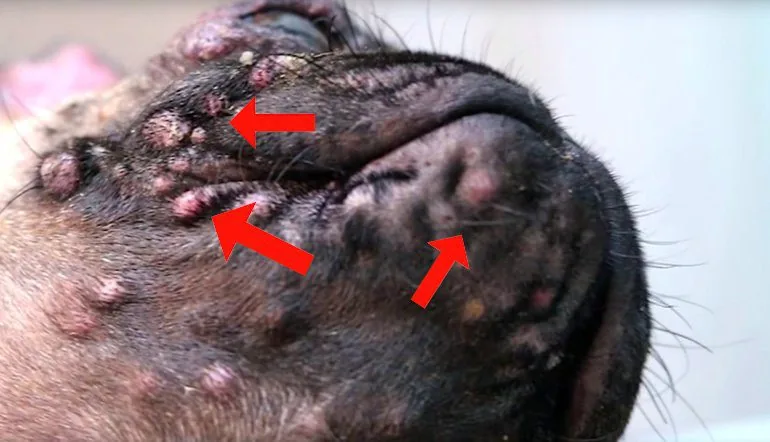
In mild cases of canine acne, red bumps (papules) or bumps with purulent content (pustules) appear on the skin. In more severe cases, a more widespread inflammation of the dermis of the lips and muzzle can develop, which is usually painful. Severe cases of canine acne can cause permanent scarring if not treated properly.
Why does canine acne occur?
What happens in cases of canine acne is that the hair follicles become inflamed and may eventually rupture. This inflammation can be caused by various factors, such as microtrauma to the muzzle area or disorders in the production of sebum or keratin in the follicles.
When the hair follicle ruptures, its contents are released, and this triggers an inflammatory reaction in the surrounding skin (perifollicular), since the follicular contents are recognised as foreign by the surrounding tissues. Initially, the inflammation associated with canine acne is sterile (not infected), but bacteria commonly colonise this damaged skin easily and cause a secondary infection.
Canine acne was initially thought to be linked mainly to hormonal factors, but more recently genetic predisposition is believed to play a more important role.
Which breeds are most prone to canine acne?
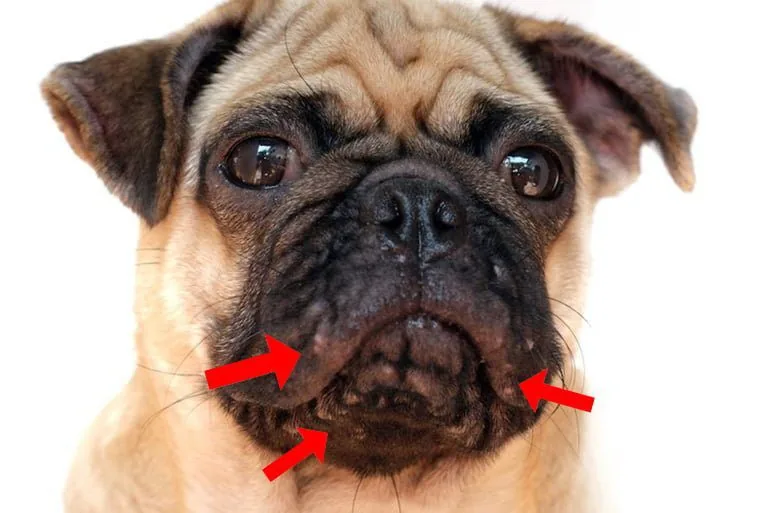
Canine acne is a skin disorder that affects almost exclusively short-haired dogs, and the most commonly affected breeds are: Boxer, Doberman Pinscher, English Bulldog, Great Dane, Weimaraner, Mastiff, Rottweiler and German Shorthaired Pointer.
What symptoms does canine acne cause?
The most common symptoms seen in dogs with canine acne are:
- Appearance of red bumps (papules), which may develop purulent content (pustules), mainly on the skin of the lips and chin.
- Itching or pain in the affected area: animals may not feel uncomfortable if the lesions are very small, but it is common for them to experience pain and mild itching. The dog will try to scratch and may rub against objects or walls.
- Appearance of sores and scabs, secondary to scratching.
How is canine acne diagnosed?
In most cases, the appearance of the lesions is enough for the vet to reach a diagnosis, since skin changes distributed around the lips and muzzle are relatively specific to this condition.
However, in some cases the vet may determine that further tests are needed:
- Skin biopsy: confirms the acne diagnosis and rules out other skin disorders.
- Bacterial culture in case of infection: identifies the bacteria responsible for the infection and makes it possible to determine which antibiotics are appropriate for treatment.
How is canine acne treated?
Treatment is aimed at preventing secondary infections, or treating them by reducing inflammation and discomfort.
- Topical treatment: the affected area must be cleaned and disinfected daily (2-3 times a day) with a disinfectant solution (chlorhexidine); in some cases more intensive treatment with benzoyl peroxide is needed. Antibiotic ointments (mupirocin) may be required.
- Systemic treatment: in severe cases it is necessary, in addition to topical cleaning, to add general (oral) antibiotic and anti-inflammatory medication until the process is brought under control.
What is the prognosis for canine acne?
Canine acne is usually a temporary condition that resolves when the dog reaches adulthood, so the prognosis is good, provided that the necessary measures are taken to prevent and control possible secondary infections.
What can we do at home to improve our dog's acne?
In addition to strictly following the treatment prescribed by the vet, at home we should follow these recommendations to help the condition heal:
- Keeping the environment clean: daily cleaning of our dog's skin is an essential part of veterinary treatment, but we must also keep its environment clean to avoid possible sources of infection (bed, toys, food and water bowls, and so on).
- Avoiding trauma to the affected area: if we reduce trauma to the dog's muzzle and chin area, its acne will improve. Possible causes of trauma include eating from a plastic bowl with rough edges, scratching its face with its paws, rubbing against objects around the house, or our squeezing the lesions (popping spots). Squeezing our dog's lesions increases the likelihood of the hair follicles rupturing and will make the inflammation worse.
By following the treatment prescribed by the vet and keeping up these measures at home, we will manage to control our dog's acne until it reaches adulthood, at which point the condition usually resolves on its own.
Bibliography: Larry P. Tilley / Francis W. K. Smith, Blackwell's Five-Minute Veterinary Consult T. Nuttall / R. G. Harvey / P. J. McKeever, Skin Diseases of the Dog and Cat
IMPORTANT: This article is for informational purposes only and does not constitute veterinary, nutritional or behavioural advice. Every dog is different, and only your trusted vet can advise you on its specific needs.