 Care
Care
Canine Atopic Dermatitis (C.A.D.)
Atopic dermatitis, also known as canine atopy, is a disease that's being diagnosed more and more, especially in certain breeds. It's treatable, but not curable.
It's a chronic condition, but we can see the vet to set up treatment to improve their quality of life. Want to know more details? Let's get into it.
What is atopic dermatitis?
Atopic dermatitis is caused by a type I (allergic) hypersensitivity reaction. It's a disease with a genetic component. Specifically, the dog produces antibodies in response to contact with different substances called allergens. In fact, this is the second most common allergic skin disease in dogs, after flea allergy dermatitis.
It usually appears between six months and six years of age, with increasingly younger animals developing it (six to ten months). Sometimes it's present subclinically, such as chronic ear infections, and shows up later. In fact, this is the second most common allergic skin disease in dogs, after flea allergy dermatitis.
 Allergens for dogs
These allergic reactions can be triggered by normally harmless substances such as grass, mold spores, house dust mites, and other environmental allergens such as:
- Weed, grass, or tree pollen.
- Feathers.
- Plant fibers.
Which breeds get atopic dermatitis?
Since the tendency to have this kind of allergic reaction is considered hereditary, some breeds are found to be more prone to atopy. There's a 60% predisposition in females. The most affected breeds tend to be terrier-type dogs, Dalmatians, Poodles, Bulldogs, and German Shepherds.
Symptoms of atopic dermatitis
When a dog starts developing atopic dermatitis, symptoms will show up only during the time of year the allergen is present. For example, if they're allergic to tree pollen, they'll have dermatitis only for a few months.
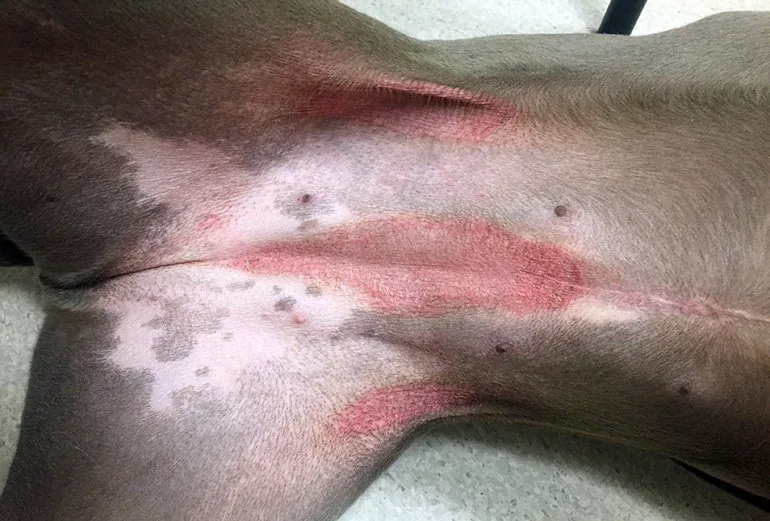
The problem is that these dogs often start out reacting to a single allergen, but progress to showing symptoms with many others. This means they end up with atopic dermatitis year-round. The areas where lesions appear are: the legs, flanks, groin, armpits, eyelids, lips, and ears.
The primary lesions are papules and redness. The remaining lesions are secondary to itching. Secondary infections are also common. Notable symptoms include the following:
- Itching, seasonal at first.
- Sneezing, nasal discharge.
- Greasy, thickened skin.
- A yeasty smell.
- Rubbing the face with the paws or against objects.
- Scratching with the teeth on the back of the wrist (carpus).
- Licking the paws until they turn brown.
How is atopic dermatitis diagnosed?
Before any treatment, the vet will need a complete medical history to determine your dog's allergy pattern. Some allergies are seasonal, while others show up year-round. A full physical exam is important to determine the best type of treatment.
Blood allergy tests can be run, which look for antibodies in the blood, but results aren't always specific. The quality of this type of test often depends on the lab analyzing the results.
The method for confirming atopic dermatitis is what's known as intradermal skin testing. This involves injecting small amounts of allergens to see if they cause a reaction in the area, measuring the response of the wheal (a red bump).
Since this type of test is quite expensive, your vet may recommend treatment instead of advanced allergy testing. Other hypersensitivity processes will need to be ruled out (food allergy, flea bite allergy, mange, demodex...).
What is the treatment for atopic dermatitis?
The first thing done is external deworming/parasite treatment. First in case the allergy is to fleas, but also because atopic dogs are often also allergic to them. A parasite infestation would complicate things further. It's important to know that a cure would come from completely preventing the dog's contact with the allergen(s).
This is nearly impossible. It's common for several allergens to be involved in atopic dermatitis, and not all of them can be avoided. Treatment is prescribed based on each case. It focuses on reducing scratching and treating the skin issues, such as infections or seborrhea.
The vet might recommend immunomodulatory medications such as oclacitinib or lokivetmab, an injection given every 4 to 10 weeks. Along with these, antibiotics or antifungal medications are often needed to treat the skin infections that result from the allergies.
Essential omega-3 and omega-6 fatty acids derived from fish oils can be added to the diet. These have a beneficial effect on skin and coat. There are also shampoos specially formulated for these skin lesions. These can greatly improve your pet's comfort and help skin infections clear up faster. Shampoo and other topical treatments can also be used as maintenance therapy to reduce the risk or severity of future skin infections.
Immunotherapy
Immunotherapy is a treatment aimed at helping the immune system. In the case of atopic dermatitis, the goal is to desensitize the dog. This way, they react less and less each time they come into contact with the allergen.
It requires skin testing to identify which substances trigger the atopic dermatitis. Custom vaccines are then prepared, which are injected or given under the tongue. Revaccination is needed over several months.
The goal is to gradually desensitize the dog by periodically exposing them to very small amounts of the allergen. Eventually, they'll tolerate it. This way, a complete cure of the atopic dermatitis could be achieved.
Is atopic dermatitis contagious?
Like any allergic reaction, atopic dermatitis is an individual reaction of a particular dog's immune system, and therefore can't spread to other animals or to humans.
If left untreated, allergies can change a dog's personality — constant itching and frustration can make dogs withdraw from people or become aggressive when touched. So it's extremely important to see the vet and monitor the condition.
Bibliography Information provided in the medical pathology course taught at Universidad Alfonso X el Sabio. Introduction to dermatology. Studies: Allergen Immunotherapy for Atopic Dermatitis in Dogs and Atopic Dermatitis in Dogs: Causes, Symptoms, and Treatments (petmd.com/dog/conditions/skin/c_dg_atopic_dermatitis)
IMPORTANT: This article is for informational purposes only and does not constitute veterinary, nutritional or behavioural advice. Every dog is different, and only your trusted vet can advise you on its specific needs.