 Care
Care
Canine Osteoporosis
The various conditions that can affect our dog can occur in many different tissues. Bones aren't exempt from this, with osteoporosis being one of the conditions that affects them most.
Let's take a detailed look at how osteoporosis affects our dogs, what its symptoms are, and what we can do to prevent our dog from being in pain.
What Is Osteoporosis and How Does It Affect a Dog?
Osteoporosis, in both dogs and humans, is the loss of bone tissue. That said, in dogs it isn't a very common condition. It occurs when bone resorption and lysis (destruction) processes outweigh osteogenesis (new bone formation) processes.
The disease often shows up in older dogs, though this doesn't mean it can't develop earlier, since there's a juvenile form of osteoporosis. This presentation occurs in large-breed dogs between one and six months old.
How Does Canine Osteoporosis Develop?
One cause is diet. This is due to an unbalanced diet based almost exclusively on meat, which is very low in calcium and high in phosphorus, resulting in a disproportionate ratio between these two, instead of a balanced one. If there's also excessive vitamin D intake, the problem worsens.
Another cause is primary hyperparathyroidism. This is a disorder in which the parathyroid gland abnormally produces too much parathyroid hormone (which normally and physiologically maintains a normal calcium level in the blood so it can perform its function in the body).
In this case, excess parathyroid hormone causes more calcium to be released by "pulling" it from the bones, raising it in blood and urine above normal levels. As a result, the bone turns into a connective substance (weaker) lacking bone tissue, with the consequences this entails.
Osteoporosis is undoubtedly linked to and worsened by being overweight. That's why preventing excess weight is recommended to reduce the risk of pets developing this and many other conditions such as osteoarthritis. In this case, it becomes a vicious circle, since being overweight makes the animal move less, gain more weight, and the disease progressively and involuntarily worsens.
How to Know If My Dog Has Osteoporosis: Symptoms
The main symptoms we can notice in dogs with osteoporosis, to a greater or lesser degree, are:
Joint swelling, most commonly at the carpus and tarsus, with pain when pressed. The joints may feel warm. Animals avoid moving, walking with difficulty, and sometimes limping to a greater or lesser degree.
Weakness and possible loss of appetite. Abnormal postures aimed at relieving the pain osteoporosis is causing. Narrowing of the pelvic canal, with possible hip collapse. Dystocia (difficult labor) can occur in pregnant females with osteoporosis.
In severe cases, there will be fractures of different types as a result of weak mineralization and loss of bone mass itself. If this happens, the animal won't put weight on the limb affected by the fracture.
How Is Osteoporosis Diagnosed?
As with any condition, the vet needs to follow a routine process consisting first of a history, gathering details such as how long the symptoms have been present, how they've progressed, etc. Afterward, a general physical exam of the patient will be performed to check for any possible systemic sign.
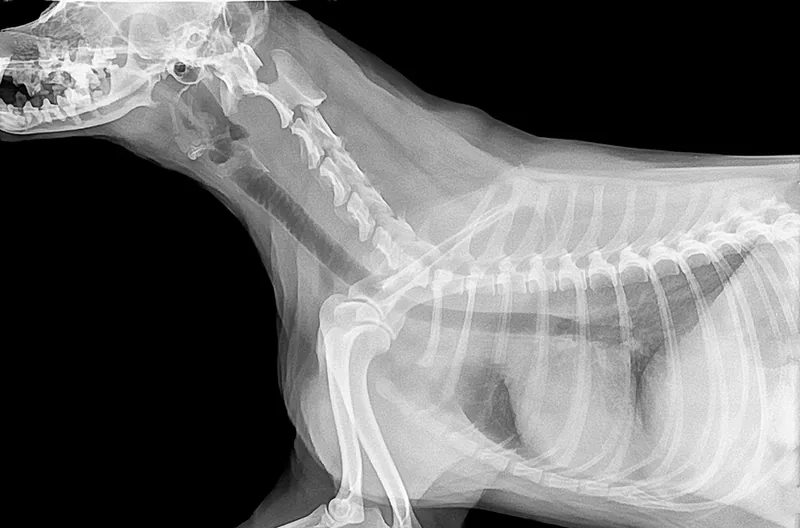
Next, regarding additional tests, conventional X-rays will be very helpful in diagnosing osteoporosis. We'll need several views of the affected area, or the area we think may have osteoporosis.
On the X-ray, the vet will be able to observe several signs showing the presence of osteoporosis in our pet. Sometimes thinning of the cortical area (the outermost layer of bone) can be seen, along with weak bone mineralization, osteolysis (areas with lower bone density), and the presence of pathological fractures if any are present. This is best observed in the ulna and radius bones.
In bloodwork, the vet may observe decreased blood calcium (once the disease is advanced), elevated phosphorus, and anemia.
Treatment for Osteoporosis in Dogs
Treatment for osteoporosis focuses on the cause of the bone loss. So, the factors predisposing your pet to osteoporosis will need to be determined. On one hand, if the animal is overweight, it will need to be reduced through a proper diet, since it could worsen the condition.
Support from products with glucosamine, vitamin D, and fatty acids such as Omega 3 and 6 will be essential. These are some of the components of chondroprotectants, which are very helpful for this and other bone conditions. They should be recommended by your trusted vet, and home treatments shouldn't be started on your own.
On the other hand, as mentioned, the diet shouldn't be based exclusively on meat. If it is, it needs to be balanced due to its excessive phosphorus level. Controlled exposure of our pet to direct sunlight is very beneficial for this condition and for maintaining good overall health.
As the saying goes, prevention is better than cure. To prevent osteoporosis, it's necessary to follow all the animal's feeding guidelines throughout its life, but especially while it's growing. Foods need to be balanced, carefully chosen for their ratio of vitamins (especially D) and minerals (phosphorus and calcium).
IMPORTANT: This article is for informational purposes only and does not constitute veterinary, nutritional or behavioural advice. Every dog is different, and only your trusted vet can advise you on its specific needs.