 Care
Care
Canine Renal Dysplasia: Causes, Symptoms, and Diagnosis
When we hear the term kidney failure, we tend to associate it with older dogs. However, there's a congenital kidney disorder that can trigger kidney failure in puppies just a few weeks old. This disorder is known as canine renal dysplasia, and it's a hereditary condition present from birth.
Symptoms are usually related to a failure in kidney function, notably vomiting and diarrhea, weight loss, loss of appetite, and stunted growth, among others. Below, we explain the causes of this disease, its symptoms, diagnosis, and the treatment options currently available.
What Is Canine Renal Dysplasia?
Canine renal dysplasia is a congenital disease (dogs are born with it) in which one or both kidneys haven't developed normally; they're small, misshapen, and their internal structure is immature. This structural defect usually results in poor kidney function, leading to kidney insufficiency or even complete kidney failure.
What Causes Renal Dysplasia in Dogs?
The exact causes of this condition aren't fully understood at present. Certain breeds tend to be affected more often, which suggests it may be a familial disease inherited through a recessive gene. Some of the predisposed breeds include the Golden Retriever, Lhasa Apso, Miniature Schnauzer, Samoyed, Shih Tzu, Pinscher, and Poodle, among others.
Researchers are also looking into a possible link between this condition and certain intrauterine infections during pregnancy, since canine herpesvirus infections during pregnancy are suspected of potentially causing renal dysplasia in puppies.
Symptoms of Renal Dysplasia
Although renal dysplasia is a condition present from the puppy's birth, symptoms often don't appear until weeks, months, or even several years into the dog's life. Sometimes it may show no symptoms at all, or the symptoms may be mild enough to go unnoticed by the owner.
Signs of renal dysplasia vary depending on how severe the condition is, with the most common being: increased water intake (polydipsia), increased urine output (polyuria), blood in the urine, loss of appetite, weight loss, stunted growth in puppies, lack of activity (lethargy), vomiting, diarrhea, mouth ulcers, and bad breath.
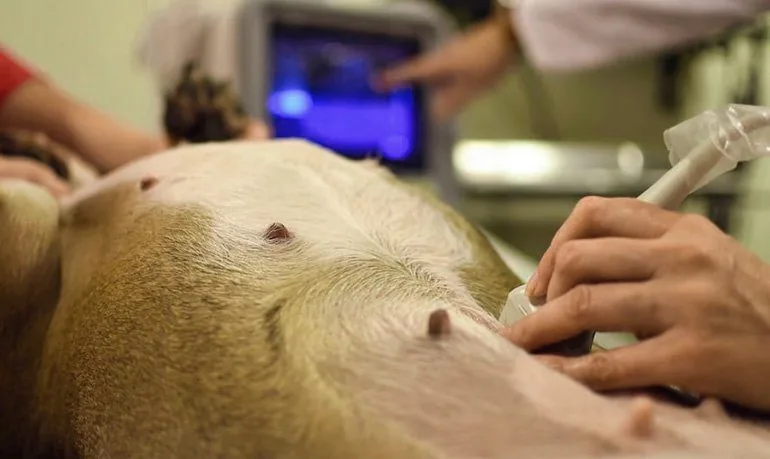
How Is Renal Dysplasia Diagnosed?
If our dog shows symptoms of renal dysplasia, we should see a vet for a full physical exam and the diagnostic tests needed to confirm this condition.
Tests usually include bloodwork, urinalysis, abdominal ultrasound to assess kidney structure, and a kidney biopsy. The kidney biopsy provides a definitive diagnosis of the condition.
Treatment for Renal Dysplasia
There's no curative treatment for this condition, since what has happened is that the kidney's structure didn't develop correctly, and the kidney doesn't function properly.
In most cases, if both kidneys are dysfunctional, the dog will end up developing kidney failure, and the long-term prognosis usually isn't good. If only one kidney is affected, the prognosis is more favorable; however, these cases aren't common, since the disease is usually bilateral.
Treatments for renal dysplasia are aimed at supporting normal kidney function and are palliative, not curative. The most common treatment measures include:
Specific Renal Diet
Switching to a renal diet is a key part of treatment. There are commercial diets currently available that are formulated to protect kidney health, being low in salt, phosphorus, and protein, and easy to metabolize. Supplementing with omega-3 fatty acids can be beneficial.
Fluid Therapy and Proper Hydration
Dogs with renal dysplasia become dehydrated easily and often need intravenous or subcutaneous rehydration to restore fluid levels. Daily or every-other-day subcutaneous fluid therapy is very beneficial for animals with kidney failure.
In dogs with renal dysplasia, proper water intake should be encouraged, making sure they have regular access to fresh, clean water, and increasing water intake through diet by feeding wet food (canned renal diet food).
Medications
In certain cases, and as the disease progresses, medication will be needed to treat the complications associated with renal dysplasia. For example, if there's vomiting or diarrhea, the vet will determine whether an anti-emetic or anti-diarrheal is needed to prevent the dog from becoming dehydrated. Medication for high blood pressure may also be necessary.
Alternative Therapies
Ozone therapy is currently being used in veterinary medicine as a supportive treatment for dogs with kidney failure. Results show a protective effect in preserving kidney function thanks to its antioxidant action on damaged structures.
It's a minimally invasive technique, administered either intravenously or intrarectally.
Dialysis or Transplant
In severe cases, kidney dialysis or a kidney transplant may be considered. However, these procedures are expensive and are only performed at select referral hospitals.
Can Renal Dysplasia Be Prevented?
Since it's a congenital disease, there's no way to prevent it. But since there's likely a strong hereditary factor involved, it's essential to avoid breeding dogs affected by this condition, so it isn't passed on genetically to future puppies.
Bibliography Carlson and Giffin. 2002. Manual práctico de veterinaria canina. Madrid. Editorial el Drac.
IMPORTANT: This article is for informational purposes only and does not constitute veterinary, nutritional or behavioural advice. Every dog is different, and only your trusted vet can advise you on its specific needs.