 Breeds
Cardigan Welsh Corgi
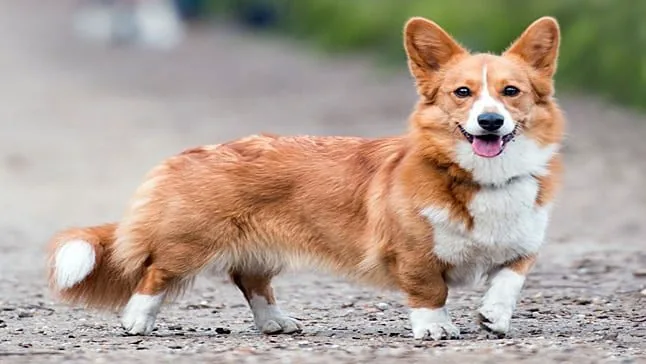
The Cardigan Welsh Corgi is a small but sturdy dog, with short legs and a coat that protects it from any weather. Originally from Wales, where it worked as a cattle herder, today it's an intelligent, loyal, energetic family companion. Unlike its close relative the Pembroke, the Cardigan stands out for its long, bushy tail, its large rounded ears, and its more elongated body. If you're looking for an active dog that adapts well to family life, this is an exceptional candidate.
History and Origin of the Cardigan
The Cardigan descends from herding dogs brought by the Celts to Wales around the 10th century. They were originally used to herd cattle in the Welsh mountains, where their small but sturdy size, combined with their agility, made them ideal for controlling livestock over difficult terrain. There's evidence of its presence in the United Kingdom dating back to the 10th century, which makes it one of the oldest British herding breeds.
It's earned a special place in British royal history, frequently seen alongside Queen Elizabeth II, who was a passionate fan of the breed. This royal connection has helped fuel its popularity worldwide. Today, although it keeps its working instinct alive, it's mainly a companion dog valued for its loyalty, intelligence, and gentle temperament.
Physical Characteristics of the Cardigan
The Cardigan is a small-to-medium dog with a muscular, well-proportioned body. It stands about 30 cm at the withers and weighs between 15 and 18 kg as an adult, being slightly larger and heavier than the Pembroke. Its build is longer than it is tall, with short but surprisingly strong legs.
The head is triangular, with a profile that slightly recalls a fox's. The ears are large, erect, and rounded at the tips, much bigger than the Pembroke's. The eyes are oval-shaped and dark, expressive and alert. The tail is long and bushy, wagged enthusiastically to show happiness, clearly setting it apart from the Pembroke's very short tail.
The coat is double, with a soft undercoat and a tough, weatherproof outer coat. Common colors include blue merle, brindle, red, sable, and tricolor with brindle and red patches. It often shows white markings on the legs, chest, neck, muzzle, and belly. It sheds heavily twice a year.
Differences Between the Cardigan and the Pembroke
Although both are Welsh Corgis, the Cardigan and the Pembroke were recognized as two separate breeds in Britain in 1934. The physical differences are notable: the Cardigan is longer and larger, with a long, bushy tail it carries upright. The Pembroke is smaller and lighter, with small pointed ears and a very short, almost nonexistent tail.
The Cardigan has large, rounded ears, while the Pembroke's are smaller and more pointed. The Cardigan is the older of the two breeds and was an excellent flock guide in the Welsh mountains. The Pembroke, by contrast, has more recent origins.
Behavior and Temperament
Although it's mainly used as a companion dog today, the Cardigan keeps its herding instinct alive. It's a cheerful, affectionate, sharply intelligent dog, with a personality that reflects independence and self-confidence.
It sometimes shows a bit of stubbornness, a trait typical of herding dogs that had to make their own decisions out in the field.
It also makes an excellent watchdog. It's wary of strangers and won't hesitate to bark to alert you to the presence of unfamiliar people, or to anything it interprets as a threat to its home and family. Being highly sociable, it loves being around people and gets anxious when left alone for too long.
One notable trait is its tendency to nip at ankles and chase feet, a behavior inherited from its work as a herding dog. With proper training, this instinct is easy to channel. It's obedient and loyal to its family, always alert to what's going on around it.
Coat Care
The Cardigan's coat is resistant to temperature changes, but it needs regular care. It should be brushed often, especially during the two annual coat blows, when it sheds heavily.
Weekly brushing is recommended during normal times, increasing to daily during shedding season to prevent the hair from tangling and piling up around the house.
Bathing can be done every 6-8 weeks with a dog-specific shampoo. Dry the coat well after bathing, especially the undercoat, to prevent skin problems. The large ears need special attention: check them regularly and clean them with a damp cloth to prevent infection.
Training and Education
The Cardigan is intelligent and generally easy to train, although its independent streak can present some challenges. It responds well to positive reinforcement and reward-based motivation. Set clear boundaries from puppyhood, since its herding instinct can lead it to nip at ankles or chase young children.
Early socialization is essential. Expose the puppy to different people, animals, and environments so it develops confidence and security. Training should be consistent but never harsh; these dogs respond better to patience and rewards than to strictness.
It needs mental exercise as much as physical exercise: scent games, command training, and activities that stimulate its intelligence.
Recommended Care
The Cardigan is an active dog that needs daily exercise. Walks of 30-45 minutes at least twice a day are ideal, combined with play at home or in a park. Without enough activity, it can develop destructive behavior or gain excessive weight.
Annual vet check-ups are essential. This breed can be prone to back problems due to its elongated body, so keep it at a healthy weight and prevent it from jumping down from heights. Veterinary costs can exceed €900 a year. Food should be high quality, costing approximately €20-30 a month.
The average cost of keeping a Cardigan Welsh Corgi runs between €50-80 a month, not including the puppy's initial price.
Life expectancy is 12 to 14 years, making it a long-term companion. Check its teeth, nails, and anal glands regularly. The large ears need weekly cleaning to prevent infection.
Price and Getting One
A well-bred pedigree Cardigan Welsh Corgi puppy costs from €700 upward, though the price can vary significantly depending on the kennel, the bloodline, and the region. Some champion or exceptional-pedigree dogs can cost considerably more.
Get your puppy from a responsible breeder who health-tests the parents and provides pedigree documentation. Avoid breeders with no references or who won't let you visit their facilities. Some shelters and breed-specific associations also have Corgis available for adoption at a lower cost.
Is the Cardigan the Dog for You?
The Cardigan Welsh Corgi is ideal if you're looking for a small but sturdy, intelligent, loyal dog that adapts well to family life. It's perfect for active people who can dedicate daily time to exercise and mental stimulation. Its size makes it suitable for apartments, as long as it gets enough activity.
It's not the best choice if you're away from home for long hours, or if you'd prefer a completely submissive dog. Its independence, herding instinct, and tendency to bark call for an owner committed to training and socialization. If you're willing to invest time and resources into its training and care, you'll have an exceptional companion for 12-14 years.
IMPORTANT: This article is for informational purposes only and does not constitute veterinary, nutritional or behavioural advice. Every dog is different, and only your trusted vet can advise you on its specific needs.