 Care
Care
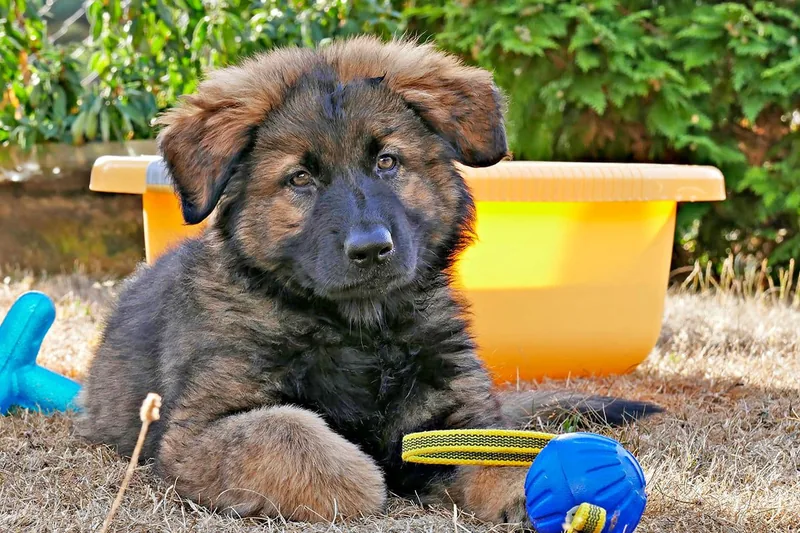
Care for Large-Breed Puppies
Although the care dogs need is basically the same regardless of breed or size, it's true that there are certain considerations where size really does matter.
Specifically, when we're raising a large-breed puppy — one that as an adult will exceed 25 kg (55 lb) — we need to pay attention to aspects such as diet, exercise, or training to avoid problems.
Slow Growth
Generally, we consider dogs to have completed their puppy stage and start being treated as adults around one year of age. But in the largest breeds this period lasts longer. Broadly speaking, these dogs keep growing until around 18-24 months. The first effect of this will be on their nutrition.
Also, their skeleton grows quickly, which can lead to certain conditions related to the strain caused by an early increase in muscle mass, such as dysplasia, osteochondrosis, or hypertrophic osteodystrophy. There's a detail worth noting about large-breed dogs' bones.
These dogs have lower bone density than small-breed dogs. Under these conditions, rapid weight gain worsens the strain. It's important to record weight regularly, at least at first, to monitor both excess and deficiency. Vet visits for deworming and vaccines can be used for this.
Diet for a Large-Breed Puppy
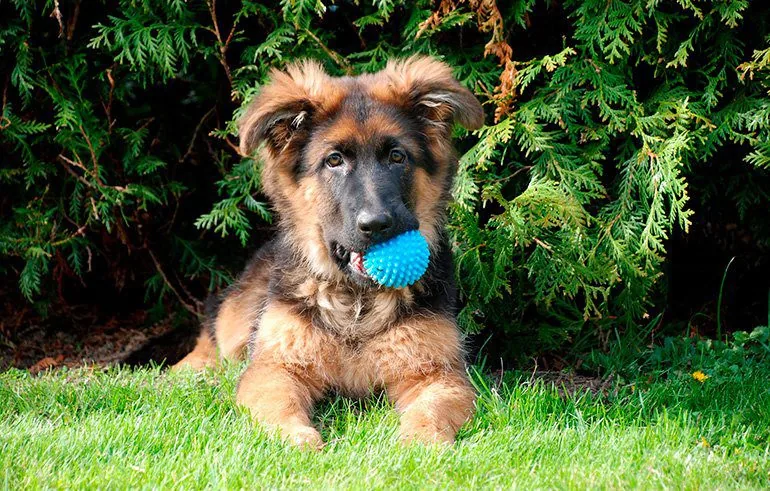
All dogs have similar nutritional needs regardless of size. But in large dogs, due to the traits of their growth, diet will have some particularities. Keep in mind that an inadequate diet during growth is linked to muscular and skeletal diseases.
Physical activity also plays a role. There's a tendency to overfeed this type of dog, thinking the more they eat the better, and to supplement with calcium. And it's true that, logically, they'll need more food than a mini-breed puppy, but without that meaning an excess of calories.
In these dogs, the surplus isn't stored as fat — instead they use it to grow faster, with the resulting problem for their skeleton, which isn't ready for it. That's why, more than the amount, we should focus on the quality of the diet. It's recommended to split the ration into about three meals a day and use height-adjustable bowls.
Nutrition in Large Breeds
Broadly speaking, there are certain recommendations to follow when choosing good food for this type of dog. The goal is balanced growth. The food should be made up of:
- High-quality proteins.
- A moderate amount of fat.
- Glucosamine and chondroitin to support joint care.
- Calcium and phosphorus in a 1:1 or 2:1 ratio. An imbalance could cause skeletal deformities and deficiency of other nutrients. Despite the myths, these dogs don't need more calcium than others, and as we've seen, providing it as a supplement is a source of problems.
- CLA, or conjugated linoleic acid, which is associated with a reduction in body fat and an increase in protein levels.
Improving the Diet With Nutritional Supplements?
Just as it's common to give large-breed puppies a lot of food, it's also a widespread idea that they need supplements to prevent growth problems. But the truth is it could be counterproductive.
That's why we should never supplement on our own. If we think the puppy shows some nutritional deficiency, we should always see the vet, the professional in charge of diagnosing and treating it.
Exercise for Large-Breed Puppies
Large-breed puppies will get exercise like any other dog. Walks, running, and play are essential for their wellbeing. But we do need to be careful to keep them from jumping from or onto elevated spots, or frequently standing up on their hind legs.
These are factors that contribute to triggering symptoms of hip dysplasia, a condition large breeds are more prone to. Of course, any limping or discomfort is reason for a vet visit.
Training Large-Breed Puppies
All dogs require socialization and training, but these needs will be much more evident in puppies that will soon reach a large size, simply due to handling. A Chihuahua's habit of jumping on us to say hi might be amusing. It won't be the same if our dog is a Great Dane.
They also have more strength, and the damage a disobedient dog can cause if it escapes or bites someone generally increases with its size. That's why its training is essential, and it should start from puppyhood.
Health Problems in Large-Breed Puppies
These puppies need the same deworming and vaccinations as any other. But, since they're more likely to live or spend time outdoors, special emphasis needs to be placed on deworming.
They'll be more exposed both to all kinds of parasites and to the diseases these can transmit when acting as vectors. Increasingly diagnosed examples are heartworm disease or leishmaniasis.
Bibliography Carlson and Giffin. 2002. Practical Manual of Canine Veterinary Medicine. Madrid. Editorial el Drac. Sagarra, Natalia. 2019. Feeding Large Breeds. Ateuves no. 77. pp. 16-17. Villagrasa, María. 2017. Calcium in the Diet. Ateuves no. 66. pp. 14-16.
IMPORTANT: This article is for informational purposes only and does not constitute veterinary, nutritional or behavioural advice. Every dog is different, and only your trusted vet can advise you on its specific needs.