 Care
Care
What Causes Cataracts in Dogs? Origin, Symptoms, and Treatment
Cataracts are a serious eye condition, since they can cause blindness in the affected dog. And although they're more associated with older dogs, the truth is they can appear at any age.
So, we distinguish between congenital and acquired cataracts. Sometimes, cataracts can be resolved through surgery, letting the dog fully regain their vision. Want to learn more details about treating cataracts?
What are canine cataracts?
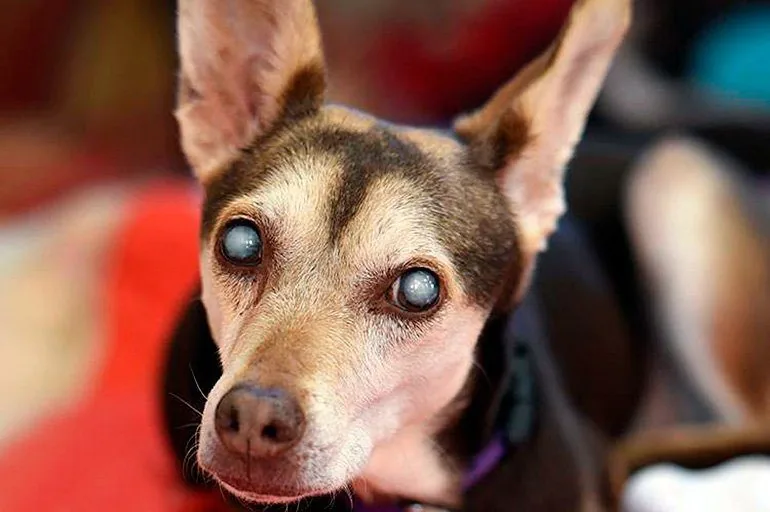
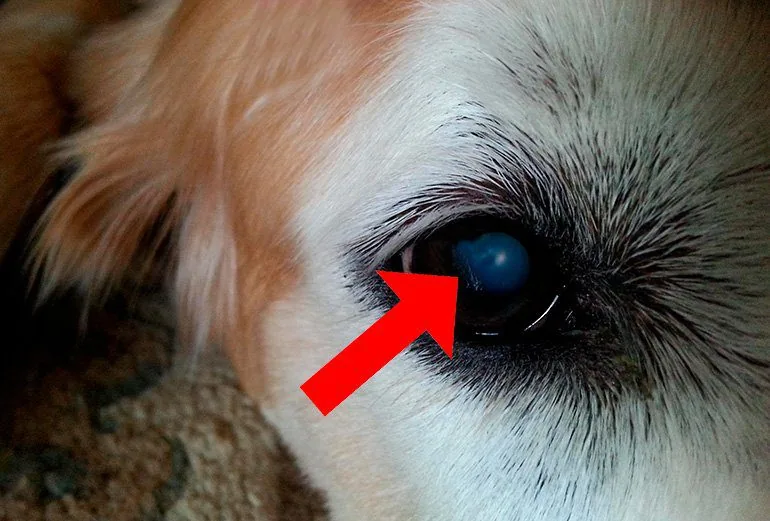
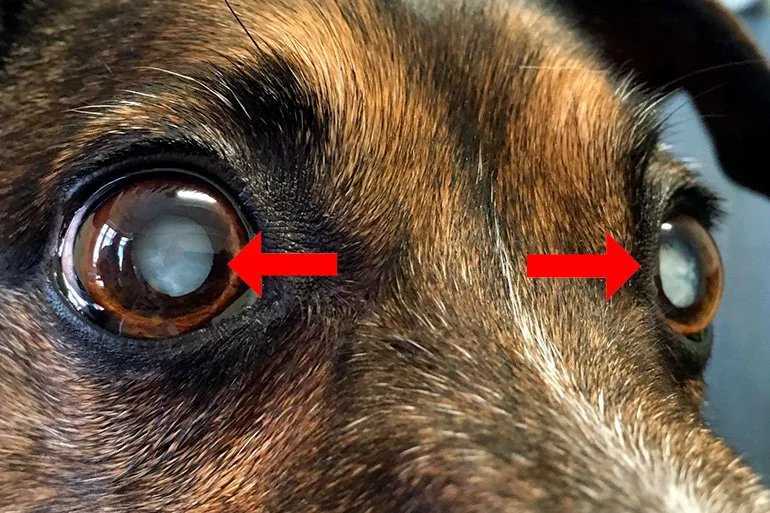
Cataracts are defined as loss of the lens's normal transparency. They're easy to recognize, since we'll see an opaque area of varying size in the dog's eye. Specifically, it's as if a grayish-white film were covering the eye. Most cataracts have a genetic origin.
They progress over days or months. Eventually, they cause blindness. They can be congenital or acquired. What's more, cataracts can be complicated by inflammation, glaucoma, lens dislocation, pain, etc.
Types of cataracts that can affect a dog
Based on their characteristics, we can distinguish four different types of cataracts. Not all can be treated with surgery, but we can slow their progression with proper treatment.
Juvenile congenital cataracts
These are the ones seen in dogs under six years of age. They'll affect both eyes, though this doesn't mean they appear in both at the same time — they can develop at different rates.
Acquired cataracts
These are the ones that occur in older dogs as a result of aging. They're also seen linked to other diseases, such as uveitis or diabetes. Diabetic dogs are very prone to developing cataracts, often within a very short time.
In fact, cataracts are the most common complication of this disease. They can progress as quickly as days or weeks and are usually bilateral and symmetrical. Cataracts in diabetic dogs are a veterinary emergency.
Senile cataracts
This is the name given to cataracts affecting older dogs. They're one of the main causes of blindness in them. They can appear in both eyes, though they develop at different rates.
These cataracts are first noticed in the center of the eye and gradually spread outward until the whole lens becomes opaque. This is known as a mature cataract.
Cataracts and nuclear sclerosis
What's known as nuclear sclerosis is a degeneration of the normal lens due to aging. It has nothing to do with cataracts, even though its appearance may remind us of them. With sclerosis, what happens is that new fibers form around the outer edges of the lens.
These press toward its center, and this process is what creates the bluish haze commonly seen in older dogs. Unlike cataracts, nuclear sclerosis doesn't cause blindness or affect vision.
Which dogs get cataracts?
Any dog can develop cataracts, but since there's a genetic component, we can identify some breeds more predisposed to them. These include the Cocker Spaniel, Boston Terrier, Fox Terrier, West Highland White Terrier, Miniature Schnauzer, Poodle, Siberian Husky, Golden Retriever, Old English Sheepdog, and Labrador Retriever.
What is the treatment for curing cataracts?
Treating cataracts means operating quickly. A vet specializing in ophthalmology assesses each case. Senile cataracts are left untreated if the dog is very old, has other health conditions, and anesthesia poses a high risk. Surgery is generally attempted if both eyes are affected and the dog's vision is so poor it interferes with normal life.
What the ophthalmologist does is remove the lens. The technique is called phacoemulsification (PHACO), though there are others, such as phacofragmentation or extracapsular extraction (ECLE), more recommended for mature cataracts. Without a lens, the dog sees blurry, but at least retains some vision. There's also the option of replacing the lens with an artificial one.
On the other hand, juvenile cataracts can disappear on their own, generally within a year. In these cases, the cataract is reabsorbed and the dog keeps vision equivalent to what surgery would give. If surgery isn't possible, lifelong medication and strict veterinary follow-up are needed.
Post-op care after cataract surgery
After surgery, the vet will schedule the necessary follow-up visits based on progress. Topical and oral antibiotics and anti-inflammatories need to be given to reduce discomfort and prevent infection.
It's essential for the dog to wear an Elizabethan collar. We also need to keep them from any sudden movement, such as playing with toys or other dogs. If the operated dog lives with other pets, we need to keep them from licking the eye.
How much does cataract surgery for a dog cost?
The price of cataract surgery is high. Operating on just one eye averages around 900 euros. If both eyes need surgery, the amount doubles, and on top of that, costs for tests, follow-ups, and medications need to be factored in. Before surgery, the vet needs to explain the procedure and post-op care in full detail.
We also need to be aware that the surgery isn't always successful. The PHACO technique is reported to be more effective, and generally success rates of close to 95% are cited. The procedure is considered successful when the animal can see well enough to lead a normal life.
If we decide to go ahead with surgery, contrary to the belief that it's necessary to wait for the cataract to mature, it should be done as soon as possible. This makes a good outcome more likely. Otherwise, the lens hardens and becomes harder to remove, which can lead to complications during and after surgery, such as uveitis or glaucoma.
Can cataracts be prevented?
Hereditary cataracts can be prevented by not breeding dogs affected or carrying this condition. To identify these dogs, it's a good idea to consult veterinary ophthalmologists, who will be responsible for eye check-ups and the relevant tests.
Bibliography Carlson and Giffin. 2002. Manual práctico de veterinaria canina. Madrid. Editorial el Drac. Díaz, Clinio. 2009. Remisión de casos al oftalmólogo y cirugía de cataratas. Portal Veterinaria. Ortiz, M., Salas, V., Cumpa, E., and Villagrasa, M. 2012. Catarata diabéticas: una urgencia quirúrgica. Portal Veterinaria.
IMPORTANT: This article is for informational purposes only and does not constitute veterinary, nutritional or behavioural advice. Every dog is different, and only your trusted vet can advise you on its specific needs.