 Nutrition
Cheap, Quality Dog Kibble
Finding cheap, good-quality kibble for your dog is not a contradiction, but it does mean knowing where to look. The price on the sack is misleading: what matters is nutrient density, the source of the protein and what the label says — and hides.
Myths and Realities: Is It Really Possible to Buy Cheap, Quality Kibble?
The idea that cheap equals bad is very widespread, but it is not always true. There are brands that manage a decent formulation at an affordable price without resorting to filler ingredients. The key is knowing what to look for and, above all, what to avoid on the label.
Some manufacturers cut costs by streamlining processes or using wholegrains instead of refined ones. Even so, cheap and bad are not the same thing: an affordable, well-formulated kibble is not the same as one packed with unspecified by-products.
The most common mistake is only looking at the price per kilo. A cheap sack may force you to give more of it because the dog does not absorb the nutrients, while a quality one goes further per portion. The real value for money is hidden in the nutrient density, not in the packaging design.
How to Work Out a Kibble's Real Cost: The Price per Daily Portion Nobody Tells You About
Comparing the price of the whole sack is a mistake. The real cost per portion depends on how much your dog needs to eat each day, and that varies with each food's nutrient density.
The formula is simple: divide the sack's total price by the number of days it lasts. To get that number of days, divide the sack's weight by the grams recommended in the manufacturer's table for your dog's weight. Apply this calculation to the two or three kibbles you are considering before deciding.
The result is often surprising. A kibble with specified animal protein may need a fairly smaller daily ration than one with a lot of refined grain. That difference in grams completely changes the real monthly cost, and often the apparently more expensive kibble turns out to be just as cheap, or cheaper, day to day.
Below we look at five types of kibble under €2/kg based on their key ingredients: protein source, type of preservatives and grain quality. The exact protein figures vary by batch and year, so we offer qualitative criteria you can check on the label of the product you have in hand.
Supermarket kibble with mostly plant protein. The first ingredient is usually corn gluten or soya, with a low animal protein percentage. It includes artificial preservatives such as BHA or BHT and refined grains. It uses unspecified by-products. It does not hold up in the value-for-money comparison.
Own-brand with identified chicken meal. Chicken meal appears as the first animal source on the ingredient list. It uses natural preservatives (tocopherols) and wholegrains such as brown rice or barley. It avoids the worst fillers. Acceptable value for money.
Low-cost distributor kibble with mostly plant content. The protein comes mainly from pea and potato. It includes artificial preservatives and refined grains with wheat by-products. Low animal protein content. Not advisable as an ongoing main diet.
Specialist budget range with specified animal protein. Fish meal or dehydrated chicken appear with the specific species stated on the label. Natural preservatives (vitamin E) and wholegrains such as oats or brown rice. Meets the quality criteria within the budget segment.
Supermarket with a higher-quality affordable range. Turkey meal or another identified animal protein as the first ingredient. Natural preservatives and wholegrains. No unspecified by-products. Good balance between cost and formulation for everyday use.
A 10-Step Checklist for Reading Labels and Avoiding Bad Kibble Disguised as Premium
These 10 steps help you spot suspicious ingredients and misleading marketing without being swayed by the packaging design.
1. The first ingredient should be named animal protein. Look for "dehydrated chicken", "lamb meal" or "salmon". If it just says "meat and animal by-products" with nothing more, the source is questionable.
2. Demand a sufficient percentage of animal protein. Check in the guaranteed analysis that the protein comes mostly from identified animal sources, not legumes or grains. A scant animal supply is often insufficient for a healthy adult.
3. Reject unspecified by-products. Terms like "animal by-products" or generic "meat meal" can include very low-digestibility scraps. The label should state the species.
4. Wholegrains are better than refined ones. "Brown rice" or "oats" provide fibre and nutrients. Refined "maize" or "wheat" are cheap fillers that raise the glycaemic index with no real benefit.
5. Artificial preservatives, out. BHA, BHT and ethoxyquin are synthetic antioxidants with associated long-term risks. Go for tocopherols (vitamin E) or rosemary extract.
6. Fat should have a specific source. "Chicken fat" or "salmon oil" indicate quality. Unspecified "animal fat" may come from poorly digestible mixes.
7. Artificial colourings and flavourings are unnecessary. A well-formulated kibble does not need them. If you see "allura red" or "artificial flavouring", be wary.
8. Look for the FEDIAF compliance mark. Serious brands state "complete and balanced according to FEDIAF", the European guarantee that the recipe covers the dog's nutritional needs.
9. Do not be swayed by the sack's price. Apply the cost-per-portion calculation described above before deciding which kibble is genuinely cheaper for your pocket.
10. Be wary of empty terms like "premium" or "natural". These are not regulated. The only way to verify quality is reading the ingredient list and applying the steps above.
The Truth on the Plate: How the Colour and Shape of the Kibble Pieces Reveal Their Quality
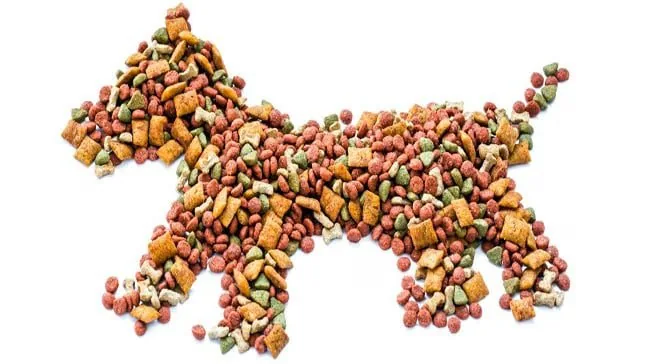
Uniform colour and an artificial shine in the kibble pieces are often the first warning sign. Manufacturers of low-quality kibble add colourings and fatty coatings to make the product look appealing, but that has nothing to do with its nutritional value.
Pieces with brown or toasted tones indicate proper cooking: when meat is the main ingredient, the Maillard reaction during extrusion naturally darkens the piece. Very pale, uniform colours often give away a predominance of refined grains over animal protein.
Texture gives clues too. Pieces with slightly rough edges or visible pores are typical of processes that respect the integrity of the ingredients. Perfectly round, smooth pieces of identical size tend to be made from heavily processed mixes where filler meal calls the shots.
Feel the surface: if you notice a greasy layer that stains your fingers, the kibble probably has a coating of low-quality fat to improve palatability. Well-formulated kibble tends to feel matte and slightly rough, a sign that no external fat has been added to mask poor ingredients.
Irregular shape and a dark colour are not cosmetic flaws, but indicators that the manufacturer has prioritised nutritional value over appearance. If you find a cheap kibble with these characteristics, its ingredient list is likely honest too: specified animal protein, wholegrains and no added colourings.
Consequences of Feeding Your Dog Cheap, Low-Quality Kibble: Short- and Long-Term Risks
Kibbles with excess refined grain and unspecified by-products cause immediate digestive problems: wind, soft stools or frequent diarrhoea. A sudden switch to this kind of food makes intestinal upset even worse.
In the medium term, the coat and skin suffer from the lack of essential fatty acids and quality protein. A dull coat, persistent dandruff and itching with no identified allergic cause appear — symptoms often put down to other causes when the source is in the bowl.
In the long term, kidney health suffers from excess phosphorus and low-digestibility protein. The kidneys work overtime filtering compounds with no nutritional value, which can lead to chronic kidney disease, especially in older dogs.
The joints suffer too. Poorly formulated kibbles tend to have an imbalanced calcium-phosphorus ratio and lack chondroitin and glucosamine. This speeds up joint wear and predisposes dogs to hip dysplasia or early arthritis, especially in large breeds.
The financial impact is real too: vet visits for chronic dermatitis, recurring digestive problems or kidney disease can far exceed the savings built up from cheap kibble. A poor formulation is not free; it just delays the bill.
Frequently Asked Questions About Cheap Dog Kibble: Science-Based Answers
Can a cheap kibble cover all my dog's nutritional needs? Yes, if it is formulated to FEDIAF standards and states so on the packaging as "complete and balanced food". Price alone does not determine whether it meets nutritional needs; the recipe does.
Can I mix a cheap kibble with a more expensive one to save money? It is possible, but it makes controlling the portion harder and can unbalance the intake of certain minerals if the two kibbles have very different profiles. If you do this, adjust the amounts using each manufacturer's tables and check with your vet.
Are supermarket kibbles always worse than ones from specialist shops? Not necessarily. Some meet the basic quality criteria: specified animal protein, natural preservatives and a transparent label. The sales channel neither guarantees nor rules out quality; the ingredient list does.
How often should I change kibble? There is no fixed schedule. It is worth considering if the dog shows signs of intolerance (soft stools, itching, wind), if their life stage changes (puppy to adult, adult to senior), or if the manufacturer changes the recipe without clearly saying so. Any change should be made gradually over 7-10 days to avoid digestive upset.
Are grain-free kibbles a better option to save money? They have not been shown to be superior for healthy dogs and, in some cases, have been the subject of research into a possible link with dilated cardiomyopathy in predisposed breeds. Unless the vet indicates it for a confirmed intolerance, a kibble with quality wholegrains is an equally valid option and is usually cheaper.
What do I do if my dog rejects the cheap kibble I have chosen? Rejection can be down to palatability — kibbles without artificial fat coatings are less appealing to the nose at first — or a genuine intolerance to some ingredient. Try mixing in a little unsalted, onion-free chicken stock to help the transition. If the rejection carries on for more than three days, check with your vet before switching food.
IMPORTANT: This article is for informational purposes only and does not constitute veterinary, nutritional or behavioural advice. Every dog is different, and only your trusted vet can advise you on its specific needs.