 Training
Do Dogs Understand What We Tell Them?
If you're the kind of person who talks to their dog, you'll be pleased to know your dog does indeed understand you… though maybe not as much as you'd like. That is, they don't understand every single word, but they can understand some, along with the tone of voice you use.
Even though you already know your dog understands you and don't need any scientific proof to confirm it, below we explain what studies have been carried out on the matter, how, and, most interesting of all, what their conclusions have been.
How Dogs Understand Words
Thanks to science, we can now say dogs understand us when we talk to them. It's a subject that's been studied for years, with various experiments carried out on it. In the end, a few years ago several of these scientific studies managed to show how a dog's brain works when interpreting their carer's words.
To do this, MRI scans were used, a test that can record brain activity. Before that, the dogs had to be trained to stay entirely still for the result to be valid. The information gathered has revealed similarities between how dogs and people understand language.
Dogs manage to build brain-level representations of the meaning of the words they regularly hear while interacting with people. In other words, dogs learn certain words that matter to them because they're the ones their carers direct at them most often.
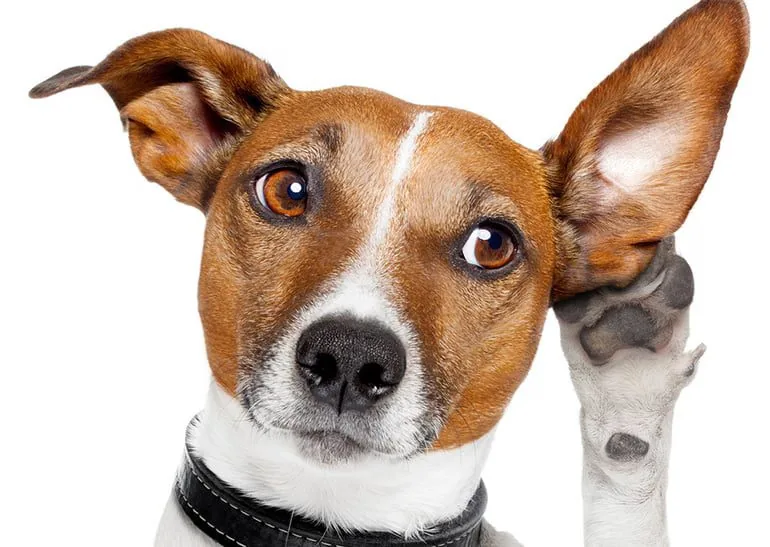
Dogs Tell Apart the Components of Human Speech
Explaining the process in more detail, the brain is split into two hemispheres, each with different specialisations. So, it's possible to understand words and sentences, but also intonation and gestures that correspond to non-verbal language and help interpret the meaning of words.
Studies have confirmed dogs have the ability to understand both elements of human communication, though it's not possible to determine to what extent. And not only that. It has also been concluded that dogs understand the words and not just the intonation, so the order in which we say them when talking to them matters.
The language comprehension process the brain carries out, which we said is similar between dogs and us, may have been encouraged by domestication. A dog who understands would have benefited from being around people. In light of this data, the level of understanding shown by dogs has put them roughly on a par with two-year-old children.
Words of Praise for Your Dog
Studying a dog's brain through MRI has also revealed that the words of praise we direct at them are perfectly understandable to them. They're interpreted in a part of the brain devoted to pleasure, the same area that responds to, for example, food and strokes.
This lets us say that, when training a dog, it's not only possible to reward them with food. Our strokes and words of encouragement can also make for a good reward. Dogs' capacity for understanding can explain the relative ease with which we manage to teach them basic obedience commands.
Some dogs even manage to learn fairly complex tricks. What's more, the dog is highly motivated. They genuinely want to communicate with us. The bond between humans and dogs is so close that we're their reference point above their own kind. They constantly seek to please us and win our approval.
Talking to Your Dog
To sum up, dogs have some interesting abilities when it comes to understanding us and interacting with us. This doesn't mean, though, that they understand every single word we say to them. That is, it has indeed been proven that they recognise some words, the ones they hear very often.
What's more, though, they also manage to sense whether our tone is one of praise, anger, sadness and so on. The number of words most dogs manage to recognise puts them on a par with two-year-old children. Even so, there are considerable differences between breeds and individual dogs. It's also worth bearing in mind that dogs are experts at watching us.
They pay attention to our every movement, which gives them important information when interpreting us, or makes us believe they're understanding us. This isn't a shortcoming at all, since dogs have developed varied visual, auditory and scent-based communication that lets them interact successfully with us beyond words.
Bibliography Andics A., Gábor A., Gácsi M., Faragó T., Szabó D. and Miklósi Á. 2016. "Neural mechanisms for lexical processing in dogs". Science DOI: 10.1126/science.aaf3777. Fogle, Bruce. 1999. Los perros hablan sobre sus dueños. Madrid. Ateles Editores.
IMPORTANT: This article is for informational purposes only and does not constitute veterinary, nutritional or behavioural advice. Every dog is different, and only your trusted vet can advise you on its specific needs.