 Care
Care
Signs a Dog Is About to Give Birth
It's completely normal to be full of doubts once our female dog gets pregnant. When will she give birth, will we know how to help her once labor starts, how long does the whelping process take, and so on… We should stay calm, it's all much simpler than it seems, and if everything goes as it should, we can handle the birth ourselves.
It's important to keep a few tips in mind to make the birthing process easier for our female dog, especially if it's her first litter: watch her closely during the last days of pregnancy and support her at every step. You'll need to try to figure out whether your dog wants to give birth with you around, or would rather have a quiet, dark spot away from everyone.
Here at SoyUnPerro we'll go over the clearest signs that labor is about to start and how to respond.
How long does a dog's pregnancy last?
The total length of a dog's pregnancy varies a lot depending on her age, size, and breed. Some female dogs have a gestation cycle of just fifty-five days, while others go almost as long as seventy days.
Since we should be going to the vet for routine ultrasounds to check everything is fine, they'll be tracking how far along our dog's pregnancy is. Through the ultrasound they can assess the puppies' development and estimate an approximate due date.
Dogs generally don't follow any set date for this — they simply start giving birth when nature tells them the time has come, when their body signals that it's time.
Either way, it's worth getting as close an estimate as possible to the due date, since this allows for better care and preparation in order to prevent neonatal losses or other complications. Estimating a date as close to reality as possible lets us make better decisions when it comes to planning a C-section, in cases where one is needed.
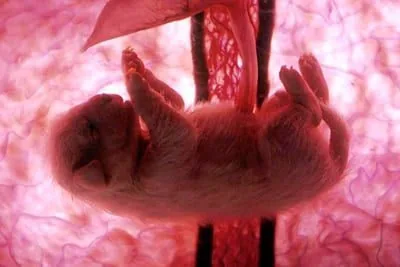
What symptoms does a female dog show when she's about to give birth?
Labor happens in 3 stages (dilation of the birth canal, delivery of the puppies, and delivery of the placenta). Each of these stages comes with hormonal changes that produce a series of symptoms.
Although these symptoms shouldn't be taken as absolute rules, since every dog is different and not all of them show them the same way… generally speaking, most female dogs show one or several of these symptoms.
Let's go over what they are, what they look like, and how we should respond. Remember that a dog giving birth is an intimate moment. Her attitude toward her owner can vary — while some dogs prefer having you around, others will look for a secluded, dark spot to give birth.
Finding the ideal place to give birth
One very common sign is that our female dog will look for a cozy, quiet place to give birth, usually somewhere that in some way resembles a den. Our dog will look for a safe, quiet spot at home or outdoors and will start adopting comfortable positions as the moment approaches.
Some dogs curl up into a ball, as if incubating an egg — this is known as the "nesting" position. This kind of behavior gives us clues that the time to give birth is near.
She seeks your attention and avoids other dogs
When our female dog senses the moment is near, she'll try to keep other dogs or animals away from her. This is an ancestral form of protection to stop other animals or dogs from trying to attack her while she's giving birth or trying to harm her puppies.
If we have other dogs at home, we should keep them from bothering the mother-to-be and separate them. On the other hand, in most cases it's completely normal for the female dog to seek out her owner and want their attention — she knows she's about to give birth and wants you by her side, helping and supporting her.
If you think this situation might overwhelm you, you can call the vet to be with you during the birthing process. That said, it's something you can handle yourself as long as there are no complications. If you notice your girl is more anxious than usual, it's because the time to give birth is near. It's completely normal for them to be more agitated than usual, since it's an exceptional event for them too.
My dog is licking herself and discharging fluid
Another clear sign that labor is near is exactly this: when our female dog starts licking herself insistently, after a while we may notice a viscous fluid starting to come out of her genitals.
This is a mucus plug that forms naturally to prevent infections from entering through the uterus, and before giving birth, she expels this plug, which can look greenish, whitish, or yellowish. It's a bit unpleasant to look at, but nothing to worry about, since it's completely natural.
It's also common for her not to eat her usual kibble or food, since in the hours or days before labor dogs often lose their appetite and may even have nausea and vomiting. This shouldn't worry us too much. Not worrying too much does NOT mean stop watching for every change — this applies to every stage of labor and even to the postpartum period.
Drop in temperature and increase in contractions
A good trick for telling when our female dog is in labor is to take her body temperature rectally. Her normal temperature in the days before labor will be around 38°C (100.4°F), but as the time to give birth approaches, her temperature will drop by one or two degrees.
This drop in temperature is due to the sudden fall in progesterone levels (the hormone that drives the labor mechanism). Contractions are also a clear sign that labor is imminent, just as with humans. We can see our dog's contractions in her belly, time them, and watch the miracle of life unfold.
What should I do while my dog is giving birth?
Really, there's not much we need to do — once she's accepted our company, just support her with all our love. Once our dog has chosen her spot to give birth, we should lay down clean towels or sheets there so she feels comfortable.
As the moment approaches, she'll settle into a comfortable position for labor — she may lie on her side and wait for the puppies to be born one by one, or stay standing and let them drop carefully. Sometimes up to forty minutes can pass between one puppy and the next, so we need to be very patient.
It's important to watch how the puppies are presenting — if the head comes out first, everything's going fine; if you notice the hind legs coming out first, it's not necessarily going wrong, but it does require some help from you. It's a very simple procedure, and you should stay as calm as possible, so your dog doesn't pick up on any fear from you.
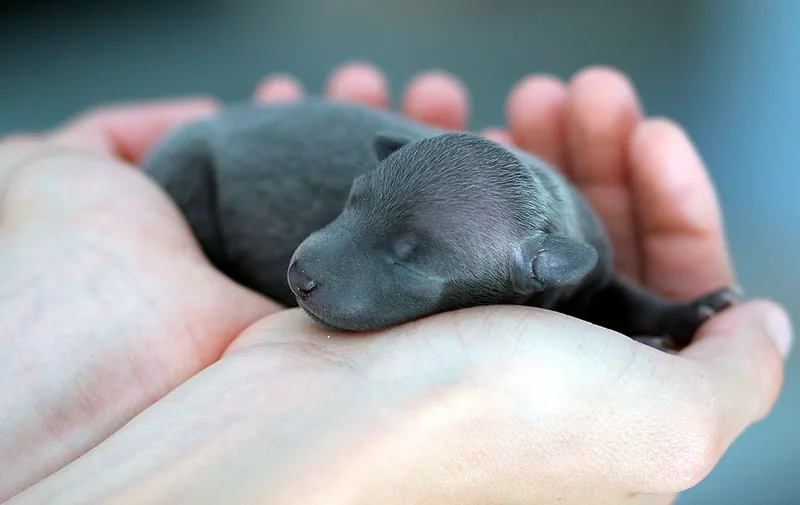
You'll take hold of the newborn by its limbs and, timing it with each uterine contraction, gently help it come out. Once the puppy is born, the mother will start licking it until it breathes on its own. We shouldn't intervene as long as we see our dog has cleared all the membranes and fluid from the airway.
Otherwise, we'll do it ourselves with a clean cloth we've prepared beforehand. Our dog will then pick up her puppy to nurse it, or, alternatively, the puppy itself will make its way to one of her teats.
Once all the puppies have been born, we simply need to make sure they're comfortable with their mother. In very large litters, the smallest puppies can miss out on nursing, so we can place them as close as possible to a teat, and the scent will let the puppy find it and start nursing.
Making sure nursing happens within the first 36 hours is essential to your puppies' future health. Sometimes dogs eat the placenta and other birth remains — this is very normal and natural, since it contains a lot of the nutrients our dog needs.
If during labor we notice that a puppy is stillborn or dies, we should remove it. If we notice any complications during labor, such as black or very dark, foul-smelling blood, we should call the vet urgently.
How many puppies can a dog have?
It's impossible to say exactly how many puppies a pregnant dog will have, since depending on her size, breed, number of matings, history of previous litters, and health, she could have two, three, or even ten puppies in a single litter. Don't panic if there are more — there are documented cases of a single litter having up to fifteen puppies.
That said, our vet can give us a precise number of puppies, since thanks to the routine ultrasounds they perform on our dog, they'll be able to see and count them. If the number of puppies is higher than what you can keep, you should start looking for homes for them by the time they're two or three months old and can be separated from their mother.
How to care for a dog and her puppies after giving birth
Puppies should keep nursing from their mother until at least two months of age, so our job with them will mostly be looking after their comfort and hygiene.
Lay down clean towels or sheets regularly, clean up their waste and urine, and so on. Our dog, having just given birth, should be given food specifically formulated for nursing mothers. You can find this type of food at any veterinary clinic, and it's highly recommended, since it contains many nutrients essential for nursing and for helping our dog regain her strength.
It would also be a good idea to keep an eye on her temperature in the first hours after giving birth. It's a very simple check — just touch her nose: if it's warm, that could mean a fever, but in most cases she won't have one.
A fever sometimes occurs when membrane remnants have been left inside your dog, in which case you should call your vet. You should keep strangers your dog doesn't know away from her or her puppies, since her protective instinct can kick in and she may become defensive.
Beyond that, the vet will guide you on what to do based on the puppies' condition. Remember to pick some lovely names for your puppies and give them all the love they deserve. To them, you're part of their family too — don't let them down.
IMPORTANT: This article is for informational purposes only and does not constitute veterinary, nutritional or behavioural advice. Every dog is different, and only your trusted vet can advise you on its specific needs.