 Care
Care
Effects of Antihistamines in Dogs
Antihistamines are a very well-known group of drugs, especially among people who suffer from allergies. Because of this, they're easily found in home medicine cabinets, giving us a false sense of harmlessness.
This means that if we assume our dog shows allergy symptoms, we might choose to give it the antihistamine that works for us, without consulting the vet. This is a very serious mistake, as we'll see below.
Everything You Need to Know About Antihistamines
Antihistamines get their name from their action. They manage to inhibit the action of histamine. Histamine is an amine, meaning an organic chemical compound derived from ammonia.
It's mainly known for its role in the immune system's local responses, helping the inflammatory process. But it also plays an important role in stomach function, triggering gastric acid secretion, and as a neurotransmitter between neurons.
A good number of antihistamines are sold commercially, since they're drugs that have been in use for decades. This is why they can be grouped into what are known as generations, more or less advanced. The most recent ones are considered effective and have fewer side effects.
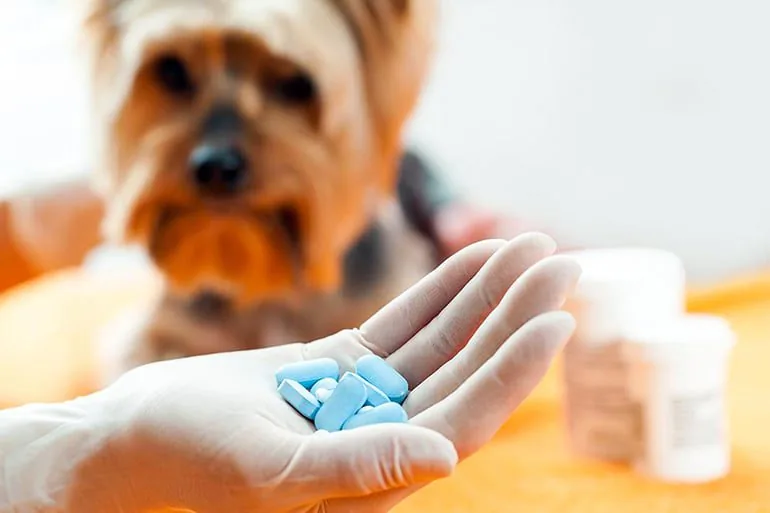
Use of Antihistamines in Dogs
Antihistamines are usually used to treat allergy symptoms. Specifically, they reduce the effect of the histamine released during these processes, which causes symptoms like nasal and eye discharge or itchy eyes.
Histamine also plays a role in severe allergic reactions. Antihistamines work by blocking histamine receptors. There are four types: H1, H2, H3, and H4. Specifically, the ones linked to allergies are H1.
H2 receptors are linked to hydrochloric acid secretion. But in cases where we want to control this secretion, such as when treating gastroduodenal ulcers, antihistamines aren't usually used anymore. They've been replaced by omeprazole and similar drugs.
When to Give Antihistamines to a Dog
Although drugs with an antihistamine effect are widely used in human medicine, in veterinary medicine, specifically for dogs, they're not as commonly used. In dogs, they haven't shown the same effectiveness for allergies.
That's why it's important to use them only if the vet considers them necessary. So, it's not a good idea to give our dog one of our own antihistamines. At best, it could turn out to be completely ineffective. In cases of allergy, vets usually turn to corticosteroids as a first option.
Only when the dog has mild itching that doesn't go away might they consider antihistamines. Some studies point to their effectiveness for treating atopic dermatitis when given alongside omega-3 and omega-6 fatty acids.
Treatment for Anaphylactic Shock in Dogs
Anaphylactic shock is a severe allergic reaction. It can occur after giving medication, insect stings, or, in very rare cases, vaccine injections.
It triggers easily identifiable symptoms such as swelling and discomfort at the point of contact, nervousness, vomiting, breathing problems from the larynx swelling, etc. In these cases, you should never give the dog one of our antihistamines.
This is an emergency that the vet needs to treat, giving different drugs intravenously or subcutaneously, and even oxygen. So, giving an antihistamine during anaphylactic shock won't just fail to help the dog — it can delay necessary treatment.
Antihistamine Options for Dogs
The antihistamines shown to be effective in dogs belong to the second generation of these drugs. But this in no way means we can give them without the vet's prescription.
Only this professional can decide which antihistamine is most suitable and at what dose we need to give it. Each specific case needs to be considered. These are:
- Loratadine.
- Diphenhydramine or Benadryl.
- Hydroxyzine or Atarax.
- Terfenadine.
- Cetirizine.
- Clemastine or Tavist, chlorpheniramine + hydroxyzine, and oxatomide have shown some effectiveness in controlling itching.
Side Effects of Antihistamines in Dogs
If we follow the vet's instructions for giving antihistamines, adverse effects are rare. Either way, these effects occur in very few cases.
They're usually limited to drowsiness or gastrointestinal symptoms. If we notice these or other symptoms in our dog after giving antihistamines, we need to tell the vet. Other effects that could show up include the following:
- Tremors.
- Lack of coordination.
- Excess salivation or drooling.
- Very pronounced panting.
- Heart disturbances.
- Anxiety.
Bibliography Bravo, Verónica; Martorell, Ana María; and González, Jose Luis. 2011. Opciones terapéuticas para la dermatitis atópica canina. Portal Veterinaria. Carlson and Giffin. 2002. Manual práctico de veterinaria canina. Madrid. Editorial el Drac. Domínguez, Juan Alberto. La atopía en las mascotas. Revista Ateuves nº 42. pp. 20-25. Portal Veterinaria. 2001. Enfermedades alérgicas en caninos. Apunte.
IMPORTANT: This article is for informational purposes only and does not constitute veterinary, nutritional or behavioural advice. Every dog is different, and only your trusted vet can advise you on its specific needs.