 Breeds
Extinct Dog Breeds
There are more than 400 dog varieties in the world, and more have been created in recent years. But do you know the extinct dog breeds? These are types of dogs that have disappeared today for various reasons.
Some of these breeds disappeared at the hand of humans, while others died out naturally. We'll show you which they are, along with their characteristics. Ready?
How Many Dog Breeds Are Extinct?
Throughout history, various breeds have gone extinct — do you know any of them? Today, records exist for 28 extinct breeds.
They are the following:
-
- Alano
- Levesque
- Cuban Dogo
- Chiribaya Shepherd
- Old English Bulldog
- Braque du Puy
- Russian Retriever
- Bullenbeisser
- Alpine Mastiff
- Bull and Terrier
- North Country Beagle
- Argentine Polar Dog
- Brazilian Tracker
- Yaghan Dog
-
- Celtic Hound
- Southern Hound
- Moscow Water Dog
- Talbot
- Cão de Fila da Terceira
- St. John's Water Dog
- Cordoba Fighting Dog
- English White Terrier
- Spanish Pointer
- Hawaiian Poi Dog
- Dorset
- Kurī
- Turnspit Dog
- Tweed Water Spaniel
Learn the history of some of these varieties below.
Kurī
First on this list of extinct dog breeds is the Kurī, a canine variety from New Zealand and Polynesia. On these islands, it was bred as food for Māori tribes, though it was also a companion animal.
The Kurī's appearance was similar to a wolf's: a small body, short legs, and a pointed muzzle. The coat was short, and records suggest it had a shy personality.
This breed disappeared during the 19th century, since it preyed on livestock belonging to the islands' colonizers. It's said that wiping it out wasn't difficult, since the breed's population density was already low.
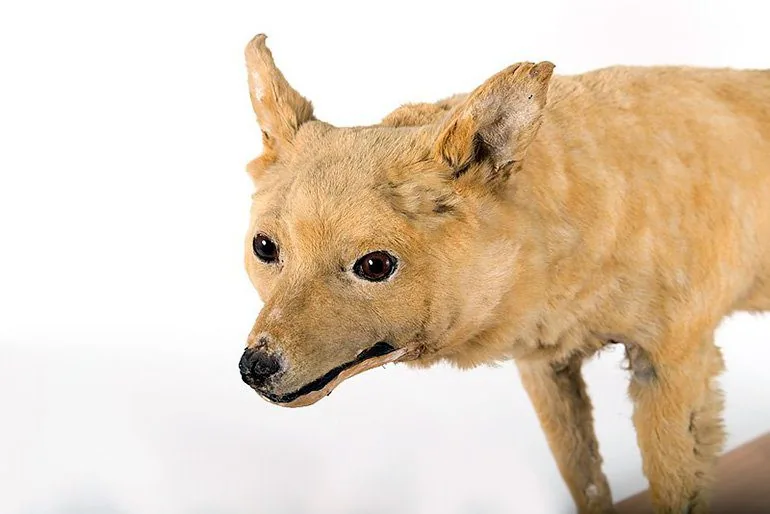 A Kurī dog specimen at the Otago Museum
Bullenbeisser
Also called the German Bulldog, the Bullenbeisser is one of the oldest dog breeds on record. Current breeds like the Great Dane and the Boxer descend from it.
The Bullenbeisser existed 2,000 years before Christ, when it was found across Asia and Africa. Surviving illustrations identify it as a molosser-type dog: strong, tall, and big-headed. It's believed to have been used as a war animal at the time. It was also the perfect companion for hunting wild boar and other large game.
The breed began disappearing as a result of crossing with other dog varieties. The main reason was that, over the centuries, dogs were put to other uses, requiring different traits.
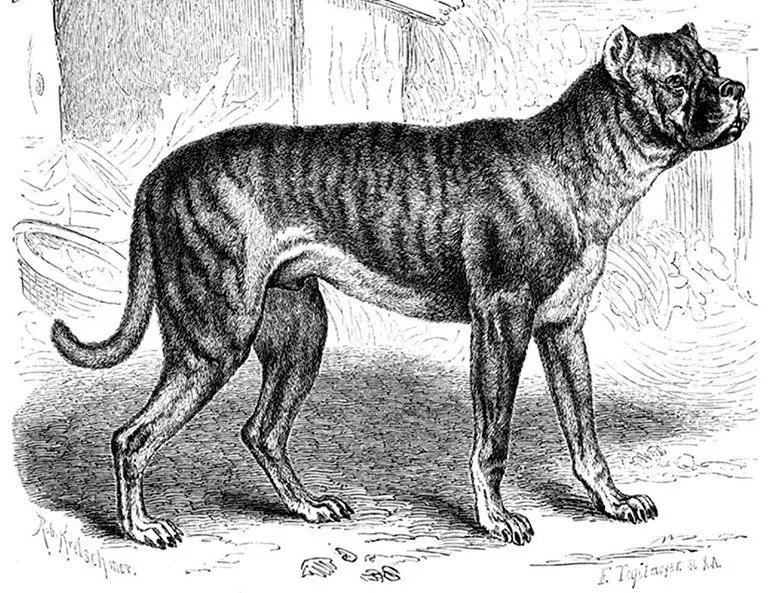 Charcoal recreation of the Bullenbeisser breed
Cordoba Fighting Dog
There are also extinct Argentine dog breeds, and the Cordoba Fighting Dog is one of them. It appeared during the 20th century, from crosses between the Boxer, the Spanish Mastiff, the Bull Terrier, and other dog breeds.
It was a solid, tall, sturdy dog. The head was large and the ears small and triangular. The breed went extinct quickly, since it was known for being very violent. It easily attacked people and even dogs of its own breed, which is why it was rarely bred.
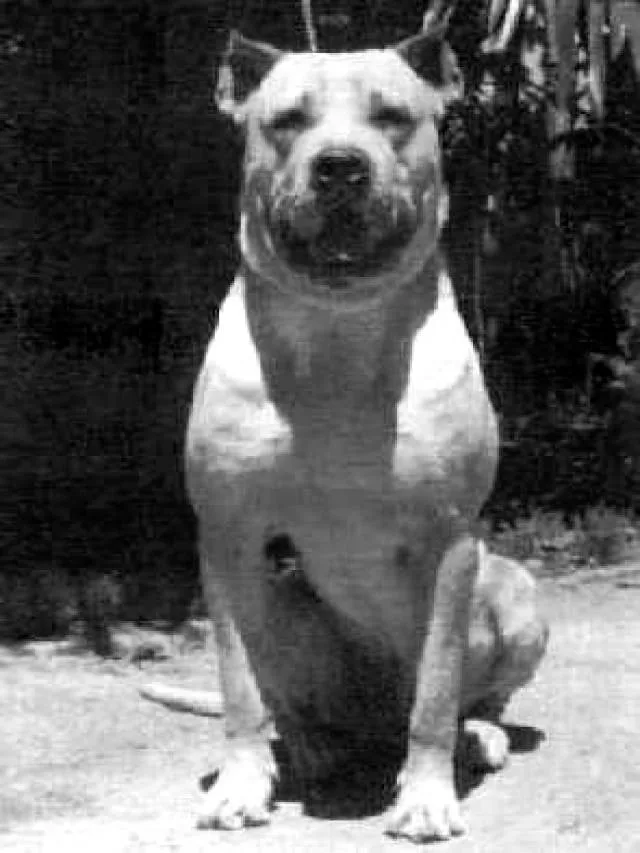 Cordoba Fighting Dog
North Country Beagle
Native to Great Britain, the exact date the North Country Beagle began being bred is unknown, as is the moment of its extinction. That said, it appears to have happened in the early 19th century.
It was a tracking hound, and records show it stood out for its speed while running. It was medium-sized with long legs, a well-proportioned body, and a raised tail. Its ears also hung down to the base of the neck.
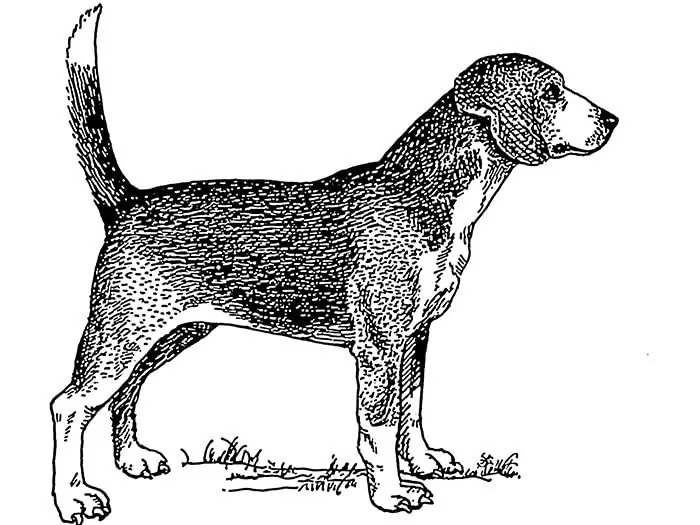 Charcoal recreation of the North Country Beagle breed
Celtic Hound
Another extinct dog breed is the Celtic Hound, a dog native to Ireland. Records of its appearance survive in jewelry and paintings that have outlasted this European culture.
The Celtic Hound was similar to Greyhound-type breeds. It was tall, lean, and long-legged, which is why it was used for hunting, as well as serving as a companion dog.
Brazilian Tracker
The Brazilian Tracker was native to Brazil, where it was used as a scent hound. It had been recognized by the Fédération Cynologique Internationale in 1967.
It was a medium-sized, lean dog, with long legs and drooping ears. Unfortunately, every individual of the breed died in 1973. A single kennel handled breeding the Brazilian Tracker, and that year, a worker there accidentally poisoned all the dogs by miscalculating a dose of tick insecticide.
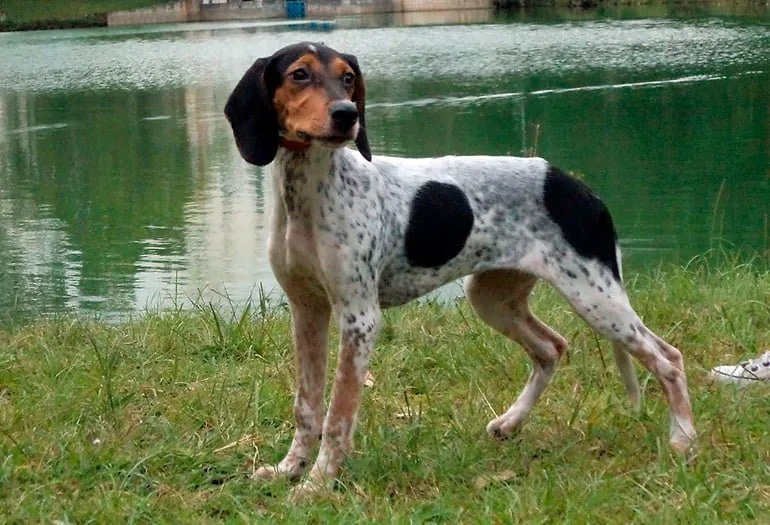 Brazilian Tracker breed
Talbot
Another extinct dog breed is the Talbot. Native to Normandy, it's a very ancient breed. During the 11th century, William the Conqueror brought it to Great Britain, where it also began being bred.
The Talbot was a large hunting dog with a white coat. The exact time of its extinction is unknown, but it's presumed to be the ancestor of today's Beagle and Bloodhound breeds.
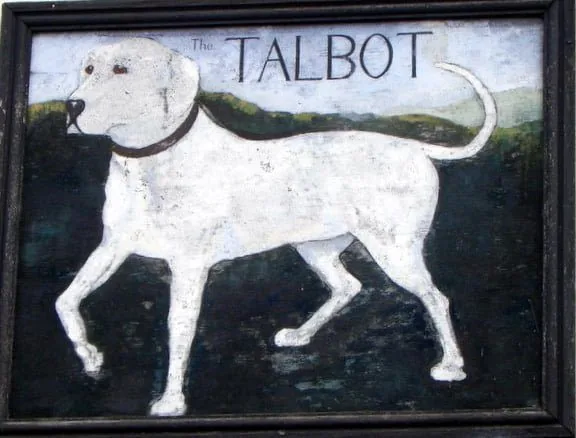 Painting of a Talbot dog
Cuban Dogo
The Cuban Dogo was a Mastiff variety. Its origin is unknown, but for a long time it was bred in Cuba to hunt escaped enslaved people and for dogfighting.
It was a solid, large, sturdy dog. It had a large head, but a flat muzzle and drooping lips. When slavery was abolished, the breed began crossing with other dog varieties and disappeared.
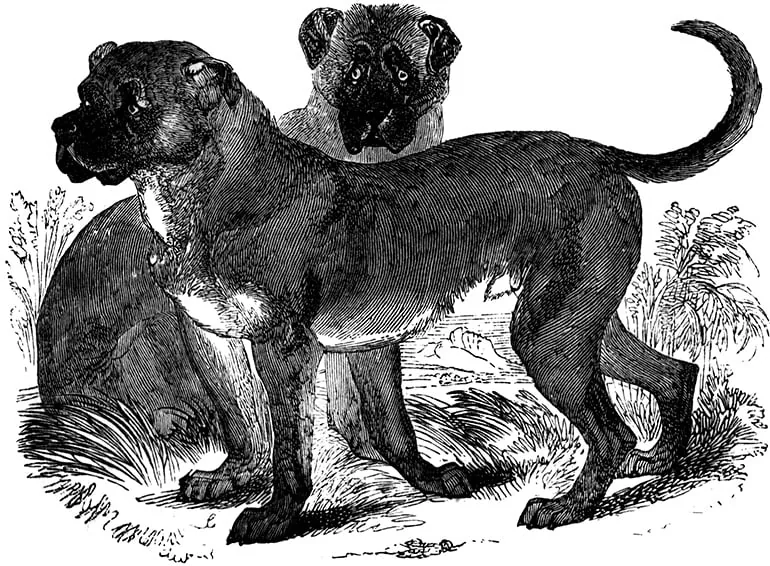 Charcoal recreation of the Cuban Dogo breed
Alpine Mastiff
The origin of the Alpine Mastiff is unknown. It was a molosser-type dog, which is why it was known for its large size, muscular body, and strength. The coat, meanwhile, was brindle.
This dog disappeared naturally through crossing with other dog varieties. It's estimated to have gone fully extinct sometime after 1829.
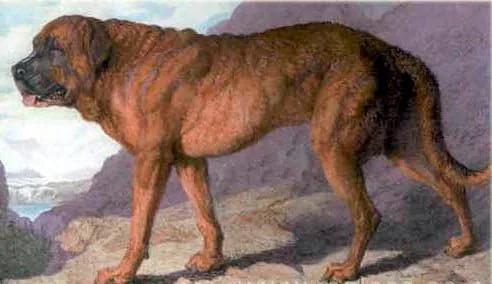 Illustration of an Alpine Mastiff
Tweed Water Spaniel
The Tweed Water Spaniel was a breed developed in England, though there are no records of its exact origin. The breed was popular in Norham, south of the River Tweed, from which it takes its name.
Like most water dogs, this variety's body was medium-to-large, known for having only a chestnut-colored coat. It's an ancestor of current breeds like the Golden Retriever.
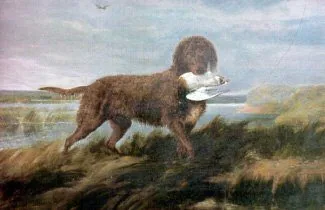 Recreation of a Tweed Water Spaniel
IMPORTANT: This article is for informational purposes only and does not constitute veterinary, nutritional or behavioural advice. Every dog is different, and only your trusted vet can advise you on its specific needs.