 Breeds
French Bulldog
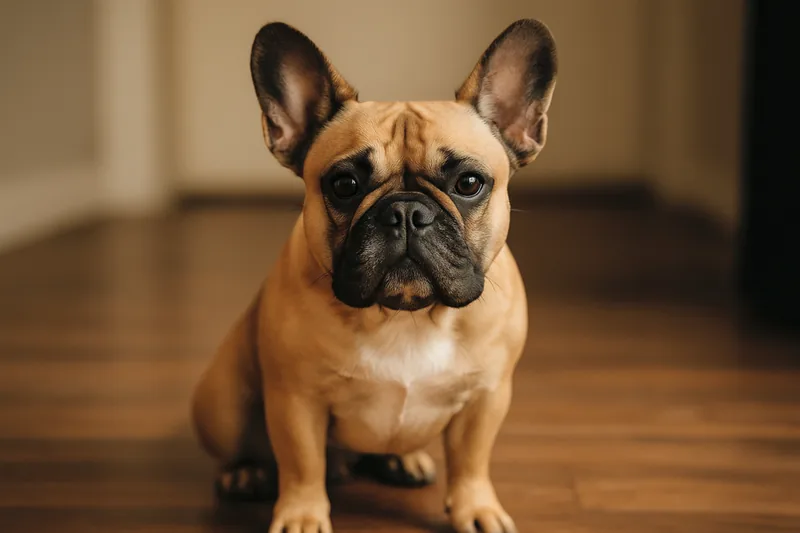
The French Bulldog is far more than a flat face and bat ears: it's a concentrated dose of charisma, stubbornness, and tenderness packed into a compact body. Its popularity keeps growing, but behind that alert gaze and easygoing gait hides a very particular anatomy that demands informed, attentive owners. Let's discover everything that makes this little molosser unique, from its textile-mill origins to the care that ensures its wellbeing.
The Technical Profile of a Miniature Molosser
The French Bulldog is a solidly built, muscular, compact dog, with a height at the withers ranging from 27 to 35 cm and a weight falling between 8 and 14 kg, with no significant difference between males and females. The official American Kennel Club (AKC) standard considers a dog around 30 cm tall ideal, always aiming for a balance between proportion and sturdiness.
Its coat is short, smooth, and glossy, accepted in three basic patterns: brindle, fawn, and brindle with white markings. Any combination that includes white is valid as long as the base color is one of the two mentioned above. Solid black, blue-gray, chocolate, and the merle pattern fall outside the standard — colors that, while eye-catching, don't reflect the breed's traditional genetics. Average life expectancy runs between 10 and 12 years, potentially reaching 13 or 14 with excellent veterinary management.
From English Textile Mills to Parisian Boulevards
Although its name immediately evokes France, the French Bulldog has its roots in Industrial Revolution England. In the textile workshops of Nottingham, lacemakers bred a scaled-down version of the English Bulldog that served as company and, literally, as a foot-warmer during long sewing shifts. As the industry became mechanized, many craftsmen moved to northern France, bringing their little bulldogs along.
In towns like Calais and across Normandy, local breeders saw the potential in those affable, compact dogs and began selecting them for their sociability and tiny size. The decisive leap came in late-19th-century Paris, where the breed became an emblem of the bohemian middle class and artistic circles. There, the two traits that would set it apart from the English Bulldog were fixed: erect bat ears and a calm yet always alert temperament, completely divorced from any working or fighting role.
A Clown With a Velvet Soul
The French Bulldog is a cheerful, affectionate dog, deeply attached to its family. It doesn't handle loneliness well and needs physical contact and constant stimulation, which makes it the ideal candidate for households where someone is usually around. Its serious expression is deceiving: it's actually a playful companion with an irresistible clownish streak, capable of following its owner around the whole house and demanding affection with snorts and theatrical poses.
Its natural sociability makes it excellent with children and other animals, as long as the relationship is built on mutual respect. It's not a barky or guarding dog, but it is a tireless observer that stays alert to every movement in the household. Its balanced temperament and need for constant company make it a deeply family-oriented dog, one that struggles with sudden changes and prolonged absences.
Secrets Only a Frenchie Holds
Few breeds can claim to have been born as a foot-warmer in English textile mills and gone on to become the favorite companion of Parisian bohemia. The French Bulldog owes its early popularity to the seamstresses and artists of turn-of-the-century Montmartre, who turned it into an icon of city life. Its characteristic flat head and erect ears, which so define its expression, were fixed precisely to set it apart from the heavier, drop-eared English Bulldog.
That same brachycephalic build that gives it such an endearing look, however, hides an anatomical challenge. A scientific study from the Royal Veterinary College showed that flat-faced breeds like the French Bulldog face a significantly higher risk of brachycephalic obstructive airway syndrome, underscoring the importance of responsible breeding and regular vet check-ups to ensure their quality of life.
Essential Care for a Full Life
The French Bulldog's brachycephalic anatomy demands special attention to its respiratory system. Brachycephalic obstructive airway syndrome (BOAS) is common in the breed and can show up as snoring, poor tolerance for intense exercise, and difficulty regulating body temperature. That's why walks should be short and scheduled during cooler hours, always avoiding extreme heat and high humidity, which can trigger dangerous heatstroke.
Its facial folds also need daily cleaning with specific wipes to prevent dermatitis and infection. Its spine, especially prone to disc herniation, means avoiding sudden jumps and stairs whenever possible. A balanced diet and weight control are essential, since excess weight worsens every respiratory and joint problem. With regular vet visits and careful management, this companion can enjoy a long, happy life.
IMPORTANT: This article is for informational purposes only and does not constitute veterinary, nutritional or behavioural advice. Every dog is different, and only your trusted vet can advise you on its specific needs.