 Breeds
Havanese
The Havanese is far more than Cuba's national dog: it's a lively, intelligent companion with astonishing adaptability. Its silky coat, compact size, and cheerful temperament have made it one of the most beloved family breeds in the world. Discover in this updated guide everything you need to know to understand and care for this small but wonderful friend.
What the Havanese Is Like
The Havanese is a small dog with a compact build, slightly longer than tall. Under the official American Kennel Club (AKC) standard, its height at the withers falls between 23 and 27 cm, with an ideal weight ranging from 3 to 6 kg in both males and females. This breed's life expectancy runs around 13 to 15 years, a notable lifespan for a dog of its size.
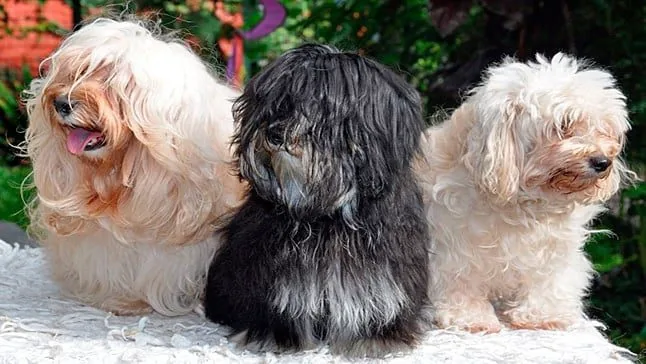
Its coat is one of its most striking trademarks: long, silky, and slightly wavy, without tight curls or a woolly undercoat. The standard accepts an exceptionally wide color palette including pure white, cream, champagne, gold, black, chocolate, and every possible bicolor combination, though merle and albino patterns aren't accepted. The tail, set high, curves gracefully over the back, forming a characteristic plume of long hair.
The head is well-proportioned, with a slightly rounded skull and moderate stop. Its large, almond-shaped, dark eyes stand out, giving it a sweet, alert expression. The ears, dropped and covered in thick hair, frame a face that's wider and sturdier-looking than other bichon-type breeds, reflecting a sturdier bone structure that gives it a firm, springy step.
Cuban Origin of the Havanese
The Havanese was born in Havana, Cuba, descending from the old Blanquito de la Habana, a small white dog that arrived on the island with Spanish colonizers. During the 18th and 19th centuries, selective crossing with other European companion breeds shaped the Havanese we know today, making it the favorite dog of the Cuban aristocracy.
The Cuban Revolution marked a dramatic turning point: many families left the country, and the breed came close to extinction. Its salvation came thanks to the dogs that emigrated to the United States, where American breeders led a selective breeding program that managed to rebuild the population. Although its current genetic base largely comes from those dogs brought to North America, in Cuba the Havanese remains a cultural symbol and the island's national dog. The Fédération Cynologique Internationale (FCI) later cemented its recognition as an independent breed, helping it spread worldwide.
Temperament of the Havanese
The Havanese's temperament is its greatest treasure. This is an exceptionally affectionate dog, deeply attached to its family, with a contagious joy that fills any household. It's intelligent and highly receptive to positive training, making it a diligent student as long as sessions are short and motivating. Its adaptability is extraordinary: it lives happily in a city apartment or a house with a yard, as long as it's close to its people.
Naturally sociable, it gets along wonderfully with children, other dogs, and even cats when socialized from puppyhood. It's not an overly barky dog, but it does make an excellent alarm. Its bond with family is so intense it can develop separation anxiety if left alone for long periods; it appreciates constant company and taking part in the daily routine.
Unique Traits of the Havanese
Few breeds can boast such a versatile, functional coat. The Havanese's coat barely sheds, making it a breed many people with allergies can tolerate. Its silky, wavy texture is different from any other bichon-type breed: thicker than the Maltese's and without the Bichon Frisé's tendency to curl.
From a medical standpoint, a scientific study from the College of Veterinary Medicine identified the Havanese among the breeds predisposed to congenital portosystemic shunts, a liver vascular abnormality that requires early diagnosis. This finding underscores the importance of vet check-ups in the first months of life.
Another distinctive detail is its springy, lively gait, the result of a compact yet athletic build that lets it move with ease and stamina. Its plumed tail and dark-eyed expression also give it an unmistakable air that reflects its Caribbean heritage.
Health and Care for the Havanese
Besides the liver shunts already mentioned, the breed can develop patellar luxation, hip dysplasia, and cataracts. Dogs with a lot of white on the head have a higher risk of unilateral or bilateral congenital deafness, so a BAER test is recommended for puppies. A schedule of regular check-ups and a responsible breeder who runs genetic tests are the best prevention.
Coat care demands dedication: daily brushing to prevent tangles and baths every two or three weeks with gentle products that respect the coat's natural texture. Many owners opt for a practical trim that makes upkeep easier without sacrificing looks. As for exercise, it needs moderate walks and daily play sessions; its intelligence appreciates interactive toys and scent-based challenges. It's not a physically demanding dog, but it does need constant mental stimulation to be fully happy.
IMPORTANT: This article is for informational purposes only and does not constitute veterinary, nutritional or behavioural advice. Every dog is different, and only your trusted vet can advise you on its specific needs.