 Training
How Do Dogs Communicate With Each Other and With Us?
Plenty of people live with dogs at home, but not everyone knows the particulars of canine communication. This means misunderstandings often happen between the two species.
Below we'll go through the forms of canine communication so we're clear on what our dog is trying to tell us and what we need to pay attention to for successful life together. Are you in?
Do Dogs "Talk"?
Logically, dogs won't use their voice the way we do, since we base our interactions on verbal communication built on words with a signifier and meaning, supported by so-called non-verbal communication. Dogs can also make sounds such as barks, growls or whimpers.
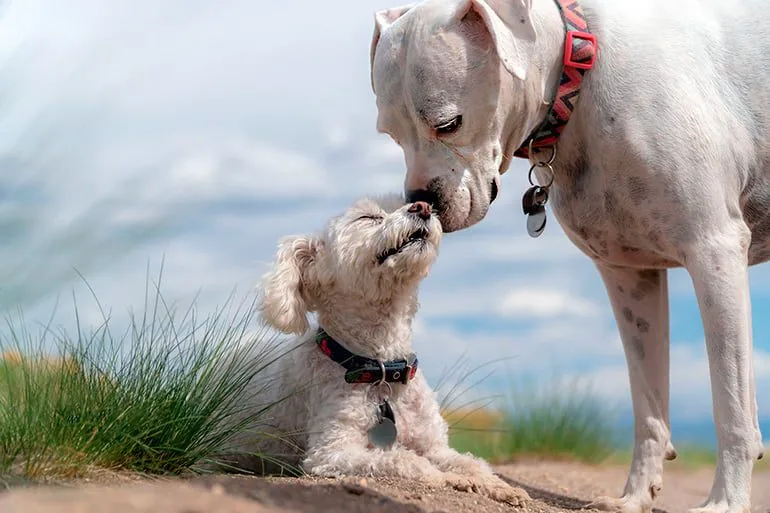
Even so, they mainly use their body, their sense of smell, and even touch to communicate. These would be, respectively, auditory, visual, scent-based and tactile signals. This is how they interact, mark their territory, and work out the state other dogs are in.
Let's not forget that, like us, they're social animals who need to communicate with their pack members. Problems arise when communication moves from their own kind to us. That's where interference happens. In other words, we don't always understand what the dog is telling us.
How Does a Dog Learn to Communicate?
There's an instinctive part to canine communication, but some learning is also needed. For this, the socialisation stage is essential, spanning from three to twelve weeks old. That's why it's recommended puppies stay with their mother and littermates at least until eight weeks old.
Canine Visual Communication
The face, ears and tail are mainly involved here, though the truth is the whole body plays a part. We can highlight the following signals, which should always be interpreted taking into account the whole set of signals the dog is giving at that moment, as well as the context:
- Eyes: a fixed stare, blinking, half-closed eyes, pupil dilation or contraction.
- Ears: pulled back, forward, up, relaxed, flattened.
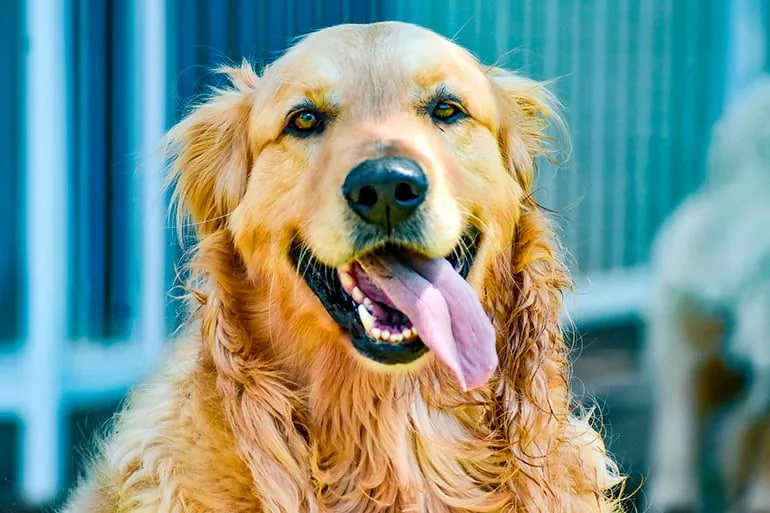
- Mouth: teeth visible, mouth closed or open, licking, nipping, muzzle nudges, yawning, panting.
- Head: tilted, placed on top of another.
- Body: straight, still, jumping, bent, in a mounting position, shaking, belly up, rubbing, turning their back, lying down, sitting, hackles up, a "play bow" posture.
- Paws: raising them, jumping, giving a paw, scratching.
- Tail: circular movements, fast, slow, stretched out, still, between the legs, curled.
Canine Scent Communication
Smell is a dog's most developed sense, so it inevitably plays an essential role in their communication. The huge number of olfactory receptors dogs have in their nasal cavity, along with the large amount of brain space devoted to interpreting scent, are responsible for dogs' astonishing ability.
They manage to detect illnesses and learn all of another dog's characteristics just by sniffing their trail. They can identify sex, age, whether or not they're in heat, or whether they have some condition. Let them sniff freely during walks.
This type of communication, which goes unnoticed by us, involves chemical substances known as pheromones. It can be direct or indirect. In the first case, it happens when there's direct contact between dogs. In the second, the dog sniffs a trail left by any animal, such as urine or sweat.
Canine Auditory Communication
This includes all vocalisations. Barks, howls, cries, shrieks, whimpers, growls, snorts, howling and even panting. Growls and, generally, deeper sounds are the most worrying, since they point to some threat.
On the other hand, higher-pitched sounds are linked to requests and pleas, such as shrieks or crying. To interpret them properly, we need to bear the context in mind and also pay attention to the frequency and intensity of the vocalisation. The most common will be barking, which can appear in a huge number of situations.
It's used, for example, to raise the alarm, seek attention, invite play, express nervousness, or give a warning. That's why, if your dog barks, go see what's going on. By the way, although howling is very typical of wolves, it's uncommon in dogs. It would mainly serve to locate and bring the pack together.
Interpreting Your Dog's Language
Broadly speaking, we can split the intentions behind canine communication with us into three categories: approach, when the dog shows themselves receptive; reserve, in cases where they show caution; and warning, a sign their patience is running out. Here are some very common examples:
- Approach: we should highlight the play-invitation posture. The dog rests their extended front legs on the ground and raises their hindquarters, wagging their tail. They may jump, bark in a high-pitched way, open their mouth, stick out their tongue and even growl. Notice that, in this case, the growl isn't a sign of aggression.
- Reserve: if a dog approaches us slowly wagging their tail, let's not make the mistake of thinking they're happy to see us. The tail wag only shows the dog is torn between approaching or moving away. We should stay calm until they make a decision. We can offer our hand palm-up and speak to them gently.
- Warning: a dog with a tense body, staying entirely still, doesn't want us to get any closer. If, on top of this, they growl, start lifting their lips to bare their teeth, pull their ears back and their fur stands on end, there's a risk they'll attack us. Stay still, don't stare at them directly, and wait for their owner.
Bibliography Carlson and Giffin. 2002. Manual práctico de veterinaria canina. Madrid. Editorial el Drac. Morris, Desmond. 1988. Observe a su perro. Barcelona: Plaza & Janés.
IMPORTANT: This article is for informational purposes only and does not constitute veterinary, nutritional or behavioural advice. Every dog is different, and only your trusted vet can advise you on its specific needs.