 Care
Care
How to Cope With Your Dog’s Death
Those who haven't had the good fortune of sharing their life with a dog can't understand the pain we feel when they pass away, when they stop being by our side, brightening our day and bringing out our best smile.
A dog isn't an animal, isn't a pet, isn't even "a dog"... When it shares its life with us, it simply becomes another member of the family, one we love with all our heart.
The nobility, loyalty, and good heart of these life companions makes us love them even more, if that's possible. Coping with our dog's death isn't easy, since it's the death of a very, very dear, close family member. Let's look at the steps we should follow to overcome this tremendous loss in the best way possible.
Grief
We need to be aware that the human mind is very complex, and it's not always enough to just cry for a few days to get over a loss. Instead, in most cases, we go through a series of stages we need to face one by one.
You've surely heard of them before — these are the stages of:
- Denial
- Anger
- Bargaining
- Depression
- Acceptance
After our dog's death, we'll likely go through each and every one of these stages, which could take several months before reaching the last one.
Denying our dog's death is something our mind does automatically — not understanding death is what makes us even more vulnerable. Our mind will keep seeing our dog in its usual spot, constantly bringing back memories, making us feel sad.
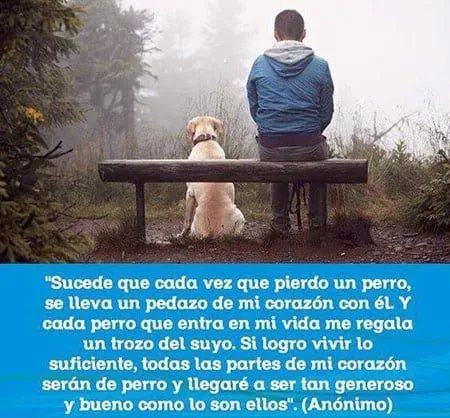
Anger is the next step, whether through tears and/or sobbing, or simply through hatred — hatred of death itself. Anger is necessary to help us let it out — crying, crying, and crying is, though it may not seem like it, a great help for the mind, a way to express its pain (and for our heart).
Our mind will try to find some balance, negotiating between accepting the dog has died and the anger — this stage is called bargaining. It's the stage where it seems like we're moving past it, but we still have bad days.
Depression is a stage that sometimes lasts longer than recommended — it's inevitable to feel sad when your life companion is no longer with you. But we should remember it's just a stage, a necessary step to help us cope with our dog's passing.
Acceptance is the last of the steps, when our mind understands that death is something natural, something that comes to every living being, and not necessarily something bad, just something unknown.
Our Dog's Life
A dog's life isn't measured by the day it dies, but by every single day of its life. If your dog had a happy life with you — if you took it out for walks, play, exercise... if you talked to it and gave it as much affection as you would your own children... then your dog had a fantastic life.
Dogs have a shorter life than humans, so we shouldn't be sad about their death, but happy about all the days we got to enjoy them, their affection, their games...
It's hard, and of course we need to cry... but we should also smile, because if our dog was happy and made us happy, what more could you ask from life?
Remember your dog with pride and love, because as long as its memory stays alive in your heart, it will never truly die. And it'll always be watching over you from dog heaven.
Tips for Moving Forward
Try to change your routines a bit — don't try to recreate your life with the dog, and take a step forward instead. Do new things, go to the movies, go shopping, take a hike in the mountains... Simply let time heal this deep wound, and be patient with yourself.
Maybe with time, maybe after some years... a new life companion will brighten your days again and bring back your sincerest smile. Give yourself a chance and try to be happy.
Always remember this — you shouldn't remember the death, but every single one of the wonderful days you shared together. A happy life is the most any living being could ever hope for.
IMPORTANT: This article is for informational purposes only and does not constitute veterinary, nutritional or behavioural advice. Every dog is different, and only your trusted vet can advise you on its specific needs.