 Care
Care
How to Get Rid of Fleas at Home
If you start noticing more bites on your body than mosquitoes usually give you, an odd itchiness all over, or tiny bugs moving around on the sofa or your clothes, you very likely have fleas in the house.
Those of us who live with dogs know the risk of a parasite infestation, but make no mistake — it's also possible to have fleas at home even without pets, since fleas are also happy to feed on our own blood.
We'll explain how to tell if you have fleas at home and, of course, how to get rid of them. Remember that fleas breed at an alarming rate, and within a few days you could have a full-blown infestation if you don't start exterminating them right away.
How do I know if there are fleas in my house?
Whether or not you have pets at home, you can end up with an infestation. Fleas can jump onto your clothes while you're out walking and settle into your home without you even realizing it, and your garden can even host fleas too. Within a few weeks they'll have multiplied so much that you'll no longer have "a few fleas," but a full infestation.
The most common way to tell if you have fleas is through the bites you'll notice on your body — unlike mosquitoes, which only bite once to feed, flea bites usually come in groups of three. The most common places to find these bites are around the legs or ankles, around the waist, the armpits, the chest, the groin, or in the folds of the elbows and knees.
Our dog can be a good indicator. If your dog is constantly scratching a lot, they very likely have fleas. You may also see dark, gritty specks on their skin — you can comb your pet against the direction of their fur, using a fine-tooth comb over a damp piece of white paper, which can help confirm the presence of flea dirt.
Another way to spot them is simply by looking — fleas are tiny, dark parasites just a few millimeters long, they move very fast, and they can jump great distances. If you look at your sofa, rugs, bed, or clothes and see these kinds of bugs, don't doubt it… they're fleas.
Adult fleas die within a week if they can't feed, but flea eggs and larvae can survive for many months without dying. Larvae dislike light, so they migrate to darker areas, such as under furniture or in rugs, waiting for the temperature and humidity conditions most favorable for them to thrive.
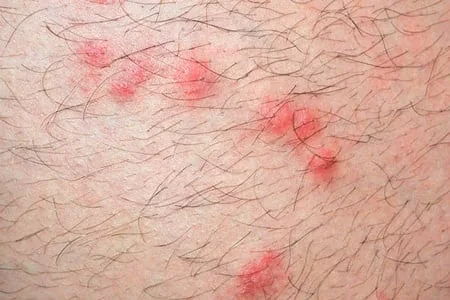 Flea bite on a human
How to get rid of fleas at home
In this case we need to run a comprehensive control plan on both the dog and their surrounding environment, paying special attention to rugs, sofas, and dark, damp spots. There's not much point getting rid of the fleas on your dog if the eggs and larvae will just reinfect them afterward and, worse, keep biting you too.
The first thing to do is disinfect and protect our dog, so fleas can't live on them or feed off them. There are several ways to get rid of fleas on your dog, both natural and chemical, but if you have a full infestation, we recommend going straight for chemical products such as collars and spot-on treatments.
The best way to finish off fleas on your dog, and any possible flea eggs and larvae, is to bathe your dog thoroughly with a specific anti-flea shampoo, which you can buy at any vet clinic.
Once your dog is flea-free and protected against reinfestation, it's time to move on to disinfecting the house from the flea infestation. Remember that we shouldn't just eliminate adult fleas — it's just as important to eliminate flea eggs and larvae.
Techniques for eliminating eggs, larvae, and adult fleas
The best way to get rid of this annoying infestation is with extremely thorough cleaning — dust all your furniture and vacuum your house deeply several times a day for a week.
You need to vacuum vigorously to help dislodge cocoons from carpets — the vibration also wakes them up and encourages them to emerge from the cocoon, making them more vulnerable. After each vacuuming session, remove the bag and throw it in the trash, to stop flea larvae from coming out and settling back into your home.
Larvae feed on other insects' droppings and on dust — if we vacuum the house often, we'll not only be taking away the larvae's food source but likely vacuuming up many of them too, considerably reducing their numbers.
Wash all your clothes, your bedsheets, and your pet's bed — you'll likely find fleas, flea eggs, or larvae. If the bed is very badly infested, it's best to replace it, but you can also wash it at 60°C (140°F) to make it safe again. Mop your floors with water and bleach to kill any potential eggs and larvae. Keep your dog away while you do this, since it could poison them.
Home remedies for getting rid of fleas at home
There are several tricks we can use to make life harder for a flea infestation at home and finish it off. If you've already done the previous step of vacuuming and washing clothes, it's time to move on to homemade flea remedies.
You can make a very effective repellent by putting half a liter of water, 10 drops of lavender oil, and two tablespoons of olive oil in a spray bottle. Shake and spray your house with the mixture. Another effective repellent is dissolving a small spoonful of neem oil in a liter of hot water and pouring the mixture into a spray bottle.
Go to a health food store and buy cedar bark. If you have a park or forest nearby with cedar trees, you can also collect bark there. Take the cedar bark and place pieces of it around the house, well distributed, on and under the sofa, on and under the bed, in furniture, and so on.
Place several shallow bowls around the house, on the floor. Inside, put equal parts water and apple cider vinegar, and leave the bowls there for several days. Fleas will be attracted to the liquid and unwittingly fall into the bowl, getting trapped and drowning.
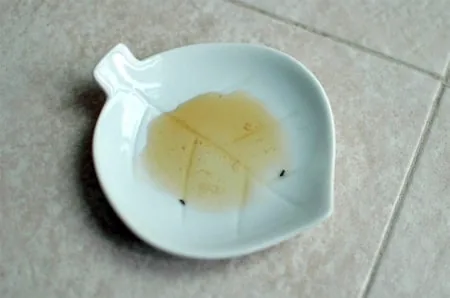
You can and should also use this same mixture to mop your entire house, every day for a week. In your mop bucket, put equal parts water and apple cider vinegar and mop the house with this mixture.
Plants that repel fleas and other insects
Plants bring life to your spaces and fill the air with wonderful scents, making them cozier — here we'll mention a few that, besides these qualities, also repel fleas without needing insecticides that are so harmful to the environment and to yourself.
- Lavender is a very hardy plant, so it doesn't need special care. Just try to keep it somewhere out of direct sunlight.
- Mint.
- Lemon balm.
- Citronella.
- Rosemary.
- Sage — just burn its leaves to keep insects away and your house fresh.
- Garlic.
- Marigold.
- Geraniums.
Major flea infestation at home: how to exterminate them?
If the infestation is so large you can't contain it, or it's simply making you so anxious that you don't want to live with them in your home for one more moment... the best solution is to call in professionals or start using more powerful chemical products.
Hiring a specialized company is the best option — pest exterminators will ask both you and your dog to leave the house for a few hours while they apply a highly toxic gas or chemical against fleas. This is, without a doubt, the strongest and most effective flea-killing option out there.
All the fleas, eggs, and larvae will die, and the poison will stop being dangerous for you and your dog within a few hours (which is why they ask you to leave). This is the most effective option for an out-of-control flea infestation at home.
That said, you can also buy chemical products and flea traps to use at home yourself. But remember, these products are also dangerous for your dog — you need to be extremely careful so neither children nor dogs touch, play with, or lick this poison.
If you choose to set the traps and poisons yourself, remember to leave them out for at least a month, since larvae and eggs can hatch at staggered intervals.
Tips - Conclusions
Fighting off a small flea infestation is simple — follow the steps above and they'll disappear in no time. However, when the infestation has spread widely, it's well worth calling in professionals. Remember that fleas hide in any crack in the floor, in rugs, sofas, even in beds and clothing.
The best way to prevent a flea infestation at home is by keeping our dogs protected. Prevention is the best solution — a flea and tick repellent collar can last three months, and combined with monthly anti-parasite spot-on treatments, your dog will be almost 100% protected.
IMPORTANT: This article is for informational purposes only and does not constitute veterinary, nutritional or behavioural advice. Every dog is different, and only your trusted vet can advise you on its specific needs.