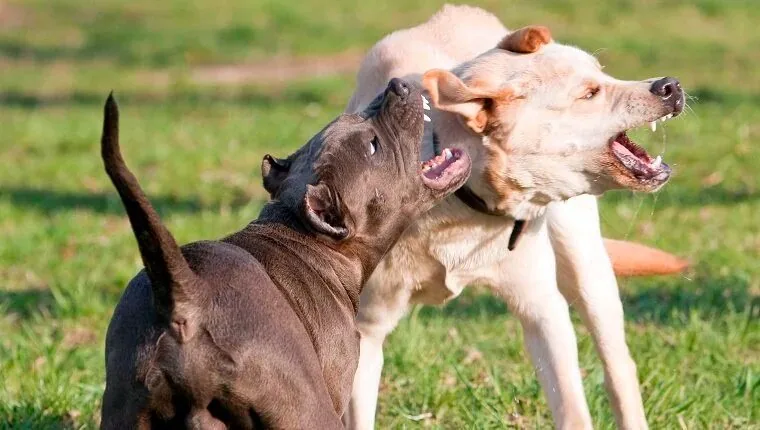
 Training
How to Release the Bite of a Gripping Dog
Almost everyone who shares their life with a dog cares about properly training and socialising them to prevent fights with other dogs or animals. Sadly, though, some people teach their dogs quite the opposite: to be aggressive and bite, causing as much harm as possible.
There are only two types of dogs when it comes to releasing a bite: gripping dogs, and every other dog. Separating other dogs in a fight is fairly simple, but releasing the bite of a gripping dog can be trickier, so let's explain step by step how to do it.
How to Know if a Dog Is a Gripping Dog?
We refer to gripping dogs as breeds such as Pitbulls, Rottweilers, American Staffordshire Terriers, Spanish Alanos, Presa Canarios or American Bulldogs, for example. These are generally the breeds classed as Potentially Dangerous (PPP), which in plenty of countries need a special permit and must always wear a muzzle, among other requirements.
These are dogs who, once they bite, won't let go of their prey. Instead, they apply force again and again until they kill it. That's why they're called gripping dogs.
Let's be clear that not every gripping dog is bad. The bad ones are the owners who don't train their dogs properly, whether gripping or not. Most people who have a gripping dog care about training and socialising them properly.
What to Do if a Gripping Dog Bites Our Dog
The first thing we need to do is stay calm, because if we get nervous we won't be able to act properly, and our dog will very likely die. So first of all, however hard it may seem given the tense situation, stay calm. Only by staying calm can you help your dog.
There are only two ways to release a gripping dog's jaw: through leverage, or through restricting their airflow. Although both techniques may sound a bit harsh, the truth is the gripping dog won't suffer harm, but will indeed release their prey — our dog or whatever animal they've bitten.
Remember dogs fighting are highly worked up and blinded by the moment — they won't know whether you're their owner or another threat, so they may bite you. It's very dangerous to try to separate them, and you should always do it with extreme care.
Releasing a Gripping Dog's Bite Through Leverage
Once the gripping dog has bitten, they won't want to let go of their prey. So, carefully, we'll lift the lips off their mouth, and towards the back of the molars, where there's only gum, we'll insert a stick of considerable thickness so it doesn't snap, and apply strong leverage so they open up and let go.
With this technique, they'll generally open their mouth and release their prey, but since they're highly worked up, they'll try to bite again. So we need to separate the dogs very quickly and be very careful not to get bitten ourselves. Ideally this is done by the gripping dog's owner, since the dog knows them.
Releasing a Gripping Dog's Jaw by Restricting Their Airflow
This technique is the most effective of all, and no, we won't kill the dog or cause them harm. We'll just restrict their airflow a little so they release the bite, with no harm caused at all.
First we'll position ourselves on top of the dog, using our legs to apply pressure on the area between the ribs and the back legs. This will stop the gripping dog pulling backwards, so they don't tear their prey. This is an entirely necessary step for restraining the gripping dog a little.
Now we have two options for restricting the gripping dog's airflow a little so they release their bite within a few seconds — let's go through each one.
- With one hand, hold the gripping dog's collar firmly and twist it slightly, to pull it as tight as possible around their neck and also to control the gripping dog's head so that once they let go, they don't bite again. With your second hand, find the trachea under their jaw and press it firmly until the dog lets go.
- With a belt or a strong lead, wrap it around the gripping dog's neck and pull the loop up to the highest part of their neck, where you'll apply a lot of pressure by twisting the belt or lead to restrict the gripping dog's airflow so they release the bite.
Once they let go of their prey, you need to be extremely careful they don't go for it again, since they'll want to bite it once more. Also be very careful yourself, since they can bite you too.
What You Should Never Do if a Gripping Dog Bites Our Dog
Plenty of people get nervous and lose their calm, which makes the injuries suffered by the attacked dog even more serious because of tearing from the bite itself. That's why you should remember the things you should never do if your dog gets bitten:
- Don't shout at them, since this will make them more nervous and aggressive
- Don't hit them, since this will increase their aggression and anger
- Don't try to separate them by pulling them apart, since the tearing damage will be more intense and lethal
- Don't put your hand in between them, since they'll bite you
- Don't throw yourself on your dog to protect them, since you'll get bitten too
- Don't pull their tail or lift their back legs, and don't throw water, pepper spray or anything else at them — this doesn't work with gripping dogs.
The only thing you can do to release a gripping dog's bite is follow the steps above, using leverage with a stick or restricting their airflow with a lead, belt or hand.
How to Separate the Bite of Dogs Who Are NOT Gripping Dogs
For dogs who aren't gripping dogs, there's a far simpler, more effective technique that doesn't work with gripping dogs, but works perfectly with non-gripping dogs.
Both dogs' owners need to do this at the same time, or failing that, the owner of the attacking dog. It involves holding the dog by their back legs and lifting them so they're off the ground, as if floating. You can even try flipping them over — this will make the dog lose their balance and let go of the other dog.
If both dogs are biting, ideally do this with both dogs at the same time. If only one is biting, do it with that one. Always with plenty of care, since a dog fighting is blinded in the moment and, often, won't even recognise their own owner because of how worked up they are.
IMPORTANT: This article is for informational purposes only and does not constitute veterinary, nutritional or behavioural advice. Every dog is different, and only your trusted vet can advise you on its specific needs.