 Nutrition
How to Store Dog Food
When we buy food for our dog we have to consider, of course, its quality and how well suited it is to the life stage the dog is in. But it's also important to know how to store it so that it keeps in perfect condition.
Storage isn't something to think about only when we buy large quantities; food should always be kept somewhere suitable. It's the only way to keep its nutrients intact until the use-by date and prevent it from spoiling.
How to Keep Food Fresh
The first step towards storing it properly is to follow the manufacturer's recommendations. Although that seems obvious, the truth is that sometimes we buy our dog's food without paying much attention, which can leave us with an unpleasant surprise.
Every manufacturer will state on the packaging the use-by date of its product and will give guidelines for storing it properly. They usually ask that the food be kept somewhere cool and dry, off the floor and away from cleaning products, out of direct sunlight, in the fridge, and so on.
So before buying, take a moment to read the instructions on the packaging. In the case of kibble, also look at what the pack is like, whether it's plastic or paper, and check whether it has some sort of device that lets you close it properly. If it doesn't, you'll have to make sure you always seal it well yourself after each use.
Where to Store It
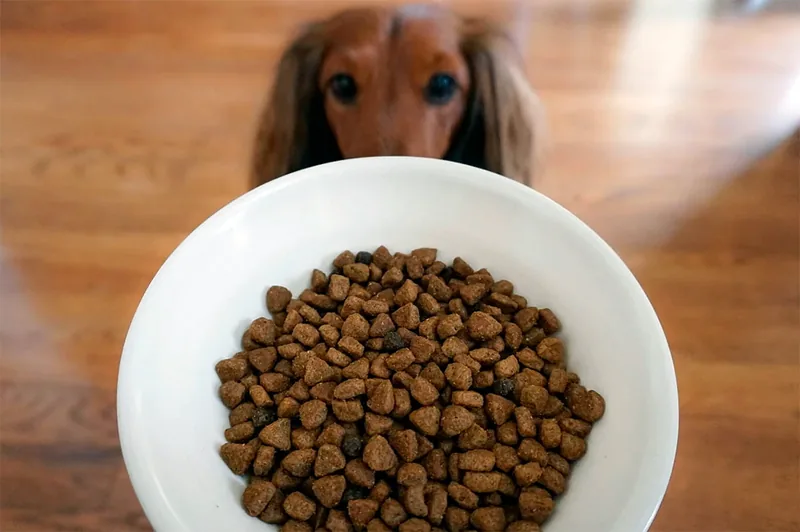
Depending on the requirements of the food you choose, you'll need somewhere to keep it stored. Normally, if you live with a small dog there won't be much of a problem, since a 1.5-3 kg bag of kibble, for example, can easily be kept in any cupboard.
By contrast, it's harder to store the 12, 15 or 20 kg that may be needed when the dog being fed is large or very large, or when there are several dogs in the house. In these cases it can be useful to turn to a kibble container with a lid that lets you keep it somewhere closed and sheltered from the sun and from potential attacks by insects or pests.
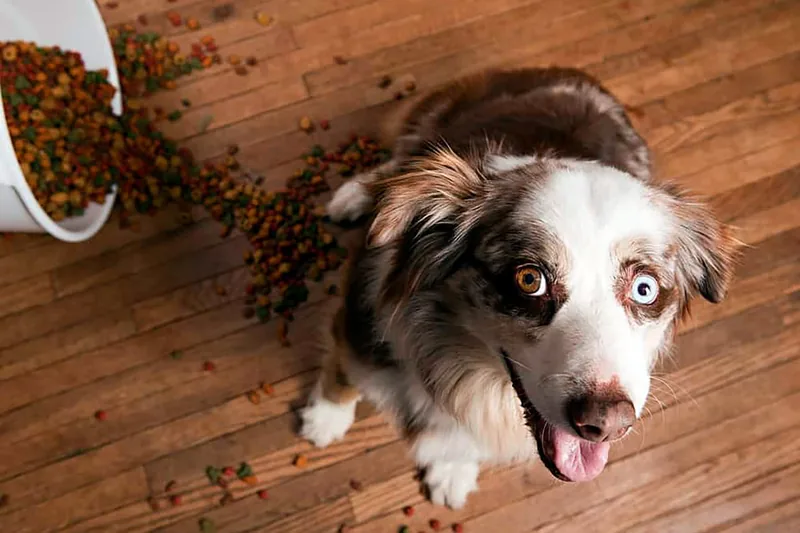
Keep it in its original packaging, but inside the container to protect it, or empty it in if the container has an airtight seal. Either way, the dog mustn't be able to get at the food. Some are such gluttons that they could eat a good many kilos the moment we look away, which would give them digestive upsets.
Why Protect Kibble From the Sun?
The action of the sun's rays can do a lot of harm to kibble, since it alters some nutrients. For example, it leads to the loss of vitamins and also affects the flavour. That flavour will turn more rancid, because vitamins act as antioxidants, helping preserve the fats, which without them deteriorate.
That's why it's recommended to always store food in the shade, but also somewhere dry. The presence of moisture encourages the appearance of mould, fungi or bacteria that seriously compromise not just the quality of the product but the dog's health.
How to Switch Kibble
When we're finishing off a pack of kibble we sometimes buy a new one and tip what's left of the old into the new one, or top up the container with the newly bought kibble, leaving at the bottom a kibble that's already been sitting there a long time. To guarantee it keeps well it's better to finish the old one off completely before opening another.
The use-by dates on these products are normally generous and stretch out over many months, but just in case, better not to mix. The manufacturer guarantees the product up to that date. Eating it later could mean a loss of nutrients. What's more, if we pay attention, the difference in freshness between the two kibbles will be considerable.
How to Store Wet Food?
If we give our dog the familiar tins, that is, wet food, everything already said about kibble applies to storing it. But this diet has the particular feature that, once the packaging is open, it's essential to keep it chilled.
At room temperature it would become an ideal environment for bacterial growth. You have to cover the tin well, to stop it drying out as far as possible, and keep it for just 2-3 days, in the fridge. It's usually difficult to close a tin properly with its own lid, but you can buy others specially designed for these containers.
There are also adaptable silicone ones, or you can fall back on the ever-handy aluminium foil or cling film. A little while before giving it to the dog it's a good idea to take it out of the fridge so it comes up to temperature, or warm the contents for a few seconds in the microwave and serve straight away, making sure it isn't hot enough to burn.
How to Store Homemade Dog Food
If we cook for our dog daily or now and then, it's common for us to make more than the portion it's going to eat in one sitting. That's why freezing is a good option. As soon as we finish cooking we should pack whatever we don't need into a glass container made for the purpose, cover it and, within two hours, put it in the freezer.
Each of these containers should have the date of preparation and the contents written on it, if the latter isn't perfectly identifiable. It's a good idea to freeze portions individually and always thaw them inside the fridge to prevent bacterial growth.
Bibliography Villagrasa, María. 2015. «Los aditivos en los alimentos para mascotas». Revista Ateuves no. 22. pp. 12-15.
IMPORTANT: This article is for informational purposes only and does not constitute veterinary, nutritional or behavioural advice. Every dog is different, and only your trusted vet can advise you on its specific needs.