 Training
How to Teach Bite Inhibition in Puppies
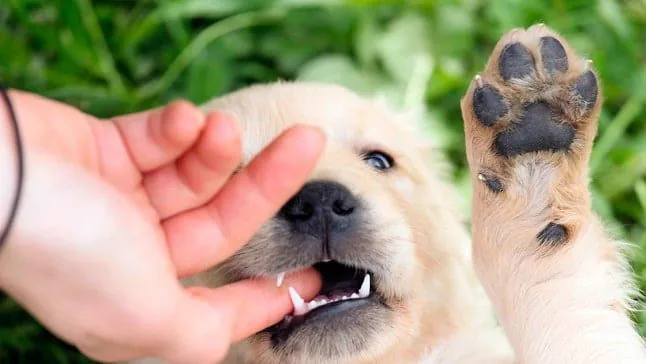
A puppy's first teeth, known as milk teeth, are thin and sharp as needles. On top of that, our puppy will want to explore their whole environment by biting it. That's why it's important to teach them as soon as possible not to bite us. Let's see how to do it simply.
How to Teach a Puppy Not to Bite
The simplest way to teach our puppy not to hurt us when they bite is by showing them we're in pain. That's why we should practise this simple exercise daily; through it they'll understand they shouldn't bite us, or at least not too hard.
The exercise involves playing with your puppy using your hands and a chew toy, letting them occasionally bite your hand instead of the toy. When they do, yelp immediately so they know they've hurt you. An "Ow!!!" is enough.
Pull your hand away and stop playing with them for a few minutes. If they come looking for you, ignore them. After a few minutes, go back to playing with them and repeat the move; when they bite the toy/chew, you should praise them and give them strokes, but when they bite your hand (which they will), yelp and complain, stopping the game again immediately for a few minutes.
As you can see, it's a genuinely simple exercise that, practised regularly, every day, gets a puppy to stop biting hands or feet, or if they do, at least not hard. Our advice, obviously, is that they shouldn't do it at all, not even without pressing down.
Tips for the Exercise
You need to understand that puppies don't reason the way a somewhat more adult dog would; they simply want to play, eat and sleep. So if your puppy doesn't listen to you, don't get frustrated — just be very patient.
Never get angry, let alone hit your puppy for biting you — they're only learning. Don't provoke your puppy into biting you either; just play with them, and if they bite you naturally, put the advice into practice.
Don't try to make them growl by winding them up so they bite you, because without realising it you'll be encouraging aggression. Puppies learn from everything they see, and if they see you acting aggressively, they'll do the same.
Try to practise at home, always making sure your children don't see you doing it — we don't want them practising and accidentally getting hurt. Once you've mastered the exercise and your dog doesn't bite you, try having another person, such as a family member or friend, try it too. Your dog shouldn't just learn not to bite you — they should learn not to bite anyone.
If your dog accidentally bites you and sinks their thin, sharp teeth in, don't yank your hand away forcefully. You could hurt yourself far more, and even hurt them too. Simply complain and wait for them to open their mouth before pulling your hand back — that way nobody gets hurt too badly.
Never practise this with an adult dog, since adult dogs can hurt you a great deal while learning this exercise. Teaching bite inhibition should only be practised with puppies, never under any circumstances with adult dogs.
IMPORTANT: This article is for informational purposes only and does not constitute veterinary, nutritional or behavioural advice. Every dog is different, and only your trusted vet can advise you on its specific needs.