 Training
How to Teach Your Dog to Bring Objects
Dogs of any age have the ability to learn a great many commands. The most basic ones are "come", "sit" or "stay", but you can teach them many more if you devote time to it and know how, of course.
It's not about having a robot or circus dog, but obedience training is essential for every dog to guarantee good day-to-day life together. Below we'll explain how we can teach our dog to bring objects. Shall we get started?
How Do I Teach My Dog to Bring Things?
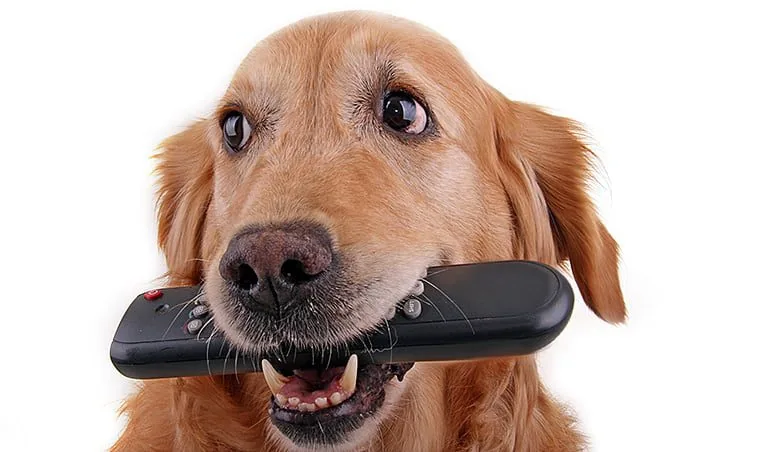
Some dogs, spontaneously and without us having taught them yet, pick up different objects in their mouth, especially their toys, and bring them to us. It's a way of getting our attention and encouraging us to play, go out and so on, depending on the object they're carrying.
We can make the most of this tendency to teach the dog to do it deliberately too, when we ask them to. In these cases, when the dog comes over with the object, we'll take it while saying the command at the same time, for example "give". Right at that moment we'll reward them with food, strokes or affectionate words.
Once this sequence is repeated identically several times, the dog will come over and hand us whatever they're carrying on our command. If the dog runs off with the object without dropping it, you should never chase them, since they'd read it as a game. Just stay still and call them.
Teach Your Dog to Find Things
If our dog isn't in the habit of bringing us objects, the first step will be to teach them to go and get one. We can start by choosing their favourite toy and encouraging them to come over to us so we can interact — human-dog-toy.
Do this at a time when they're calm, not asleep. If they've just woken up they'll be too excited to focus on commands, and the same goes for mealtimes and so on. That is, find the ideal moment for you and for them.
Once we've managed to grab their attention, and after a few seconds of play, we'll throw the toy not too far away. They'll likely go straight to fetch it spontaneously to carry on having fun. At that moment we'll give the command, which could be "find it". We'll reward as always if they do it. If not, we'll try again the same way.
How to Teach Them to Find, Bring and Drop
Bear in mind that before learning to bring things, the dog needs to know how to come when called. So, to do the full sequence of this exercise, you can start with "find it". As soon as the dog goes off to fetch the object, we'll say "find it", followed by "come" so they return to us, object in mouth.
If the dog comes back without the object, we'll go and get it ourselves and go back to the starting point, that is, play with them for a few seconds to repeat "find it". We can leave the exercise at "find it" and "come", but it's also possible to add the command "give" or "drop it" to specifically refer to the moment they need to open their mouth.
This handover of the object matters, since some dogs won't let go of it on their own. It's a command that can be essential, for example, if the dog finds some rubbish on the ground and picks it up. With a "drop it" we can stop them swallowing potentially dangerous substances. In this case, the sequence would be "find it"-"come"-"drop it".
How to Teach the "Drop It" Command?
As soon as we have the dog next to us with the object in their mouth, we'll hold onto it and give the command "drop it", gently pulling the object towards us. Usually, the dog will understand what we want and loosen their jaw. If not, don't even think about pulling hard.
Offer them some food or another object they like instead, as a reward. This way, as soon as they let go, say "drop it" and reward them immediately. As you can see, the exercise of learning to bring things can be split into several parts we can practise separately to gradually increase the difficulty and complexity.
Tracking Dogs
Every dog has the ability to learn to find and bring us the objects we ask for. We just need to know how to do it. Set up a learning schedule, start from the simplest to the most complex, and don't spend more than a few minutes a day on it, since the dog won't be able to concentrate on the task for any longer.
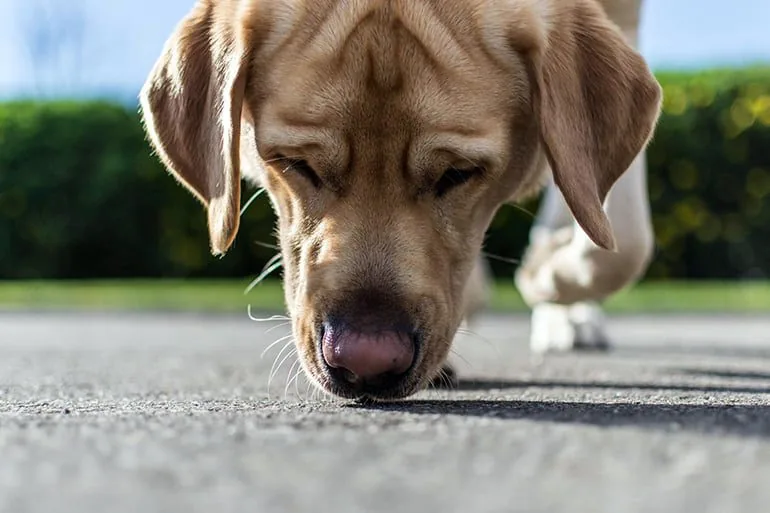
Of course, forget about shouting or hitting. They're never justified. What's more, make the most of the fact that some dogs are especially gifted at following scent trails. Every dog has an exceptional sense of smell, their most notable sense, but some, such as hound-type breeds, will especially enjoy practising exercises involving their sense of smell.
For them, following and finding objects guided by their sharpest sense is the perfect stimulation. That's why we can make this exercise harder by hiding the object instead of throwing it for them. This way the dog will retrieve it after searching for it. All we'll need to do then is ask them to come and give it to us.
Bibliography Schlegl-Kofler, Katharina. Escuela de perros. Madrid. Tikal Ediciones.
IMPORTANT: This article is for informational purposes only and does not constitute veterinary, nutritional or behavioural advice. Every dog is different, and only your trusted vet can advise you on its specific needs.