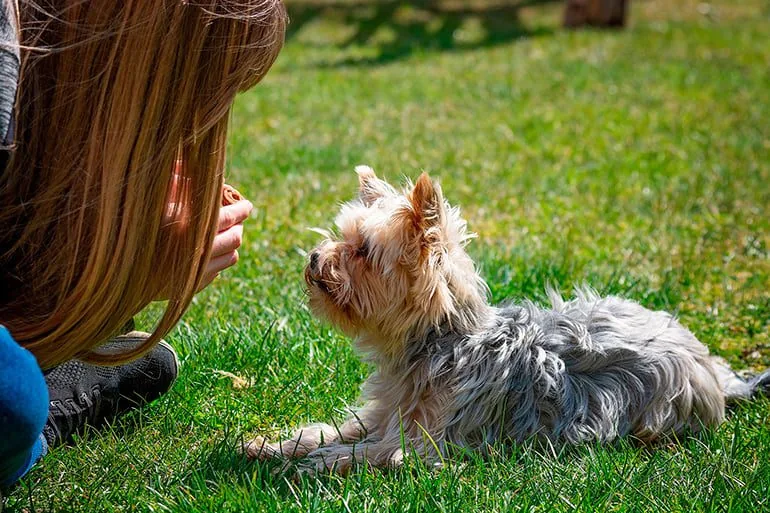
 Training
How to Teach Your Dog to Sit and Lie Down
We all like our dog to obey us and be able to do a few tricks, such as sitting or giving us their paw. Not every owner is aware, though, that these skills won't appear in the dog spontaneously.
What's more, obeying different commands isn't just a pastime. It should be an obligation for any owner and any dog, since it hugely improves day-to-day life together. Below we explain how to get a dog to sit and lie down.
The Importance of Training Your Dog
As soon as we adopt a dog we should set training as a goal. It's not about turning them into a circus dog, or a rescue or defence dog — fields that need professional training. But every dog, whatever their age or size, should learn some basic commands.
Examples include coming when called, sitting, lying down or staying still. The goal isn't to impress visitors, but to help the dog get by in a human world. In other words, dogs have trouble understanding our gestures and don't understand most of our vocabulary.
Amid all that noise, being able to make out words or gestures gives them peace of mind. At last they know what to do, what's expected of them and what they can expect from us. Predictability matters a great deal to them, hence the value of anything that supports their routine.
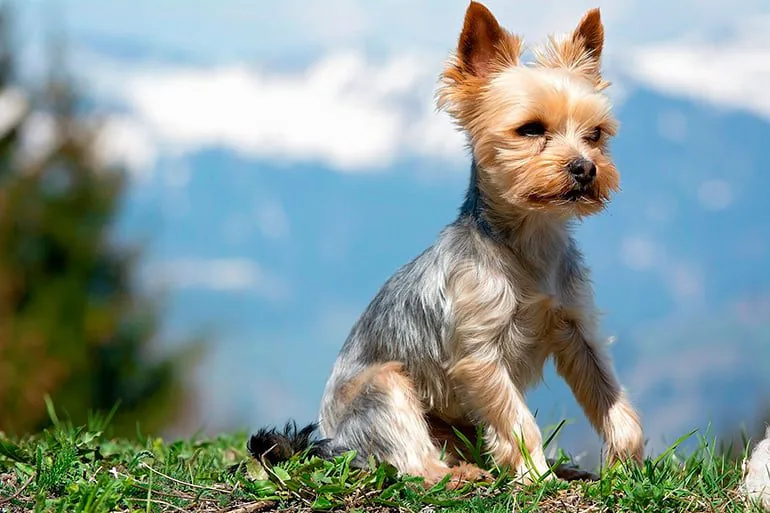
Basics of Canine Training
There are a few things to bear in mind before starting our dog's training, so it goes well. If in doubt, either way, seek advice from a canine behaviour expert or an ethologist. Broadly speaking, these are the basics:
- Every dog has the capacity to learn, whether they're a puppy, an adult, or even an elderly dog.
- Our attitude matters a great deal. Training sessions should always be done with time and a calm approach, giving the dog our full attention.
- These lessons will only last a few minutes, since the dog won't be able to concentrate any longer.
- They need to be planned, setting a schedule that goes from less to more difficulty.
- The key lies in rewarding the behaviours we want the dog to repeat, and ignoring the ones we consider negative.
- Of course, you should never shout, and far less use violence against the dog.
How to Teach a Dog to Sit
If we choose the "sit" command as one of the basics to teach our dog, which is indeed advisable, we can make use of food rewards. To boost the dog's interest in them, it's best to plan the session for a time when they're hungry, not right after feeding them.
Dogs can also be rewarded with strokes or words of praise, but it has to be said food is a more powerful incentive for them, though rewards shouldn't exceed 10% of the total daily calories in their diet. This also needs controlling in overweight dogs.
Showing the dog food while standing in front of them and moving your hand towards their tail while you move your body towards them makes them sit. We then reward them and say "sit" or "sit down". We can also rest a hand on their hindquarters to encourage them to sit, and reward them as soon as they do. Repeating the sit-reward sequence, they'll end up learning it.
Teaching Your Dog to Lie Down
It's best to teach this command once the dog already handles "sit" perfectly. This way we can start the session by asking them to sit. With food in hand in front of their nose, we'll guide them into the lying-down position, getting them to stretch towards it and lower themselves to the ground.
As soon as they take up the position we want, right then and only then, we'll give the command and reward them, so they know exactly what we want them to repeat. We'll do the exercise again a few times.
If we start from the sit position, it also lets us go over that command again. The word to use can be "down", "lie down" or "platz". Either way, it always needs to be the same one.
How to Teach Basic Commands
Lastly, it's essential we always give the command using the same word, said very clearly — not shouted. It's also advisable to pair it with a gesture, always the same one. For example, lowering your extended hand towards the ground. Once the dog sits and lies down in sessions, we'll gradually make the exercise harder.
To do this we can add distractions — on the street, with other dogs around, rewarding only with our voice and so on. Remember to always increase the difficulty gradually, and don't move on until they've properly learned the command you're working on. Always end each session with a reward, asking the dog to do something they do perfectly, so you can praise them.
IMPORTANT: This article is for informational purposes only and does not constitute veterinary, nutritional or behavioural advice. Every dog is different, and only your trusted vet can advise you on its specific needs.