 Training
How to Train a Dominant and Territorial Dog
Before starting to train a dominant dog, we need to be entirely clear on their characteristics, and for this, we need to understand what it means for a dog to be dominant. Sadly, the concept of "dominance" tends to be used inappropriately or inaccurately, and typical behaviours of an aggressive dog are often attributed to dominance, which is a huge mistake.
If you don't know how to identify a dominant dog, or if you notice your furry friend has a clear tendency towards dominance and you're wondering how you can train them to prevent any accident, in this article you'll find useful explanations and advice. Keep reading to find out more!
What Does It Mean for a Dog to Be Dominant?
Dominance is part of the communication and social behaviour codes of various animals (dogs included), but it's only exercised between members of the same species. That is, a dog will never be dominant towards their owner or any other human, since they can only take on a dominant condition when interacting with their own kind, that is, with other dogs.
It also matters to understand dominance is as dynamic as communication and interactions between dogs themselves. And it's not a personality trait of a dog, but rather a relationship of organisation and hierarchy established when several dogs interact in the same space. Because of this, a dog being dominant in relation to a specific dog at a specific moment, while they interact in the same setting, doesn't mean they'll take on this dominant condition in relation to every other dog.
Although it's true some dogs have a stronger tendency to exercise dominance, this doesn't mean they'll be dominant in every interaction they have with other dogs throughout their life. That is, even a dog who shows dominance in most cases can come to take on a submissive position in some contexts.
For example, it's possible for a small dog to establish themselves as dominant whenever they interact with individuals their own size, but take on a submissive posture when interacting with bigger dogs. It can also happen that a certain dog is dominant with females around them, but shows submission when interacting with other males.
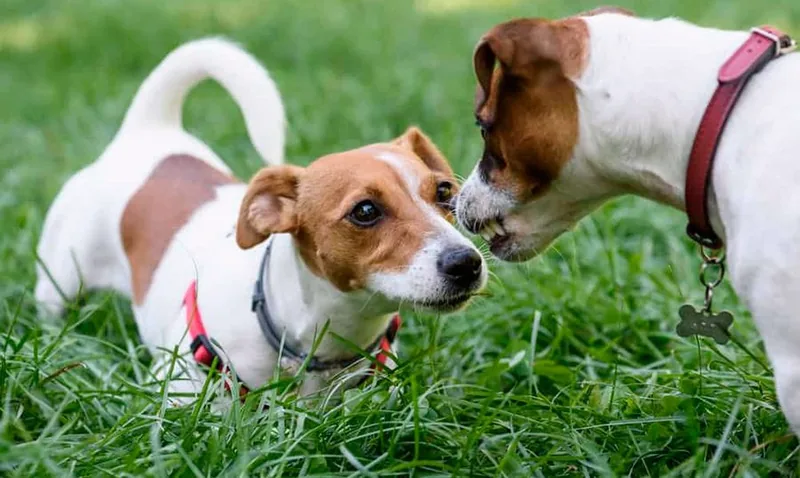
Differences Between a Dominant Dog and an Aggressive Dog
Here we have another key point for understanding a dominant dog's characteristics, and it's that we should never confuse them with an aggressive dog. Aggression is a serious behavioural problem that can have multiple causes, among which we find poor socialisation and the use of counterproductive methods in the dog's training, which usually involve punishment and violence as "corrective tools".
A dog who's received proper socialisation and training, however much they may tend towards dominance, has very little chance of showing aggressive behaviour. This is because aggression is, ultimately, a last resort dogs should only turn to in extreme situations, when their safety is genuinely at risk.
Even so, when a dog takes on aggression as a means of communication, probably because they've been taught this through violent methods, they may turn to it to react to different everyday stimuli and situations. Their social behaviour codes have been "damaged" or "confused" by inappropriate training, and this dog lacks "tools" to turn to for coping with difficult situations, so they immediately "jump" to their last resort: aggression.
What's more, dogs with a history of physical or psychological abuse may show plenty of aggressive behaviours from having taken on board that their wellbeing is constantly at risk and they need to defend themselves against any disruption in their surroundings.
Either way, what matters most is understanding that training any and every dog, even those with a stronger tendency towards dominance, needs to focus on methods that stimulate their cognitive, emotional and social abilities, while at the same time building greater engagement with training. That's why, to train a dominant dog, we'll always apply positive reinforcement, and not force, confinement, punishment or any other form of violence.
What to Bear in Mind Before Training a Dominant Dog
A dog with a tendency towards dominance needs socialising and training just like any dog, but owners need to keep in mind that dominance isn't something that can or should be "corrected", once it's included among dogs' natural communication and hierarchy codes.
The fact a dog shows dominance in interactions with other dogs isn't behaviour that needs modifying, since it's not a behavioural problem. Now, if we're talking about a dog who's aggressive with people or other animals, then yes, we're dealing with a behavioural problem (aggression) that needs treatment with guidelines aimed at modifying their behaviour.
Although dominance isn't a problem to correct, it matters a great deal to socialise a dominant dog early and train them to teach them more tools that let them build more positive, harmonious relationships not just with the individuals they interact with (people, dogs and other animals), but also with the different stimuli, objects and settings they'll be exposed to throughout their life.
This way, we manage to prevent the development of conflicts or misunderstandings in social interactions that usually stem from poor communication, as well as behavioural problems and any kind of accident that can happen when a dog isn't aware of their own strength and the limits they need to follow to play and interact safely with other individuals.
Lastly, it's also worth knowing that neutering tends to lessen the expression of behaviours linked to dominance and sexual drive, mainly in male dogs. And although it's not strictly necessary to control the dominant tendency, it should be seriously considered as a method for preventing unwanted litters.
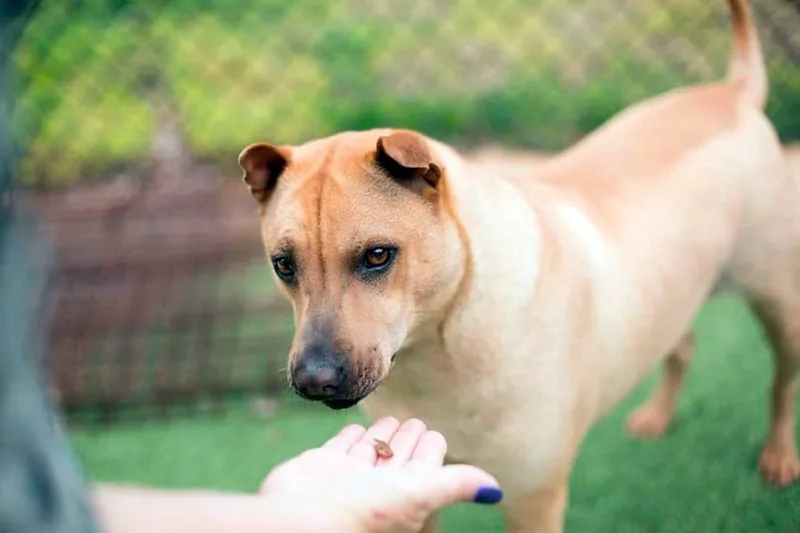
Basic Tips for Training a Dominant Dog
Training a dominant dog will follow the same guidelines and good practices we adopt for training dogs in general. In this sense, the first thing worth highlighting is the importance of starting their socialisation process during their first months of life, while they're still puppies, since at this point their character is more flexible and they're taking on board the codes that will guide their social behaviour in adulthood.
It also matters to teach them, from the moment they arrive home, which behaviours are suitable for good day-to-day life together, and which aren't. This is an important point for avoiding unconsciously reinforcing unwanted behaviours, such as getting on the sofa, rummaging through the bin for food, barking excessively, or crying every time they're alone.
Bear in mind that, if you let the puppy understand certain behaviours as "natural" in puppyhood, they'll most likely keep up this habit in adulthood. What's more, if you give them a "reward" every time they carry out some behaviour, whether because you find it endearing or because you're trying to get them to stop doing it by giving them what they want (for example, giving them a treat to stop them crying), you'll be reinforcing a behaviour you won't always want to see in your adult dog.
With these points clarified, and before we say goodbye, here are some training tips you can put into practice with your furry friend. Take a look!
Tips for Training a Dominant Dog
- Choose the right spot and hold short sessions: training sessions need to happen in a calm, positive setting, with no excess of stimuli scattering the dog's attention. What's more, each session should last between 10 and 15 minutes to avoid overloading them.
- Work on one command at a time: each obedience command needs to be presented and trained individually, until it's perfectly taken on board and carried out by the dog. That is, you'll work one by one through the commands you want to teach your dog, always after choosing the word you'll use to signal each action to be carried out.
- Use positive reinforcement to reward your furry friend: every time your dog carries out suitable behaviour, offer them a reward to recognise their achievement and encourage them to keep learning. Besides kibble and treats, you can use toys, strokes, and games or walks as rewards. What matters is being clear that punishment, deprivation and other "negative" training techniques prove counterproductive, since they tend to reduce the dog's interest in training and can encourage behavioural problems, such as aggression.
- Encourage good daily communication: dogs' ability to obey is directly linked to the bond they share with their owners day to day. If you don't learn to communicate with your furry friend and don't take the time to get to know their personality and needs, you'll probably have serious trouble grabbing their attention and getting them to want to share a training session with you.
- Seek help from a professional: if you feel you don't have the time, patience or knowledge to train a dominant dog, don't hesitate to seek help from a dog trainer or educator. What matters most is that your furry friend can access training that improves their quality of life.
IMPORTANT: This article is for informational purposes only and does not constitute veterinary, nutritional or behavioural advice. Every dog is different, and only your trusted vet can advise you on its specific needs.