 Care
Care
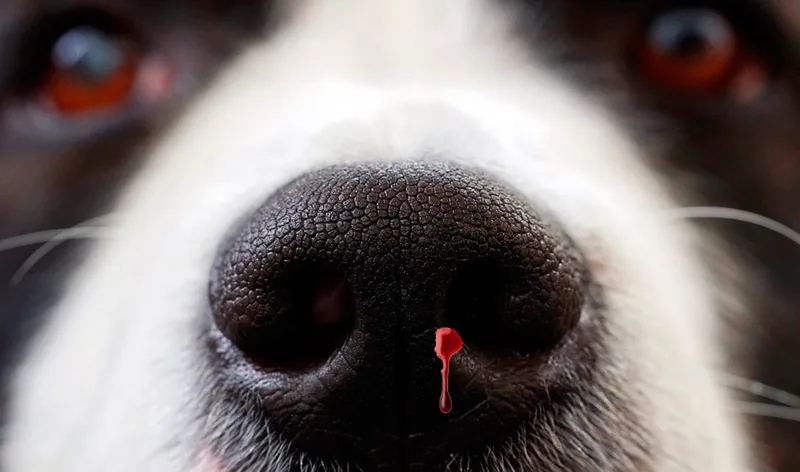
How to Treat a Wound on a Dog's Nose
If you watch your dogs, you'll notice they love sniffing everything and sticking their snout into the most unexpected places, especially bushes and shrubs. This can cause some superficial wound to our dog's nose that needs attention.
If your dog is one that plays a bit roughly with other dogs, it's also possible it gets some scratches that cause slight bleeding. At Soyunperro we'll explain how to properly treat a wound on our dog's nose, to prevent infections.
Is the Wound on Your Dog's Nose Really Serious?
We need to observe whether there's one wound or several, and their location. We also need to consider whether the bleeding is from both nostrils or just one; whether it's dripping or more continuous. It can even happen when it sneezes or coughs.
Your dog's age and medical history (whether it has any disease) can also matter when assessing how severe the injury is. This way, you'll easily be able to tell whether it's appropriate to see your vet. If so, remember every detail so you can mention it to them.
If, on the other hand, it's small scrapes or scratches with or without slight bleeding, we shouldn't be overly alarmed, since it will simply require minimal care to prevent future infections.
If we can't see the wound well because of the bleeding, we can use sterile gauze to clean the affected area, or use water to rinse the area so we can better examine the wound. It's normal for our dog to whine, since it will feel pain, so don't be alarmed if you hear it whimper.
Once you know what type of wound it has, simply use common sense. Small wounds can be treated by us; large wounds require mandatory veterinary supervision, always.
Steps to Treat a Wound on a Dog's Nose
When we talk about the nose, we mean the whole snout generally, although it's technically correct to distinguish the snout from the nose itself. The nose is the front part of our dog's muzzle, normally black or brown in color.
The first thing we should do is clean the wound with water — we can apply water directly or use sterile gauze soaked in water or saline solution (available at pharmacies).
If the bleeding is heavy, you should compress the area applying a cold compress, remembering not to cover the nostrils with cotton, gauze, cloths, or water, and keeping your dog's head facing forward at all times.
How to Properly Disinfect
We should never use abrasive products like hydrogen peroxide or alcohol. Liquid iodine (Betadine, for example) can be bought at any pharmacy and is the best disinfectant we can use.
With the help of sterile gauze, we'll apply iodine to the affected area and wait for it to dry a bit, letting the wound air out — during this time, prevent your dog from making abrupt head movements. If the wound is bleeding, we can apply, with gauze soaked in iodine, pressure on the wound for a few minutes.
This way, bleeding will decrease and we can apply iodine again to disinfect. This is usually enough, although it's recommended to apply iodine again once a day for the following two or three days. If your pet has long, thick fur, it's recommended to trim the areas immediately around the wound, preventing it from getting contaminated.
If our dog scratches the wound with its front paws and makes it bleed, we need to put on an Elizabethan collar for a few days to prevent further damage. If the wound shows signs of infection or simply won't heal, we need to see a professional vet.
What Complications Could We Face During Treatment?
- Our dog whines and cries: we shouldn't be alarmed by this, it's a physiological (normal) response to the pain of handling.
- Our dog won't let us treat it: it's very logical for it to try to avoid your touch during treatment, which is why we recommend having another person help you during treatment.
- The dog reopens the wound because it scratches often: this is something you should really keep in mind, and in this case you should put on an Elizabethan collar to prevent further damage.
- We don't have disinfectant: this is indeed a problem, since the wound could get infected and worsen. You can buy gauze and disinfectant cheaply at any pharmacy.
- The wound smells bad, is swollen, or discharges yellowish-green fluid (pus): if this happens, you need to see your vet, since for some reason normal healing has stalled, the wound has become infected, or it simply needs stitches.
IMPORTANT: This article is for informational purposes only and does not constitute veterinary, nutritional or behavioural advice. Every dog is different, and only your trusted vet can advise you on its specific needs.