 Nutrition
Human Foods Recommended for Dogs
For us, food is something to be shared and it is part of our happiest moments. Hence that irresistible urge to offer something to our beloved dog, who is also giving us those eyes… Even if it is only a tiny piece…
We know that sooner or later we will inevitably give in. That is fine, as long as the food we pick is suitable for dogs. Not everything we eat day to day will do for them. That is why it matters to know what to give them.
The Social Role of Food
Just as we bond with other people over food, the same happens with dogs. Food does not only serve the obvious and essential purpose of nourishment; it also helps cement the relationship between dog and owner.
It also encourages the dog to learn any command or trick we want to teach them. It is a motivator. But given that we are going to give them something, better that it be as healthy as possible, and always with each dog's particular circumstances in mind.
Foods That Are Dangerous for Dogs
To begin with, we cannot give every dog the same foods. We have to look at their characteristics. So if our dog has a weight problem, we need to avoid excess calories, and if they have an illness, we will have to choose foods that will not be harmful given their condition.
It is also not a good idea to fall back on leftovers. A piece of chicken is fine, but ingredients commonly found in the home, such as milk or chocolate, could be harmful and even toxic. A small dog could die if they eat too much chocolate. The same goes for dishes with too much fat or salt.
Alcohol, caffeine and sugar are out of the question, of course. In any case, unless we have chosen to feed our dog a home-made diet, always agreed with a nutrition expert, whatever food we give them will be an occasional thing. Day to day they will follow a good-quality, balanced diet suited to their stage of life.
Tips for Feeding Our Dog
If we reward our dog with food every now and then, they will have no way of knowing when their turn is coming. That can lead to them begging constantly, even climbing up on us or at the table.
So whenever you give them food, try to make it part of a routine. Dogs like a predictable environment and it helps them enormously in avoiding stress. Give it to them every Sunday after their brushing, for instance, or after a walk on the beach. Whatever you decide, only offer it when they are calm.
Never when they are climbing up at the table, barking or obviously worked up. You can call them over or tell them to sit and, as soon as they obey, give them the food. That way you reinforce good behaviour you want repeated.
Choosing the Best Food for Your Dog
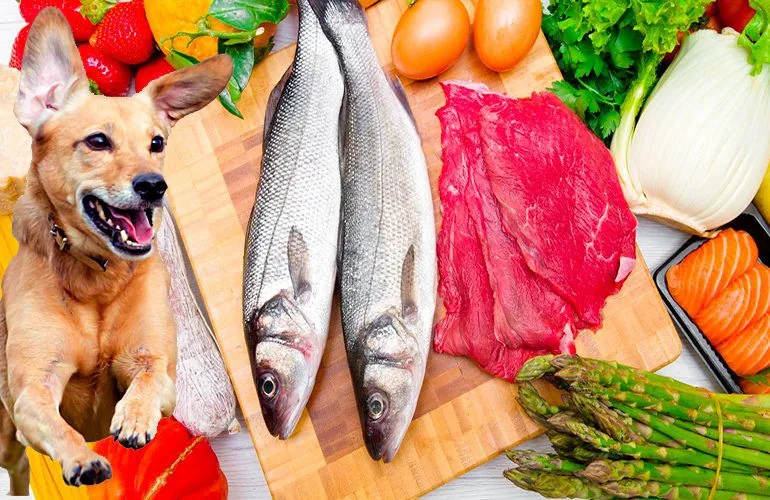
There are all manner of products that are easy to find in any kitchen cupboard and are perfectly suitable for dogs. In the sections below we go through the most common ones, along with tips for serving them correctly and safely.
Meat for Dogs
Although they function as omnivores, the truth is that dogs are carnivores. Which is why meat is of course a food we can include in their diet. They will take any of them: chicken, turkey, duck, beef, lamb, pork and so on. The best way to prepare it is griddled, boiled or baked.
Avoid anything fried, battered or heavily seasoned, and avoid salt and sauces. If you want to give the meat raw, bear in mind that it could pass on parasites or bacteria. It would be advisable to freeze it beforehand or cook it lightly. Organ meats are also edible, as are meaty bones.
Give Your Dog Fish
Like meat, fish provides animal protein, which is highly recommended for dogs. Both white and oily fish are suitable, and the best preparation follows the same guidance as for meat. That is, fish is better boiled, griddled or baked. Serve it with the bones removed.
Giving Eggs to a Dog
This is another animal product perfectly suited to dogs. The recommendation is to give it cooked — soft-boiled, hard-boiled or as a plain omelette, which is to say no more than set in the pan. Raw eggs could carry salmonella and, on top of that, eating a great deal too many becomes harmful and can cause anaemia.
Vegetables, Healthy for Your Dog
Because they behave as omnivores, dogs can also eat vegetables, though most of them, given the choice, will go for meat or fish. But if our dog is carrying a few extra kilos, for their own good it is better to focus on foods of this kind, which will give them very few calories.
Bear in mind that obesity is not merely a cosmetic problem. Overweight dogs run a greater risk of conditions such as diabetes, or of aggravating existing ones such as osteoarthritis. They will also cope less well with heat, exercise and anaesthesia. Raw or dehydrated vegetables are a good option in these cases.
Fruit, Delicious for Your Dog
If vegetables were perhaps not your dog's favourite dish, fruit tends to go down rather better. It is equally filling and low in calories. Apple, watermelon and pear are some of the healthy options we can choose from. All you need to do is wash, peel or chop.
Can Dogs Have Dairy?
Just as with some people, not every dog is going to tolerate milk. Drinking it could cause them digestive problems of varying severity. We can opt to give them a small piece of cheese, as low in fat as possible, or a little yoghurt. If it does them no harm, these products can be included in their diet on an occasional basis.
IMPORTANT: This article is for informational purposes only and does not constitute veterinary, nutritional or behavioural advice. Every dog is different, and only your trusted vet can advise you on its specific needs.