 Training
Intelligence Games for Dogs
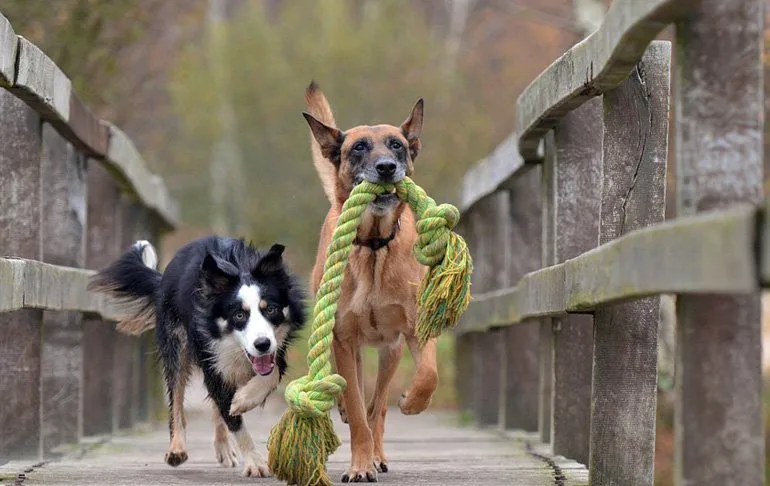
Playing is a key verb for anyone living with a dog. They show playful behaviour throughout their whole life, which is why it matters that we regularly devote a bit of time to play every day.
What's more, being highly intelligent, for their physical and emotional wellbeing they need us to provide stimulation. Play serves an important function beyond simple fun. Let's look at which ones are most recommended.
Choosing Games for Dogs
Every dog likes playing, but not all of them enjoy the same games. That's why it matters a great deal that we watch our companion to work out which activities they'll find most interesting. It doesn't matter whether they're a puppy, an adult, or even a senior. They'll all love playing with us.
We can also take our lead from their breed or mix when choosing games and toys, since it's known some prefer running, others fetching objects, while we can also find ones who love following trails.
Even so, when buying toys we should always make sure they're specifically made for dogs and of good quality. This way we'll avoid scares or harm. We also need to check them periodically and remove any that are worn out, to stop the dog swallowing pieces or hurting themselves.
What Do We Mean by Intelligence Games for Dogs?
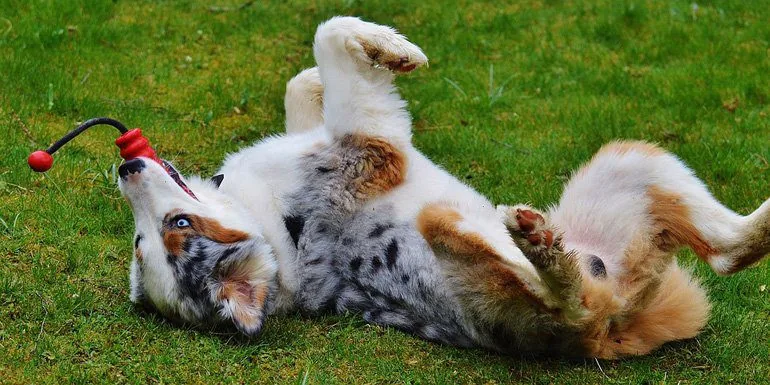
Dogs love us sharing part of our time with them. They like us offering them cuddles, taking them for walks and, also, playing with them, regardless of their age. Even though we barely notice, all these activities stimulate them, give them quality of life, and prevent stress.
For highly intelligent dogs who, as a result, will need a high level of stimulation, it matters that we provide all this care and are especially careful with the games we offer them. Intelligence games are the ones designed to develop this aspect of our dog.
Good intelligence games are ones where the dog has to face a challenge to solve, which will be bigger or smaller depending on each dog's abilities, since if they're not suited to the dog, they'll get frustrated and won't want to play again.
The Search Game
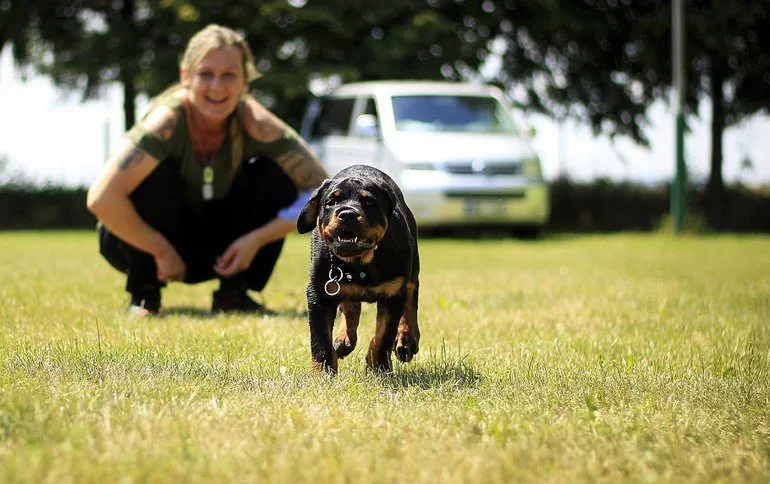
One of the most stimulating games we can play with our dog is the canine version of traditional hide and seek. This activity suits dogs who love sniffing, following trails and so on. If we try it and the dog shows no interest, we shouldn't force it, since the main thing is that they enjoy it.
To start it, all we need to do is show them an object for them to sniff. A person also works. Then, without them seeing us, we'll hide it somewhere hard to reach, but not so much that it's impossible for them to find it. We'll encourage them to search for it, and even, at first, we can guide them to locate it.
On finding the object, we should praise them enthusiastically. If we notice they're receptive and enjoying the activity, we can gradually add more difficulty, hiding the object in trickier or further spots. If we're using, say, a sock, we can show them one and hide the other from the pair.
The Famous Kong
In recent years the so-called Kong has become hugely popular. A toy used to hide bits of food inside, so the dog needs to move and shake it to release its contents. If we want to use it with our dog, we first need to show them how it works.
Although it's a toy recommended for leaving with the dog while they're alone, for them it's always more stimulating if we join in and encourage them. So, we shouldn't always offer it to them only when we leave, so they don't lose interest.
Boards
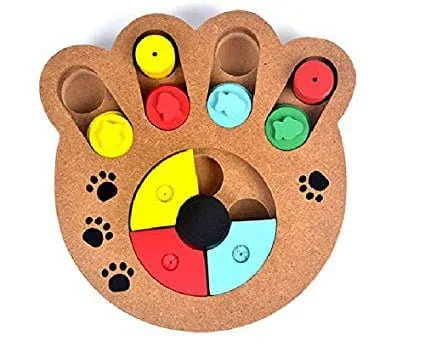
This type of toy involves a board with several lids the dog can move with their paws or mouth to access rewards. As you can see, it follows the same idea as the Kong, that is, it's based on manipulating an object to get food.
If we hide the reward under only one of the lids, we'll boost the dog's sense of smell, since they'll need to locate it, similar to the well-known shell game. The advantage of this kind of gadget is that, if we keep placing rewards under each lid, we'll be interacting with the dog, which stimulates their intelligence far more.
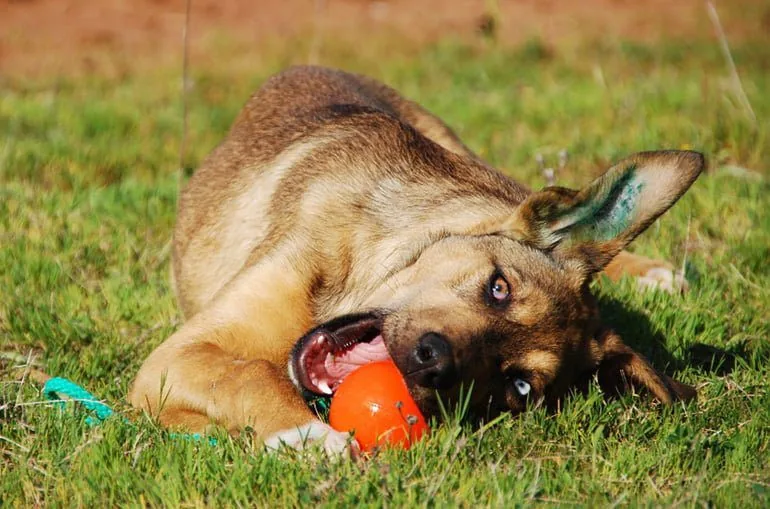
Cubes or Balls
These are structures that let a small ball be placed inside, so, in this case, the dog will get out an object to play with rather than food. To encourage them to handle it, we'll cheer them on with verbal praise or strokes, which helps build another kind of reward besides just food.
To do this, besides being able to leave the dog with the game while they're alone, at first we'll need to play with them. It also matters that they like the ball we put inside, since otherwise, they'll feel no incentive to approach the toy and will ignore it.
Electronic Toys
These are ones that can work on their own. For example, a ball launcher that throws them, or toys that give off lights, sounds, or move. They can be a huge hit with high-energy dogs, the ones we usually describe as tireless. They also have the advantage of not needing food to interest the dog.
The downside is their high cost, and that, since they work on their own, we'll tend to leave the dog alone with them, which is counterproductive, since the best intelligence toy for dogs is us.
IMPORTANT: This article is for informational purposes only and does not constitute veterinary, nutritional or behavioural advice. Every dog is different, and only your trusted vet can advise you on its specific needs.