 Breeds
Irish Wolfhound
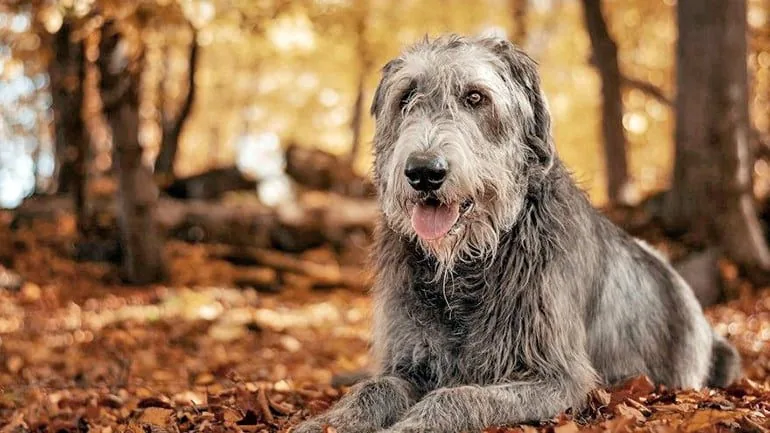
Don't let its huge size intimidate you. Despite being the tallest dog breed there is, even taller than the Great Dane, the Irish Wolfhound is remarkably gentle and loving with its people. Getting to know it, it's hard to believe that in the past the Celts used it to fight in hand-to-hand combat.
Did you know that in the Middle Ages these dogs came close to wiping out Ireland's wolf population? Centuries later, once they weren't so needed for hunting anymore, they too went through their darkest hours. Thanks to the work of an army captain, the breed managed to recover. Today they're highly valued as companion dogs for their protective instinct.
Characteristics of the Irish Wolfhound
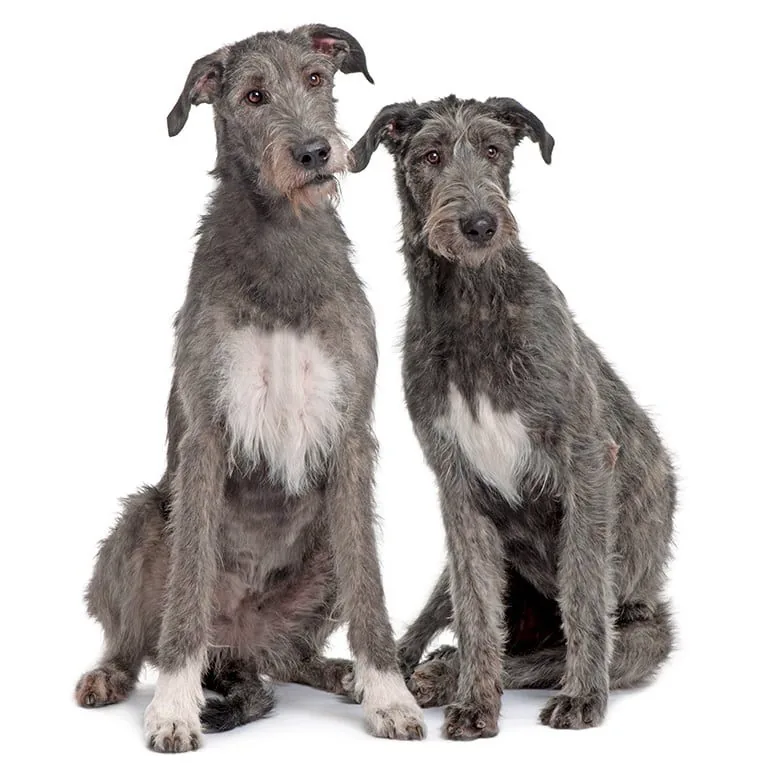
Its height alone earns it the title of a giant breed. It's not, however, an especially bulky dog — quite the opposite, in fact. Its legs are long and muscular, its chest deep, its belly tucks in, and its back tends to arch slightly. All of this gives it an elegant, graceful appearance.
Its head is long and pointed, with a scissor bite. The eyes are medium-sized and dark, and the small, rose-shaped ears fold back or hang to the sides. Its long neck and tail stand out, the latter also long, curved, and well covered in hair. Its coat is long, wiry, and rough to the touch, even on the face.
 Height between 81 and 86 cm in males and between 71 and 79 cm in females
 Weight between 48 and 55 kg in males and between 40 and 48 kg in females
 Long, very hardy coat, rough to the touch. All Deerhound (Scottish Greyhound) colors are accepted: gray, brindle, dark red, beige fawn, and black. White dogs are less common
 Intelligent, protective, calm, sociable temperament
 Good health, but prone to dysplasia
 Estimated life expectancy of between 6 and 8 years
Temperament of the Irish Wolfhound
These dogs pour out affection toward whoever they live with, getting along well with children, elderly people, and other pets alike. To avoid accidentally hurting the youngest members of the household, they should be socialized from puppyhood using positive reinforcement. Alongside treats, you can also use your voice and petting for this.
They're equally sociable with strangers and rarely show aggression. This, combined with their weak territorial instinct, means they're not the best guard dogs. They're always more focused on the people they love than on defending property.
They're highly intelligent and appreciate moments of solitude, perhaps because historically they were bred to hunt alone. They're not very vocal and adapt well to indoor life, though given their size they need space to move around and stay balanced.
What Care Does the Irish Wolfhound Need?
As we mentioned, although they can live in a modest home, it's best if they have enough space, such as a fenced yard. Spacious homes, especially country houses, are ideal for these dogs' health. It's no surprise they need several walks a day and a minimum of 1 hour of intense activity.
That said, always keep it on a leash when out, since its hunting instinct could lead to more than one unpleasant experience. Likewise, if there's a fence around your home, for its safety it shouldn't be electrified. The Irish Wolfhound can be quite stubborn. Stairs are completely inadvisable for these dogs, since they could get hurt.
Its coat needs brushing twice a week. Provide a varied, portioned diet, since these dogs are big eaters and bloat is a real risk. Always keep food bowls elevated and make sure the dog stays calm after eating. Trim its nails, as well as the excess hair on the ears and the back of the legs.
History of the Breed
Some experts believe this breed's origin lies in the Egyptian sighthounds that the Celts brought to Ireland. It's known that the island's first Gaelic settlers used them to hunt wolves, elk, and deer, as well as to pull carts or fight alongside them in combat.
In 391 AD, the Roman consul Aurelius mentioned them with astonishment, as did Julius Caesar. In a passage from the Gallic Wars, he referred to their ferocity with the phrase "gentle at home, lions in the hunt." Either way, these dogs are deeply tied to Celtic mythological sagas and literature.
In the second half of the 17th century they were no longer needed and came close to extinction. British Army Captain George A. Graham began crossing them with Scottish Deerhounds and Great Danes, successfully bringing the breed back.
Fun Facts About the Irish Wolfhound
In Ancient Rome they were called Cú Faoil, which translates from Gaelic as "wolf hound." Today, they're also referred to as the Irish Greyhound, and in dog circles they're known as the "gentle giants."
IMPORTANT: This article is for informational purposes only and does not constitute veterinary, nutritional or behavioural advice. Every dog is different, and only your trusted vet can advise you on its specific needs.