 Care
Care
Legg-Calvé-Perthes Disease in Dogs
Legg-Calvé-Perthes disease is a serious condition that mainly affects puppies of smaller breeds. And we say it's serious because the recommended treatment involves surgery.
Below, we'll describe what this disorder involves and which symptoms should put us on alert, especially if our dog belongs to a risk group. Seeing the vet is essential.
What Is Legg-Calvé-Perthes Disease?
Technically, this condition is caused by avascular necrosis of the femoral head. In other words, the femoral head, the bone in the leg that connects with the hip, experiences an interruption in blood supply that causes tissue death.
Why this necrosis occurs isn't known, but it may be due to genetic factors. Sometimes it appears after trauma capable of dislocating the hip. For example, when the dog is in a car accident or falls from a certain height. Other suspected causes include vascular disturbances, anatomical factors, or endocrine problems.
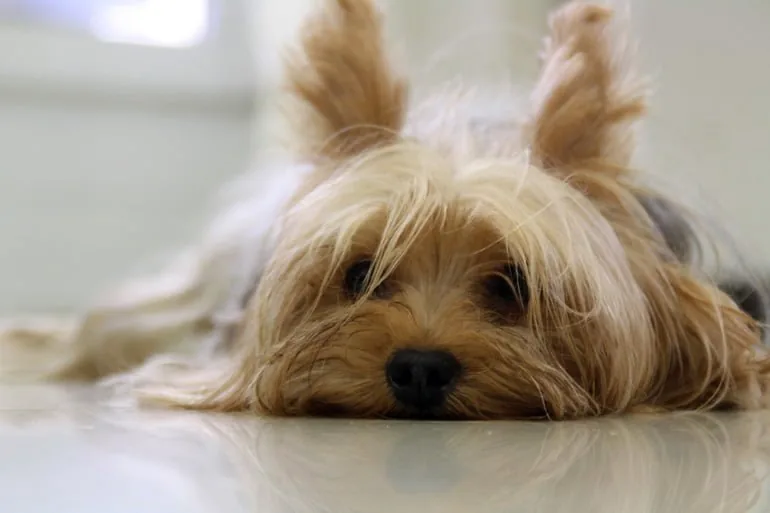
It mainly affects puppies of small, toy, or mini breeds, such as the Yorkshire breed, though cases also occur in large dogs. It mostly shows up between 4 and 11 months of age, before the animal finishes growing. Avascular necrosis of the femur can occur in one leg or both.

Symptoms of Legg-Calvé-Perthes
With the femoral head necrotic, when the dog puts weight on that area, in the most severe cases, the damaged bone collapses, the cartilage fractures, and the hip joint is progressively destroyed.
This situation also causes muscle wasting and eventually results in symptoms such as the following:
- Very pronounced limping.
- Complete inability to bear weight on the affected leg.
- Loss of joint movement.
- The affected leg may look somewhat shorter than the healthy one.
- Pain.
- Muscle atrophy.
How Is Legg-Calvé-Perthes Disease Diagnosed?
If we notice any of the symptoms described above, we need to see the vet. This professional will suspect the presence of this condition based on the dog's clinical picture, size, and age, since we've seen this problem is more common in puppies of small breeds.
The test that confirms the diagnosis is a standard X-ray, which can be done at any vet clinic. With it, we'll be able to see the condition of the hips, femurs, and pelvis in general, along with how severe the damage is.

What Is the Treatment for Legg-Calvé-Perthes Disease?
Basic treatment for this condition is aimed at restricting physical activity and giving pain-relief medication. The problem is this protocol can help us see improvement, especially in milder cases, but for good results, surgery will be necessary.
In fact, this conservative treatment protocol isn't recommended in dogs with more severe damage, since it only leads to increased muscle atrophy. For these dogs, and for mild cases where the previous treatment hasn't worked after a month, surgery is, without a doubt, recommended.
What Does Surgery for Legg-Calvé-Perthes Disease Involve?
This condition needs to be resolved surgically by a vet specialized in orthopedics. Technically, the procedure performed is a femoral head and neck excision arthroplasty. A full hip replacement is also possible, removing the joint and replacing it with an artificial one.
In the first case, the vet will remove the femoral head and neck so the joint is held in place by the muscles in the area. This is the gluteal area, which in dogs is well developed, achieving joint stability as good as what the bone offered up to that point.
With surgery, we achieve pain relief for the patient and it regains mobility, especially in smaller dogs. In short, the animal will achieve a good quality of life and a favorable prognosis. Arthroplasty is mostly used, since a full replacement requires an orthopedic specialist and is more costly.
Why Does a Dog With Legg-Calvé-Perthes Need Surgery?
Although medication and rest may improve the clinical signs shown by the sick dog, the truth is that, without surgery, over time the joint will keep deteriorating, which will cause chronic pain in the dog. That's why the general recommendation is surgery.
After surgery, the dog usually recovers without any problem. The vet will give us the necessary post-operative care instructions adapted to its situation. That said, in the most severe cases, healing will be somewhat slower. Muscle mass can take up to a year to fully recover.
Bibliography Carlson and Giffin (2002): Manual práctico de veterinaria canina. Madrid: Editorial el Drac.
IMPORTANT: This article is for informational purposes only and does not constitute veterinary, nutritional or behavioural advice. Every dog is different, and only your trusted vet can advise you on its specific needs.