 Breeds
Differences Between the Lhasa Apso and the Shih Tzu
The Lhasa Apso and the Shih Tzu are two dog breeds originally from Tibet, known for their small size, shiny coat, and cute looks. Sharing these traits makes them highly sought-after breeds, among the best known in the world — though it also gives their admirers a bit of a headache when it comes to telling them apart.
Do you know the differences between the Lhasa Apso and the Shih Tzu? Whether you're interested in adopting one of these breeds or just want to learn to spot them at a glance, we'll show you all the details you need to tell them apart. Let's dive in!
Characteristics of the Lhasa Apso
Before getting into the differences between the Lhasa Apso and the Shih Tzu, it helps to know each breed's characteristics in more depth.
The Lhasa Apso originates from Tibet (China), though its sponsoring country is Great Britain. The breed developed in the harsh conditions of the Asian mountains, so despite being small, this dog is very tough.
It has a black nose, an undershot bite, and dark, oval-shaped eyes. The ears are one of its biggest draws, since they're covered in abundant hair and hang down at the sides of the head.
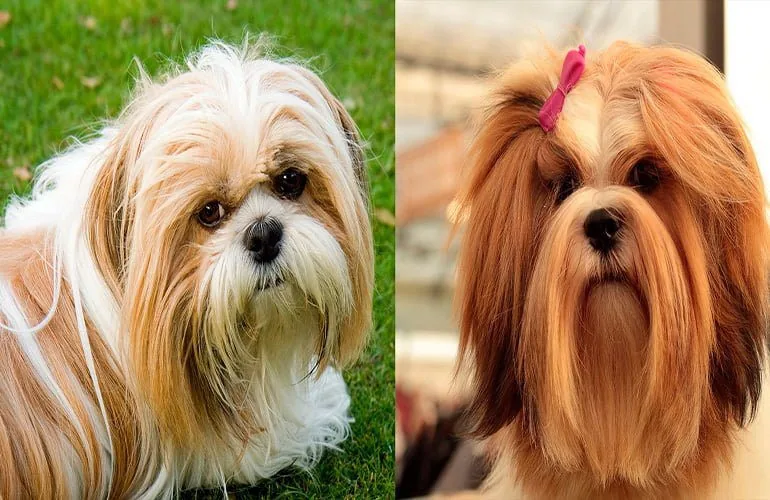
 Lhasa Apso
The breed reaches a maximum of 25 centimeters at the withers. It has a dense coat with a coarse, but not woolly, texture. The coat grows down to the legs, though it shouldn't get in the way of the dog walking. It comes in a variety of colors, such as sand, gold, gray-white, and brown, either solid or in patches combining several shades.
As for the Lhasa Apso's personality, it's a cheerful, confident, and very independent dog. It adores its own people and tends to be wary of strangers, even becoming a bit of a barker.
Characteristics of the Shih Tzu
The Shih Tzu's origin shares some similarities with the Lhasa Apso's, since its sponsoring country is also Great Britain, though the breed itself originates from Tibet. The Shih Tzu was a royal dog and is known as the "lion dog," thanks to its beautiful mane.
The Shih Tzu's head resembles a chrysanthemum, with a standout black nose and a short muzzle with a level bite. The eyes are large and dark, while the ears hang down, covered in a dense layer of hair.
 Shih Tzu
The breed stands up to 27 centimeters at the withers, for both males and females. The coat is very striking, made up of a dense, woolly double coat, slightly wavy in some outer areas. Like the Lhasa Apso, the coat can grow down to the legs, but it should never get in the way of the dog walking. The coat can come in a wide range of colors, and color combinations are common, giving the Shih Tzu a unique look.
The breed's personality is outgoing and cheerful; these dogs love playing and spending time with their owners, though they can be a bit disobedient and even a little manipulative.
How to Tell the Lhasa Apso and Shih Tzu Apart
As you can see, these breeds share many similar traits, so telling them apart isn't easy! Even so, here are some expert tips to help you identify them:
- Size: although not significant, the Shih Tzu's ideal size is about two centimeters taller than the Lhasa Apso's.
- Gait: the Lhasa Apso has a light step when walking, while the Shih Tzu carries itself in a more dignified way.
- Coat: the coat texture of both dogs is very similar, but they differ in one detail: the Shih Tzu can have wavy areas, while the Lhasa Apso's coat is always straight.
- Coat color: while the Shih Tzu's coat can appear in every possible color and combination, the Lhasa Apso is limited to gold, sand, and gray tones.
- Personality: both are cheerful dogs, but the Shih Tzu is more willful and trusting, unlike the Lhasa Apso, which tends to stay alert and act as a watchdog.
- Head shape: the distinctive chrysanthemum shape helps identify the Shih Tzu, since the Lhasa Apso's head is narrower.
- Socialization: the Lhasa Apso tends to be distrustful of strangers, thanks to its alert personality, while the Shih Tzu is friendly with everyone.
IMPORTANT: This article is for informational purposes only and does not constitute veterinary, nutritional or behavioural advice. Every dog is different, and only your trusted vet can advise you on its specific needs.