 Care
Care
Malocclusion in Dogs
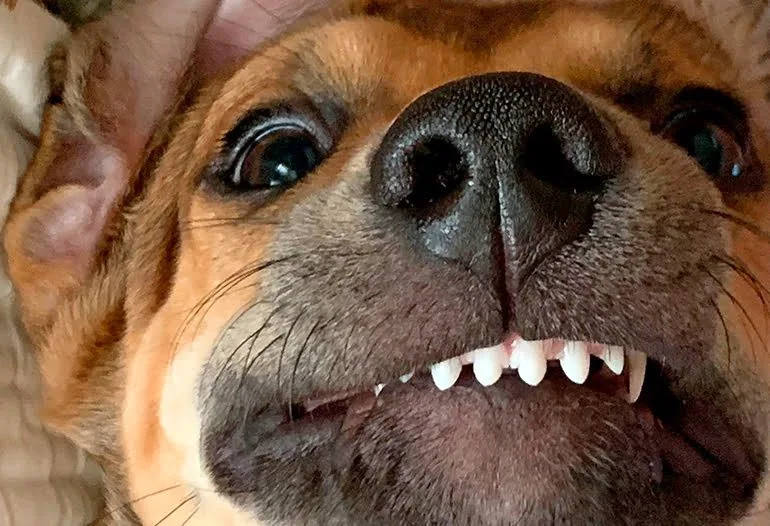
Malocclusion is a fairly common problem in dogs. This term refers to an incorrect bite. It's not a minor disorder, since it can interfere with the affected dog's quality of life.
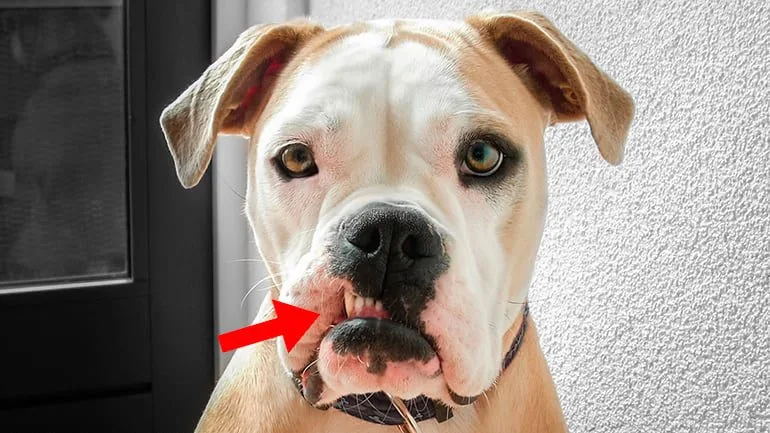
There are several types of malocclusion, notably prognathism. This is characteristic of some well-known breeds like the Boxer or the Bulldog. So, this condition doesn't always require treatment, but it's worth knowing its possible effects.
Definition of Malocclusion
Occlusion in dogs is how they bite, meaning the position of the upper and lower incisors when the mouth closes. Each breed's standard determines how the teeth should ideally be arranged. When we find a dog whose teeth don't match this, we're dealing with a malocclusion.
Most are hereditary and linked to factors determining the growth rate of the upper and lower jaws. Malocclusion can also be due to baby teeth that stay retained and end up displacing the permanent ones. Another cause would be severe trauma.
Precisely because of the likelihood of it being passed down to offspring, dogs with malocclusion aren't recommended for breeding programs. Their puppies are very likely to show the same defect. The exception is brachycephalic breeds. In them, prognathism is considered a typical trait.
Types of Malocclusion in Dogs
Generally, the ideal occlusion for a dog is when the upper incisors overlap and touch the lower ones. This is called scissor bite. On the other hand, if the incisors meet edge to edge, it's known as pincer bite.
This position isn't unusual to find in dogs, but it can be problematic. This is because continuous contact is maintained between the edges of the incisors, which will eventually wear down. In addition, we find the following skeletal-level malocclusions:
- Brachygnathism, retrognathism, overbite, exaggerated overbite, parrot mouth, or anterior closed bite: the upper jaw is positioned further forward than the lower one. So, the upper incisors are in front of the lower ones, but more so than in a scissor bite, since they don't touch. It's hereditary.
- Prognathism: this is exactly the opposite of brachygnathism. So, the lower jaw is positioned further forward than the upper one. In some breeds this is considered normal and is recognized in their standard. For example, this is the case with the Pug, the Boxer, or the English Bulldog. It's hereditary in some breeds.
- Wry mouth: this is the most serious malocclusion problem. It occurs when one side of the jaw grows faster than the other, causing the mouth to twist. This causes significant eating problems due to the physical obstruction it creates.
How to Know If a Dog Has Malocclusion
Detecting an occlusion problem in a dog is relatively simple. Just close its mouth, lift the upper lip, and, with your thumb, pull the lower lip down. Of course, always gently and without forcing. This way we can see how the lower and upper incisors fit together.
In addition, a more thorough exam is done at the vet's office. X-rays and even a CT scan can be performed to get a complete picture of the mouth's condition and the teeth.
Is Malocclusion Just a Cosmetic Problem?
Malocclusion isn't just a cosmetic problem. It's possible for it to interfere with the dog's daily activities, even if we don't always notice. We're talking about behaviors as common for dogs as holding objects in their mouth, pulling — for example, playing tug-of-war with a knotted toy — or picking up and chewing food.
This last change can end up causing digestive problems. Depending on how severe the misalignment is, its impact will be greater or lesser. Poor tooth alignment can damage the soft parts of the mouth, such as the tongue, gums, palate, or lips.
These types of problems can be seen in dogs with severe brachygnathism, but also in those with very pronounced prognathism. Malocclusion can also be the start of other oral conditions, such as tooth wear from friction, periodontal disease, or tooth loss.
Treatment of Canine Malocclusions
Treatment depends on the type of malocclusion. Generally, in mild cases, nothing needs to be done, but it's a good idea for the vet to check the mouth when the puppy turns 2-3 months old, to anticipate possible problems.
Brachygnathism in younger puppies can resolve on its own up to 10 months of age, which is when the jaws stop growing, as long as the space between the teeth is small.
But in cases where the teeth are crowded or the permanent teeth later shift out of place, the vet's intervention will be needed. They can choose between several options, such as extracting teeth or different orthodontic techniques in dogs older than six months.
Bibliography Carlson and Giffin. 2002. Manual práctico de veterinaria canina. Madrid. Editorial el Drac. Cucurella, Javier. 2017. Ortodoncia canina. Portal Veterinaria.
IMPORTANT: This article is for informational purposes only and does not constitute veterinary, nutritional or behavioural advice. Every dog is different, and only your trusted vet can advise you on its specific needs.