 Care
Care
My Dog Has a Lot of Gas — Causes and Solutions
Excess gas in dogs is also called flatulence. Gas buildup in the digestive system and its later release shouldn't worry us if it happens occasionally.
That said, if the dog has large amounts of gas continuously, it's reason to see the vet. Swallowing air or eating fermentable foods are common causes of gas, but it's also linked to serious health problems.
Why Does Gas Appear in Dogs?
There are several causes behind this problem. The most common cause is swallowing large amounts of air. This happens when the dog gulps down food instead of eating slowly. Another cause linked to gas is eating fermentable foods. Malabsorption syndrome can also cause gas.
In this case, excess gas is linked to incomplete digestion of carbohydrates. It results from a disorder in the pancreas or small intestine. Colitis, which is inflammation of the colon, also produces considerable gas elimination, straining to defecate, or small stools with blood and mucus.
Intestinal parasites like giardia are another cause of flatulence in dogs. It comes with watery, foul-smelling diarrhea, abdominal distension, pain, etc. It needs veterinary treatment. But, in addition, gas is present in serious problems, such as an acute abdomen or gastric outflow obstruction.
Foods That Cause Gas in Dogs
First, any food can potentially cause gas in dogs if eaten too eagerly. But it's true that some, since they ferment more, will increase flatulence. These stand out:
- Onion.
- Beans.
- Cauliflower.
- Cabbage.
- Soy.
What Does It Mean If a Dog Has Gas?
A small amount of gas isn't concerning and is linked to the digestive process. But abundant flatulence is a sign of problems. If it's due to eating too fast or comes after eating highly fermentable foods, we can fix it at home.
But the vet is the only professional who can diagnose and treat problems like malabsorption. In addition, we need to see a clinic if we notice other symptoms such as the following:
- Abdominal discomfort.
- Belly pain.
- Loss of appetite.
- Diarrhea.
- Vomiting.
What Is the Treatment to Eliminate Gas?
Treatment for flatulence will depend on what caused it. Generally, a change in diet is recommended. The goal is a diet that's very easy to digest and low in fiber. Once we've chosen the new menu, it's important not to give the dog any other food.
There are some vet-prescribed diets specially formulated for gastrointestinal disorders we can turn to in these cases. In addition, it's recommended to offer several small portions throughout the day. This way, by feeding it more often, we also prevent it from gulping down the whole portion at once.
For very intense episodes of flatulence, the vet can prescribe medication that acts on gas bubbles in the intestine and helps eliminate them. It's given once or twice a day after meals, depending on the professional's judgment. When gas is involved in other conditions, treatment needs to be adapted to each of them.
The Acute Abdomen
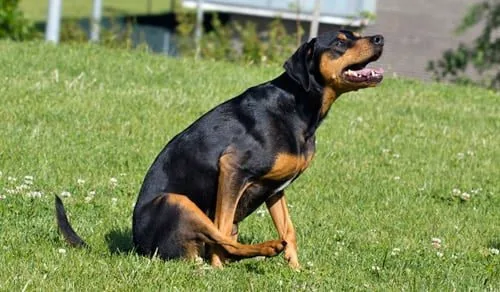
The abdominal distension caused by excess gas building up in the gastrointestinal system is called meteorism. This situation can lead to what's known as an acute abdomen, which is a veterinary emergency and requires immediately taking the dog to a clinic, since an acute abdomen can be fatal.
The dog will feel intense pain, be restless, and gag. It's unable to settle anywhere and struggles to breathe. If not treated, the animal goes into shock. So, if our dog has gas, we need to pay close attention, since the situation can worsen.
Gastric Outflow Obstruction
If gastric flow is fully or partially obstructed, the dog will show symptoms such as gas, loss of appetite, weight loss, or belching. When the obstruction is partial, intermittent vomiting occurs, usually containing undigested food and sometimes blood.
With a complete obstruction, the dog will vomit right after eating. In addition, the vomit comes out as projectile vomiting. This is a problem that will require surgery to remove the obstruction, which can be due to foreign bodies, tumors, or certain types of gastritis.
How to Prevent Gas in Dogs?
Although if it's a disease or digestive problem, specific veterinary treatment will be needed, generally it tends to be a feeding issue, so we can put these tips into practice:
- Choose quality food suited to the dog's life stage needs.
- Offer the daily ration split into several portions.
- Don't let the dog gulp down its food.
- For dogs that gulp their food especially fast, we can use special feeding bowls designed with mounds that spread the food out, making it harder for the dog to grab large amounts at once.
- Don't give it leftovers or foods not recommended for dogs.
Bibliography Carlson and Giffin. 2002. Manual práctico de veterinaria canina. Madrid. Editorial el Drac. Sabalete, Burgio, and Fariñas. 2011. Giardiasis en mascotas y humanos: ¿una zoonosis emergente? Portal Veterinaria.
IMPORTANT: This article is for informational purposes only and does not constitute veterinary, nutritional or behavioural advice. Every dog is different, and only your trusted vet can advise you on its specific needs.