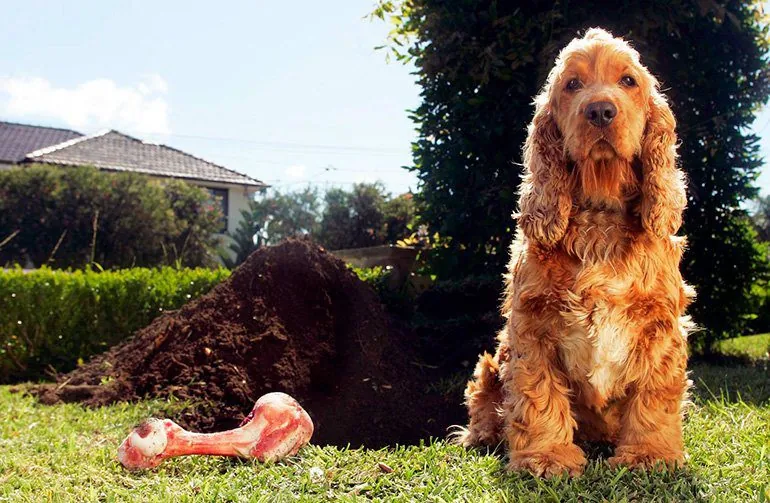
 Training
My Dog Hides or Buries Food — Why Do They Do It?
Burying food is an instinctive behaviour wolves show in the wild, one that has also been passed down to our domestic dogs. Burying food is meant to keep and preserve it.
Nowadays plenty of dogs are fed kibble, a format not very suited to burying. Even so, we may well see our dog burying their entire bowl, or any large bone we give them. Want to know more about this curious habit?
Burying Food
If our dog has access to an outdoor space, it's not unusual for us to sometimes catch them burying part of their food. Even if they're in a yard with ground impossible to dig into, they'll go through the motions.
To do this, they scratch with their paws and push around with their muzzle, as if covering the food with soil. To understand the meaning of this instinctive gesture, we need to trace it back to its origin, that is, to wolves.
Why Do Wolves Bury Food?
Wolves hunted different types of prey. Smaller ones, such as mice, were hunted individually. Wolves would catch them, kill them quickly and swallow them right away. The same happened with somewhat larger prey, such as rabbits. But also with sheep or fawns.
What these cases have in common is that they're prey that's relatively easy and quick both to kill and eat, whether by a single wolf or a few. Because of this, on these occasions they had no need at all to bury food to keep it. Bear in mind that wolves can eat up to eight kilos of meat in one sitting.
But when there was food left over, leaving it out in the open meant risking other animals finding it and eating it, which is why they buried their surplus, as if it were a pantry.
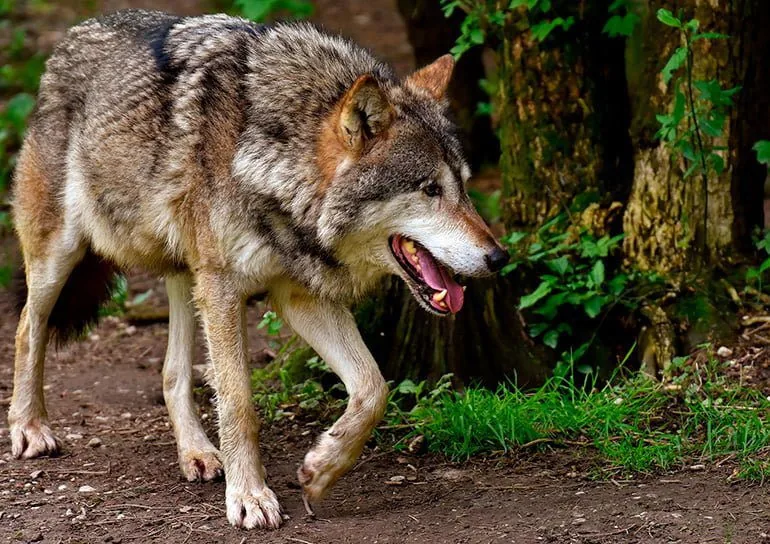
How Do Wolves Bury Food?
When wolves considered they had food left over, they'd bury it as a precaution. To do this, they'd take portions of the prey in their mouth and bury them in the ground. This way they kept them safe from scavengers, especially birds such as crows, rooks or vultures.
Burying also stops insects such as flies or maggots getting to the meat and spoiling it. Wolves would bury pieces of the prey shortly after killing it. Other times they'd carry them to their den. This might be why some dogs hide food in their bed. The burying process is done by scratching the ground with the front paws.
Meanwhile, the dog keeps the meat between their jaws. Once they've dug a big enough hole, they drop the meat into it. With their muzzle, they push the soil around it to cover it up. In this process, unlike what can be seen in other species such as cats, the dog doesn't use their paws. They finish off by pressing down with their muzzle and walk away.
When Do Wolves Dig Up Buried Food?
The next day the wolf comes back, removes the soil with their front paws, picks up the meat between their jaws and shakes it hard to get rid of as much stuck-on soil as possible. After that, they drop it on the ground and eat it.
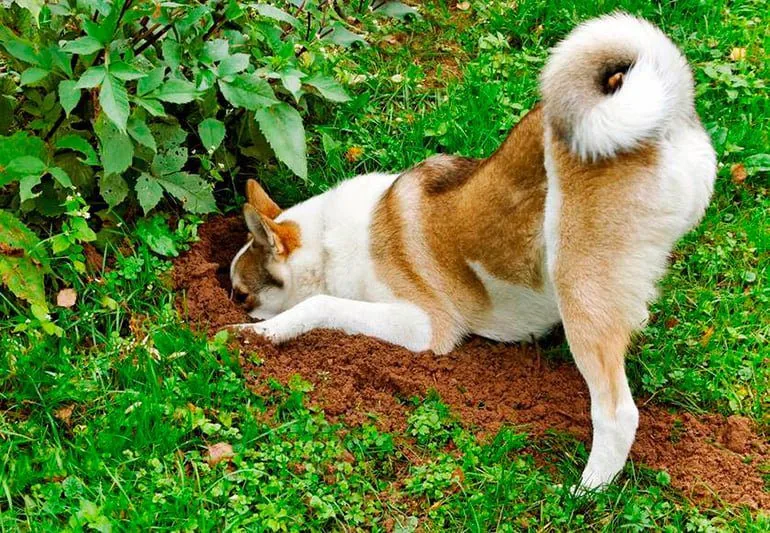
In Which Cases Do Domestic Dogs Bury Food?
Bearing in mind the burying process wolves follow, we can understand the same behaviour when we see it in our dog. For a dog to bury food, it's essential they sense they have a surplus. This is harder to happen with the most common food dogs receive nowadays, that is, kibble.
This is down to its format. The more or less rounded, small pellets it's made of aren't suited to holding in the mouth, burying and digging back up. That's why, even if the dog gets more kibble than they can eat, it's unusual for them to decide to bury it. In these cases, though, we might see the dog go through the digging motion.
They scratch around the bowl with their paws and mimic scooping soil with their muzzle to cover it. We'll see them try to bury the entire bowl, not just the food. If this behaviour repeats often, we can consider reducing the amount of kibble we're giving them.
What Does a Dog Burying Food Tell Us?
By trying to reproduce the natural food-burying behaviour, the dog is telling us they have too much food, and they're keeping it safe from scavengers who would indeed show up if they were in their natural environment.
Even so, if we give the dog home-made food that includes bones, or offer these occasionally, it's relatively easy for us to catch them burying one. In these cases there's no need for them to sense they have too much food.
Simply, a good-sized bone, just like very large prey, isn't easy to eat right away, since it takes time to break it down and finally eat it. Hence the need to bury it the animal may feel, even if they're hungry.
Bibliography Morris, Desmond. 1988. Observe a su perro. Barcelona. Plaza & Janés.
IMPORTANT: This article is for informational purposes only and does not constitute veterinary, nutritional or behavioural advice. Every dog is different, and only your trusted vet can advise you on its specific needs.