 Care
Care
Neural Therapy for Pets in Veterinary Medicine
Neural therapy is one of the practices grouped under so-called alternative medicine. These are techniques that claim to be effective in curing ailments, although no scientific studies support this.
In veterinary medicine, we can also find professionals who turn to neural therapy to treat animals. Just as with humans, it shares the same basis and the same drawbacks.
What Is Neural Therapy?
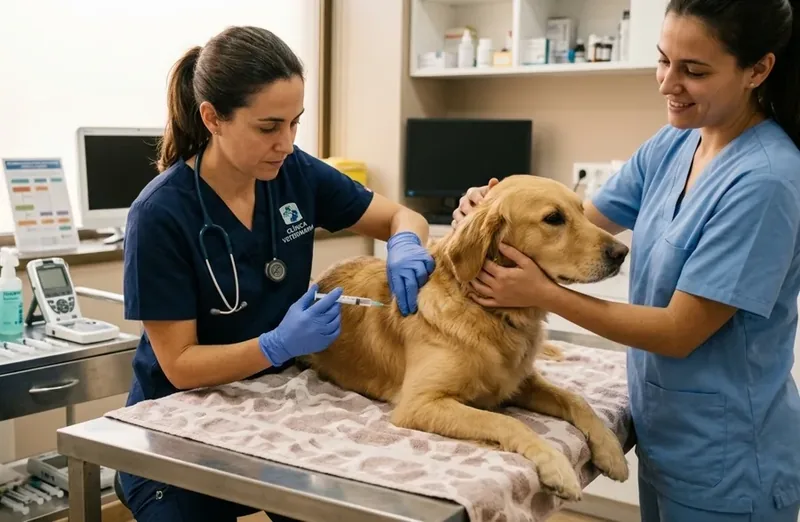
Basically, this therapy consists of injecting a small amount of some substance with a local anesthetic effect into certain areas of the body — for example, procaine or lidocaine. Laser or electric current can also be applied. The starting idea is that the body's energy flows freely throughout the whole body as long as the individual is healthy.
But if something disrupts this normal, healthy flow — such as diseases, feeding problems, stress, or even scars — an imbalance is generated that, in turn, gives rise to a pathological process. In neural therapy, these are called "interference fields."
The injection given is meant to interrupt these fields. This corrects the problem and cures the disease or corresponding symptom. This is the hypothesis behind neural therapy. But there's really no explanation of how it could work.
History of Neural Therapy
This therapy originated in Germany at the end of the 19th century. It was a physiologist named Ivan Petrov who established the idea that the nervous system would influence all of the body's functions. But it wasn't until the 20th century, in the 1940s, when doctors Ferdinand and Walter Huneke developed the original idea.
They were the ones who determined that injecting local anesthetic at one point could have effects in distant areas. Their theory was based on clinical observations while treating their patients. Germany is where this therapy is used most. It's also the country where the most studies on it have been conducted.
Neural Therapy and Local Anesthesia
In some cases, injections of locally acting anesthetics are used to relieve pain, for example, during or after surgery. This improves the animal's condition. It supports its recovery and reduces the use of other pain medications that can have side effects.
What are known as nerve blocks, used to relieve pain stemming from a peripheral nerve, work the same way. This is a procedure used in what we know as conventional or mainstream medicine. It's backed by scientific evidence, which has proven its effectiveness. It has nothing to do with neural therapy.
What Is Neural Therapy Used For?
Mainly, this therapy is used to fight chronic pain, meaning pain that lasts over time. Most studies focus on its use in this area. In human medicine, it's also used for this type of pain.
One example is the case of patients with joint problems or cancer. But it has other applications, such as allergic processes, headaches, hormonal problems and menstrual disturbances, or muscle injuries.
It's also used for diseases involving the heart, gallbladder, skin, or liver. In addition, it can be used in the psychological realm for people going through depression. Neural therapy doesn't replace the corresponding diagnosis or treatment prescribed by the vet.
Contraindications for Neural Therapy
It's worth noting that the lack of studies on this topic means we need to act with caution. For example, in the case of cancer. Some professionals who use this therapy advise against its use. They consider it could increase the speed at which cancer cells grow and spread.
Likewise, its usefulness is also rejected for treating diseases of genetic origin, nutritional deficiencies, clotting problems, chronic conditions already at a terminal stage, such as advanced kidney failure, or psychological disturbances other than depression.
It's also not recommended if the patient is being treated with certain drugs, such as anticoagulants or morphine. Obviously, if a dog has a known allergy to the anesthetic product used, it can't undergo neural therapy.
Neural Therapy Vets
If you're interested in having your dog receive neural therapy, you should contact an accredited professional you trust and feel secure with. Not every vet applies this therapy. It's important to look for one with experience who has the right training and answers all your questions.
This vet's job involves putting together the animal's clinical history and examining it to determine where the energy imbalance might be. This way, they choose the right points to apply the therapy. Treatment, involving one or more injections, can go on for several weeks.
Scientific Evidence for Veterinary Neural Therapy
The truth is that, as of today, there's no scientific evidence, either in human or veterinary medicine, supporting this therapy's success. In addition, some risk could exist due to the injections it's based on.
Either way, since there aren't enough studies, there's also no information regarding its possible side effects. On the other hand, sometimes animals get worse after a session. This is considered a temporary effect indicating another interference field that needs to be treated.
Bibliography
American Cancer Society. Neural Therapy.
IMPORTANT: This article is for informational purposes only and does not constitute veterinary, nutritional or behavioural advice. Every dog is different, and only your trusted vet can advise you on its specific needs.