 Care
Care
What to Do If a Pine Processionary Caterpillar Stings Our Dog?
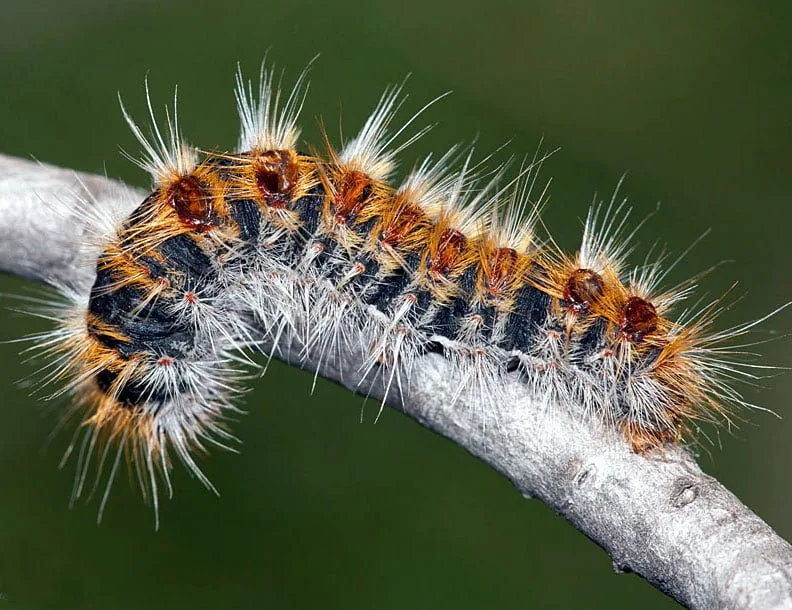
You've surely seen one of these caterpillars, so common in pine forests, at some point — the pine processionary. At first glance, it might look like a somewhat funny critter, covered in hair and walking in a line with others on the ground, but the truth is it can be quite dangerous for our dog, capable of causing fairly serious injuries from simple contact.
These caterpillars mainly live in pine trees. You've probably already seen their white nests on pine branches, with their distinctive look. They also live in cedars and firs, though they generally prefer pine forests.
What Is a Pine Processionary Caterpillar?
Its scientific name is Thaumetopoea pityocampa. It's an insect belonging to the order Lepidoptera (butterflies and moths), whose body is covered in fine hairs that release a toxin called "thaumetopoein" on contact.
This caterpillar is also known as the pine processionary, since when it comes down to the ground to move to other trees, it generally does so in single-file lines, like a "procession," and since it mainly lives in pine forests, though it can also be found in cedars and firs. Their nests are mostly found during warm seasons (spring and summer).
How Can the Processionary Injure Our Dog?
Although it may look like a small, harmless caterpillar, it's highly dangerous, since, as mentioned, the hairs covering it contain a toxin. It's especially when they leave the nest and form "processions" that the risk of accidents increases, as our dog, out of curiosity, comes into contact with these caterpillars.
When our dog tries to sniff, bite, lick, or simply brushes against it, the processionary releases its toxin-carrying hairs, causing an inflammatory and necrotizing reaction in the tissue that comes into contact with these hairs, especially the skin and oral mucosa.
What Are the Symptoms and Injuries Caused by the Processionary?
The lesions or symptoms we'll observe will depend on which area came into contact with the caterpillar. If our dog comes into contact with a processionary, it will suffer intense itching in the affected area, with severe skin irritation we'll notice as localized redness or erythema, along with swelling that, although it may initially seem mild, will intensify considerably within a short time.
The areas that come into contact with the caterpillar are usually the mouth or snout, and it's there that the inflammatory reaction is triggered. In addition, if the dog has swallowed a caterpillar or its urticating hairs, digestive problems such as vomiting can appear, and if it's inhaled them, it can suffer allergic reactions in the airways. Contact with the eyes can cause conjunctivitis.
Our dog will most likely try to scratch itself with its paws, we'll notice signs of difficulty breathing or dyspnea, it will seem more excited and nervous, and it may vomit. In addition, nonspecific symptoms related to the inflammation can appear, such as fever or fatigue.
What to Do If Your Dog Comes Into Contact With a Processionary?
The first thing is to stay calm. We'll start by washing the affected area, then heading to a vet as fast as possible so they can give fast-acting corticosteroids. Intravenous methylprednisolone (Urbason®) is generally used.
The main danger from the processionary is that our dog could die from suffocation due to airway swelling, or go into anaphylactic shock from the allergic reaction. Corticosteroids will help prevent and treat the inflammation, although some affected areas may become necrotic, with tissue death and loss of the affected tissue.
In short, the most important thing in these cases is how quickly we treat our dog. Thoroughly washing the affected area and seeing a vet immediately is essential to save its life or prevent serious damage.
Treatment for Injuries Caused by the Processionary
Depending on how severe the injuries are, the dog's size, and the specific situation, treatment may simply consist of fast-acting corticosteroids along with antibiotics. Although in mild cases the dog may not need veterinary attention, in severe cases it will most likely need to be treated and hospitalized.
For this reason, it's extremely important to see a vet so it can receive the care it needs.
How to Prevent Processionary Injuries in Dogs?
Following a few simple steps is enough to considerably reduce the risk. Processionary caterpillars are mostly seen during spring and summer. The areas where this insect is most widespread are warm regions, especially in the south.
If you live in this type of region, during this season, try to avoid areas with pine trees or dense pine forests. You should pay special attention to the presence of these caterpillars on the ground, to prevent our dogs from approaching them. It's also recommended to always keep your dog on a leash when going out to the countryside, to prevent it from getting near the caterpillars and disturbing wildlife.
If we go out for a walk with our dog through a pine forest area, even if we don't see the processionary and aren't sure it's the cause, if we notice unusual behavior in our dog and see it scratching its face, drooling or panting more than usual, or showing signs of swelling or redness in this area, we should suspect this problem and follow the steps mentioned above.
IMPORTANT: This article is for informational purposes only and does not constitute veterinary, nutritional or behavioural advice. Every dog is different, and only your trusted vet can advise you on its specific needs.