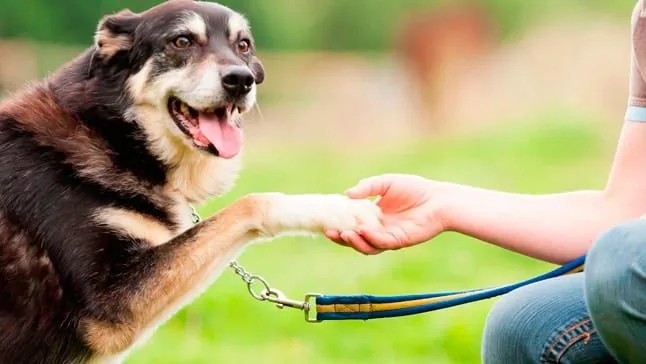
 Training
Positive Reinforcement in Dogs
There are plenty of ways to train a dog, and all of them are workable within the world of dog training. Even so, experience over the years has shown us some techniques are far safer and more beneficial than others, as well as more practical. We're talking, of course, about training a dog using purely positive reinforcement techniques.
Quite contrary to what most people think, positive reinforcement isn't simply about rewarding the dog when they do something right. Let's go through every detail of this training technique with examples included, to know exactly how it should be put into practice.
- You'll also enjoy reading: Learn how to walk a dog on the lead
What Is Positive Reinforcement?
You could say positive reinforcement is a set of specific practices that happen during a dog's training, resulting in mutual benefit. The dog gains affection, merit and rewards, while we make progress with their training.
Positive reinforcement involves stroking, praising, feeling proud of, and rewarding our dog when they obey our commands. To train a puppy or an adult dog, we first need to know how to do it — positive reinforcement alone when they do well isn't enough, though positive reinforcement is indeed vital for the dog to learn properly.

Examples of Positive Reinforcement
Say we have a dog called "Rex" (just an example), we can apply positive reinforcement with these examples:
- Rex, come here!: When Rex comes, we'll stroke him while praising how well he's done it. Right after, we'll give him a reward (biscuit, sausage, dog snack…) while continuing to praise him.
- Rex, sit!: When Rex sits, we'll praise him while stroking him, and right after, give him a reward.
As you can see from these examples of positive reinforcement, the technique involves giving off good vibes when the dog properly obeys a command. Stroking them, praising them and giving them a reward is essential, just as keeping a very cheerful mood while doing so is.
What to Do When the Dog Doesn't Obey or Does Something Wrong?
You should never apply negative reinforcement to a dog. We shouldn't hit, belittle, or even scare a dog when they do something wrong — we should simply say "No!".
Positive reinforcement involves rewarding the dog when they do well, but we also need to be aware that if they do something wrong, we need to make them understand it. We should tell the dog "No! (dog's name here)" when they do something wrong, and then simply ignore them.
Never apply aggressive techniques, nor ones that instil fear, because that's not the right way to do it, not in any case, not under any circumstances.
Examples of Bad Practices (Negative Reinforcement)
These are just a few examples of things you should never do with your dog — really, with anyone.
- The dog pees inside the house: NEVER scold them, give them a dirty look, hit them, or rub their nose in their urine — simply ignore it and think about what could have caused it. They possibly couldn't hold it and simply needed to have been taken out for a walk.
- The dog doesn't obey me when I give a command: Dogs aren't as smart as us (though I'd bet in plenty of cases they are), so if a dog doesn't obey it's not because they're bad, but because we don't know how to teach them properly. Never scold or hit them for not obeying — simply say "No!" if they're doing something wrong, or ignore them if they're just playing around on their own…
- The dog has bitten me: You don't know if it was in play, an accident, or… but whatever the case, we should simply say "No!" so they know they're doing something wrong. Training them not to bite is a separate task, which of course is also our responsibility.
How Long Does It Take a Dog to Learn With Positive Reinforcement?
It's been proven and backed by thousands of dog trainers that positive reinforcement is the best way to train a dog so they learn quickly. Some dogs may take a few days to learn, while others take a few weeks. It all depends on the dog's intelligence and how complex what we're teaching them is.
If you give your dog a bit of your food at mealtimes, the next day they'll sit next to you waiting for their piece of food. Dogs learn very fast when food is involved, which is why positive reinforcement focuses on praise but also on rewards.
Should I Use Positive Reinforcement Throughout Their Whole Life?
That's right — whenever the dog does something well, you should praise them, so they understand they've done what we expected them to do. You don't always have to give them rewards (food), but you do always need to praise them.
Some people make the mistake of stopping praising or rewarding their dogs once they've already learned to do the trick they were teaching them. This isn't a good idea, since if the dog notices they're no longer praised for doing something, they'll gradually stop doing it.
IMPORTANT: This article is for informational purposes only and does not constitute veterinary, nutritional or behavioural advice. Every dog is different, and only your trusted vet can advise you on its specific needs.