 Care
Care
Pros and Cons of Having a Dog in the City
You've surely heard people say "I like dogs, but not to keep in an apartment" more than once. It's one of the most common excuses among those who can't decide to take the step of taking in or adopting a dog at home.
But is it actually harmful for dogs to spend their life in an apartment? What are the advantages and drawbacks of city life for dogs? We examine this below.
Advantages of Having a Dog in the City
Generally, city life means the dog stays indoors, since not every apartment has a yard or terrace. This makes cohabitation between the dog and its human family closer, which usually means more attentive care for the dog, if only for hygiene reasons.
City dogs are usually able to sleep with their caretakers or have comfortable beds of their own. They're bathed and groomed regularly, dewormed both internally and externally, vaccinated, and even visit the dog groomer. They're under closer supervision, which tends to mean more frequent vet visits.
As a result, conditions can be detected early, improving quality and life expectancy. These are also dogs that usually receive training, helping them adapt better to living with people. Also, homeless dogs become more visible in the city, making it easier for shelter organizations to take them in.
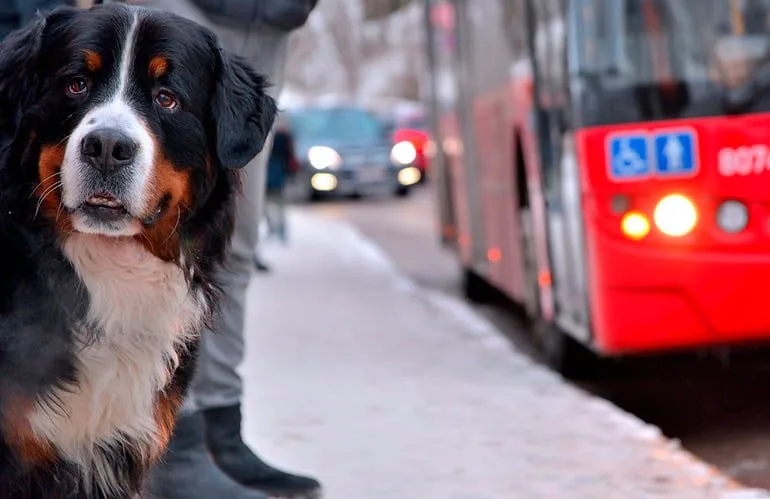
Main Problems for City Dogs
Probably the biggest problem for city dogs is the lack of space for recreation. Physical activity is essential for them. In urban settings, there aren't always suitable places to let a dog run off-leash. There are few parks designed for them, and not all are in good condition or close to home.
This means many dogs have their exercise limited to leashed walks. Also, contact with nature is missing. Digging or rolling around are activities city dogs usually can't do. Living in too small a space, spending hours alone, and not exercising affect a dog's wellbeing and are a source of behavioral issues.
Lack of exercise also means health issues like obesity. Since there's more interaction with people, it becomes more important for the dog to be well trained, and it's subject to greater pressure and more rules to follow. In other words, it has fewer opportunities to behave like a dog. On top of that, there's the risk of being hit by a vehicle.
Keys to a Happy City Dog
Given the drawbacks urban life can bring for dogs, it's important to focus on maintaining their wellbeing despite the obstacles. But what does a dog need to be happy? We can base its wellbeing on several fundamental aspects:
- Company: since they're social animals like us, it's essential for them to feel part of a family, which means dedicating the necessary time to build a bond.
- Mental and physical stimulation: dogs need exercise with more or less intensity depending on their characteristics. But also, being intelligent animals, they need mental stimulation and challenges to face.
- Learning: living in a world designed by and for humans, dogs need to know the rules of coexistence. These aren't part of their nature, which is why we're responsible for teaching them basic training.
- Care: with this term, we mean basic needs like food, hygiene, and veterinary services.
Meeting these points in the city is possible, so a dog can indeed be happy living in an apartment. Similarly, a dog can be very unhappy in the countryside, for example, if it's tied up on a property or loose with no contact at all with its supposed caretakers.
Tips for Properly Caring for Your Dog in an Apartment
Canine wellbeing depends on meeting the principles we've outlined. Their practical application can vary depending on our personal circumstances and, of course, the dog's. A puppy is different from an adult, and a Podenco is different from a Bulldog. These are the basic recommendations:
- Walk your dog 2-3 times a day. Try to make at least one of the walks long, roughly an hour. It'd be ideal for it to have a few minutes to run free or interact with other dogs.
- Use the weekend or your day off to go on an outing with it, go hiking, take it to the beach, the mountains, or even do an activity like agility.
- Train it regardless of its age. A few minutes a day practicing commands to come, sit, or heel strengthen our bond, help the dog manage stress in a world it doesn't control, and stimulate it mentally.
- Spend time with it every day, for example, with a play or brushing session. You don't even need to do something together — just having its bed where we spend more time will make it feel accompanied.
- Don't leave it alone all day. If you're never home, adopting a dog isn't a good idea. When you need to go out, if necessary, leave it a toy it can interact with, like a Kong.
- Of course, take it to the checkups your vet schedules, keep it dewormed and vaccinated, and offer it quality food suited to its needs.
Bibliography Fogle, Bruce. 1999. Dogs Talk About Their Owners. Madrid: Ateles Editores.
IMPORTANT: This article is for informational purposes only and does not constitute veterinary, nutritional or behavioural advice. Every dog is different, and only your trusted vet can advise you on its specific needs.