 Care
Care
How to Protect a Dog Against Fleas and Ticks
Fleas and ticks are the external parasites that affect dogs most often. Not only are they a nuisance just by being there, but they can also transmit a large number of diseases, some of them very dangerous.
In addition, fleas and ticks can also bite people and spread diseases to them. That's why it's very important to keep our dogs free of this type of parasite. Let's look at how to prevent them.
What Are Fleas?
Fleas are blood-feeding insects, meaning they feed on blood. The adult stages are found on the dog's body. They measure a few millimeters and are brown or black. Their hind legs are highly developed for jumping. Females lay their eggs on the ground, where the larvae will hatch and grow in the environment.
That's why it's fair to say that for every flea we find on the dog, there are over ninety more growing in the environment. We won't always spot the fleas themselves. Other times what we notice is a kind of black grit, which is actually flea droppings. If we wet it, we'll see it's digested blood.
Besides itching, some dogs suffer from what's known as flea allergy dermatitis (FAD). It's caused by a hypersensitivity reaction to these parasites' saliva. Fleas are also responsible for transmitting other parasites, such as tapeworm, and causing diseases such as bartonellosis. They can bite other animals too, including humans.

What Are Ticks?
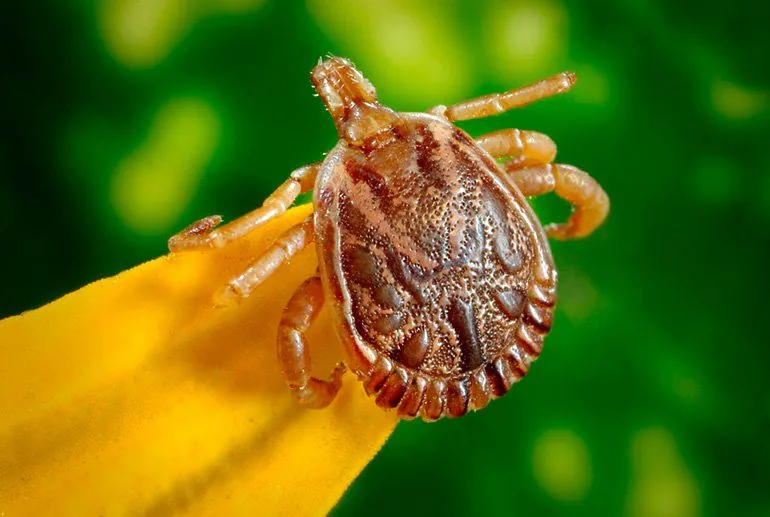
These parasites are also blood feeders. They usually live in wooded areas or livestock land. They stay hidden until they sense a warm-blooded animal nearby. Once they manage to climb onto one, they insert their head into the skin to start feeding on blood. This makes them grow in size.
So, we can see them looking like peas or even beans. During feeding, they can also transmit diseases to the dog. Many of these are serious and potentially fatal, such as babesia or tick paralysis. These parasites usually feed on a single animal.
That's why the ones attacking our dog rarely bite us too. But people can still pick up ticks if they walk through infested areas. So can other warm-blooded animals.

How Do Dogs Catch Fleas and Ticks?
Generally, dogs go out for walks regularly. On any city street, on a farm, or in the woods, fleas and ticks can climb onto the dog. But contact with other dogs alone is also a way they can be picked up.
Even if our dog stays on a property and never leaves it, we ourselves can carry fleas in on us, or a cat passing through our home could bring them, etc. That's why deworming is essential.
How to Prevent Fleas and Ticks?
There are different products available that let us protect our dog. It's impossible to fully eliminate parasites from the environment, but we can minimize the odds that fleas or ticks manage to bite. Anti-parasite products should be used following veterinary prescription. These include:
- Spot-ons: here, the anti-parasite product is applied in a single dose at one or two points along the dog's spine. The active ingredient spreads across the whole body, protecting the dog from external parasites. Some also act against egg development. They're applied every 4-6 weeks.
- Collars: put on like any other collar, with the difference that they contain active substances against parasites. These spread gradually across the whole body and keep up protection for 3-8 months.
- Sprays: more commonly used in puppies or small dogs, since they need to be sprayed across the whole body. They need to come into contact with the skin. Protection usually lasts about four weeks.
- Pills: although pills against internal parasites are more widespread, some also work against external ones. Some even keep up protection for as long as twelve weeks. There are also pills that kill fleas within hours in severe infestations. Their protection only lasts about 24 hours.
- Shampoos: we can bathe our dog with an insecticidal shampoo, which will eliminate the parasites currently on its body. The problem is that, generally, they only offer a few days of protection.
- Repellents: we should always buy anti-parasite products following the vet's advice. It's common to find products advertised against parasites at any supermarket. Looking closely, these are only repellents. They only keep insects away for a few days, and their effectiveness is questionable.
Tips to Prevent Fleas and Ticks
The main thing is to work with the vet to set up the deworming schedule best suited to our dog's characteristics and living conditions. We should deworm year-round, always sticking to the repeat schedule indicated by the manufacturer. We'd also highlight other measures:
- If we've found even a single flea on our dog, we need to disinfect the environment.
- We need to deworm all the animals living together. Ideally with a product that also targets immature stages.
- We can regularly run a fine-toothed metal comb through the dog's coat to find and remove fleas. No anti-parasite product will be 100% effective.
- Examine the dog, especially after walks through wooded or brushy areas. If we spot a tick and remove it right away, we prevent it from being able to transmit diseases.
- Vacuum the house frequently.
- Wash the dog's bedding in the washing machine.
- If we have a yard where the dog spends time, the grass should be kept well trimmed.
Bibliography Carlson and Giffin. 2002. Manual práctico de veterinaria canina. Madrid. Editorial el Drac.
IMPORTANT: This article is for informational purposes only and does not constitute veterinary, nutritional or behavioural advice. Every dog is different, and only your trusted vet can advise you on its specific needs.