 Breeds
Schipperke
If you're looking for a small guardian with a giant's soul, the Schipperke is a Belgian dog with an intense black coat that combines a compact size with unwavering courage and loyalty. Lively, always alert, with an expression that blends curiosity and cunning, this Flemish companion thrives in active households where it can burn off all its energy.
What Type of Breed Is the Schipperke?
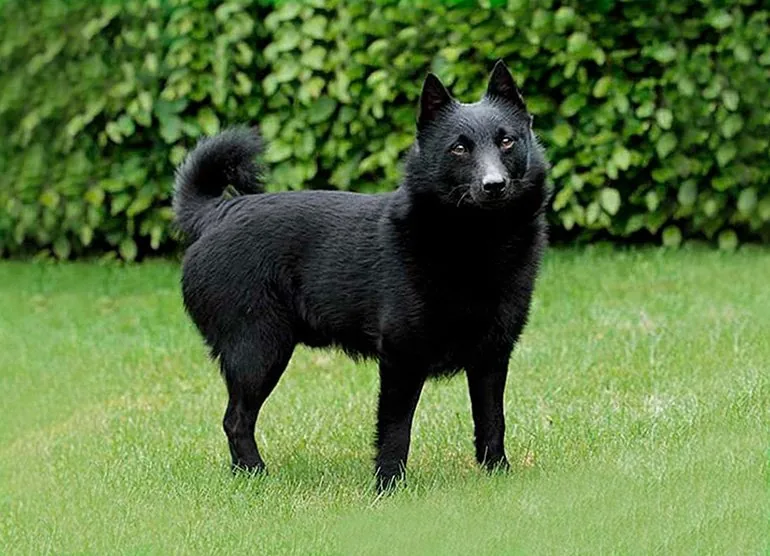
This is a small dog with a solid body, classified as a utility breed. Under the Fédération Cynologique Internationale (FCI) standard, its shape is harmonious, and its head, wolf-like and wedge-shaped, resembles a fox's, with a short muzzle and raised, pointed ears.
The nose is small and black, while the eyes are almond-shaped with dark brown irises rimmed by black eyelids. Its gaze is distinctive: attentive, curious, and good-natured.
Its coat is thick, hard, and straight, medium length on the body, short on the ears and head, and long around the neck. The color is intense black; some dogs show dark gray patches in the undercoat. In older dogs, gray patches around the muzzle are common.
- Height: between 27 and 33 cm in males and between 25 and 30 cm in females
- Weight: between 5.5 and 7.5 kg
- Life expectancy: between 13 and 15 years
- Coat: thick, hard, straight, intense black
The tail is often docked, but we don't recommend it, since it amounts to an act of cruelty and is completely banned in countries like Spain, where it's treated as a criminal offense.
History and Origin of the Schipperke
Originally from Flanders, Belgium, it descends from the Leuvenaar. It was an effective rodent exterminator and a good watchdog, which caught the attention of sailors, who brought it aboard their ships to control pests. Its name means "little shepherd" in Flemish.
It's been known as a tailless breed for centuries, a trait that's part of its historical identity.
During the 19th century it grew popular in Belgium and later spread to other European countries and North America, becoming an internationally recognized breed.
Personality and Temperament of the Schipperke
Despite its small size, it makes an excellent watchdog. It'll alert you with barking if someone comes into the house, since it's wary of strangers.
Like any herding dog, it will guard objects if you tell it to, so it can be protective of its toys.
With family it's loving and craves affection, respects house rules, and is very loyal. Its curious, lively personality is ideal if there are children at home, since it loves playing hide-and-seek with them and spending time together. It's very careful when playing with young children and more boisterous with older ones.
It also hunts mice and other small animals around the house. The one downside is that, given its protective nature, it can be somewhat barky; you'll need to train it well so this doesn't become a problem. Without proper socialization, it can be a bit stubborn and mischievous, earning it the nickname "little black devil."
Is the Schipperke a Good Family Dog?
Yes, it's an excellent companion for active families. Its loyal, docile, good-natured temperament makes it very adaptable to family life. It's easy to train, highly intelligent, and quick to pick up commands.
With children it's very sweet, always curious and on the move, making it a highly energetic playmate.
That said, it needs extra supervision around young children and may need training to live with other pets. It's distant with strangers but adapts quickly once it trusts them.
Although it's suitable for first-time owners, it does need basic training and early socialization. Its watchdog nature means it's always on alert, which makes it ideal for households that value protection and loyal companionship.
Recommended Care for the Schipperke
It can adapt perfectly to apartment life, but needs active daily walks of 1 to 2 hours, since it's very energetic. This is an athletic dog; it loves exercise, and in a yard it will run and play with anything it finds.
If you enjoy running, hiking, or cycling, don't hesitate to bring it along — it'll love it.
Weekly grooming is enough to keep its coat in good condition. During shedding season, increase brushing frequency to prevent hair from piling up around the house. Its intelligence means it responds well to training, but it needs a consistent, patient owner who sets clear boundaries.
Schipperke Health and Possible Diseases
This is a sturdy breed with generally good health. That said, they can suffer from certain hereditary neurological conditions, as well as hip disorders. It's important to get your puppy from a responsible breeder who health-tests the parent dogs.
Regular vet check-ups, a balanced diet, and consistent exercise are essential for keeping it healthy.
Some dogs can be prone to dental problems, so oral hygiene is recommended from puppyhood.
How Much Does a Schipperke Cost?
The average price runs between 1,000 and 1,500 euros, though it can vary depending on the breeder, bloodline, and region. It's recommended to check that the breeder has a registered kennel name, proper pedigree paperwork, offers health guarantees, and hands over the puppy with a vet record, microchip, and up-to-date vaccinations.
Be wary of significantly lower prices, since they can point to irresponsible breeding practices.
A serious breeder will let you meet the parent dogs and provide references from previous buyers. Invest time in finding a trustworthy breeder; it's the best guarantee of getting a healthy, well-socialized puppy.
Is It Worth Having a Schipperke?
If you're looking for a small, loyal, energy-packed dog, this Belgian breed is an excellent choice. Its size makes it manageable, its intelligence makes training easy, and its temperament makes it an effective watchdog without being aggressive. It's ideal for active families, people who enjoy outdoor exercise, and owners who appreciate a watchful, affectionate companion.
That said, it's not the best choice if you're looking for a quiet, silent dog; its barky nature calls for patience and training. It's also not ideal for sedentary people or those who spend long hours away from home. With the right commitment to exercise, socialization, and training, it will reward you with years of loyal companionship, fun, and protection.
IMPORTANT: This article is for informational purposes only and does not constitute veterinary, nutritional or behavioural advice. Every dog is different, and only your trusted vet can advise you on its specific needs.