 Care
Care
Things Your Dog Teaches Your Mind
Various studies have shown the many benefits living alongside dogs brings us. Our health, our psychological state, and even our social life all improve when we share our lives with them.
Most of these benefits go unnoticed in our day-to-day lives. Below, we'll go over everything dogs teach us. Caring for them is a big responsibility, yes, but it's rewarded many times over.
The Nonverbal Communication of Dogs
In our human society, words are the basic building blocks of communication. We rely on spoken language to relate to others. Although it's not the only communicative tool at our disposal, it's the one we pay the most attention to. But this changes with dogs. They don't talk, but they don't need to.
They've taught us it's possible to understand each other perfectly without uttering a single word. Dogs have made an effort to build communication with us. Since we're their main point of reference, they've focused on making themselves understood through body positions and all kinds of sounds. But they're not only interested in explaining what's happening to them or what they need.
They've also become experts at interpreting our gestures. Have you noticed your dog knows exactly when you're about to leave? Not because you've told it, but because it's internalized the sequence you go through, almost unconsciously, when heading out: keys, jacket, shoes... Your dog has learned to detect all these signs that go unnoticed by you.
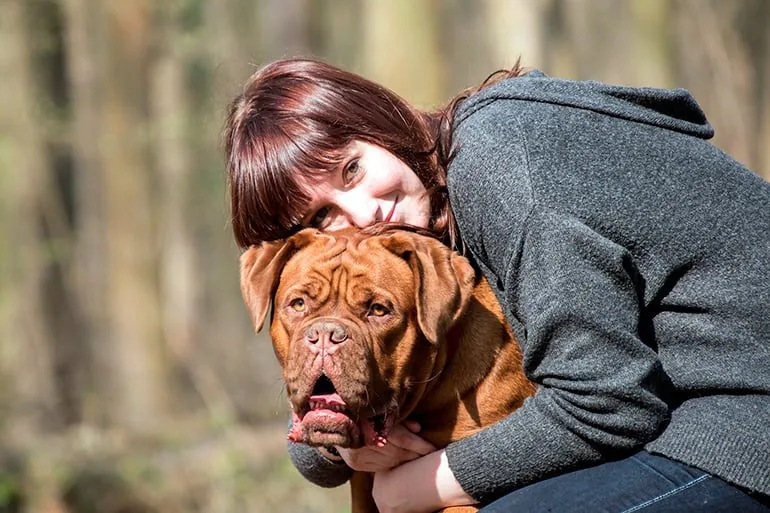
The Power of Canine Empathy
On another note, when we're the ones making an effort to understand our dog, we're strengthening a very positive human quality: empathy. This is defined as the ability to put yourself in someone else's shoes, making us more understanding and tolerant.
When we try to figure out what our dog needs, what it's asking of us, or what's wrong with it, we're exercising our empathy. And if we build the habit of looking through the lens of empathy, it'll be easier for us to carry this perspective into our relationships with other people.
The True Love of Dogs
It sounds cheesy, sure. But a dog loves you for who you are, not for who you appear to be or wish you were. You can't fool it. It accepts you and always knows how to see the positive side of you. This unconditional support is known to positively impact owners' self-esteem. We don't just feel better — we're also less alone.
A dog is unconditional company. Contact with our dog, among other hormones, makes us release oxytocin, known as the love and friendship hormone. This induces a state of wellbeing in us.
The Responsibility of Having a Dog
A dog at home means work. It needs walking, feeding, training, its messes cleaned up, and so on. Besides a financial responsibility, a dog means a lifelong commitment. Without realizing it, it makes us establish a routine we need to maintain every day, regardless of our personal circumstances.
Taking on the responsibility of caring for a dog helps people in difficult situations, pushing them to go outside, interact with others, and worry about another living being instead of sinking into their own concerns. Caring for a dog makes us feel useful. Talking to it, always ready to listen even if it doesn't understand every word, is a way to unwind.
People with psychological issues or elderly people who've stopped caring for someone after a lifetime of doing so can benefit from contact with a dog for this reason. A dog is a purpose. The chance for a new life, and the hope of possible change. It's no wonder dogs are the therapy animals par excellence.
The Advantages of Dogs and Children Living Together
A dog at home is a way for children to take on responsibilities. Always under adult supervision, kids can handle different tasks like brushing, playing, feeding, or walking.
These interactions should always be supervised, and, of course, children need to be taught how to treat the dog well to avoid scares. On another note, owning dogs has been linked to a lower risk of developing allergies.
Benefits of Walking Your Dog
Taking your dog for a walk has many advantages. The most well-known are related to getting physical exercise, which is always positive for our health, and the social interaction that happens simply from going outside and crossing paths with other people.
At the very least, you need to get out of bed and get dressed... But, although less talked about, walking with your dog is also a moment of connection with yourself. Of course, for this to happen, you need to dedicate yourself fully to the walk. Holding the leash in one hand and your phone in the other doesn't count.
It doesn't work either if we have a very poorly trained dog that won't stop pulling, barking, or lunging at every stranger. Invest time in its training. Walking with a dog is the best moment of the day to disconnect and think about your own things. Try it, and you'll see how some brilliant idea comes to you as a result of letting your mind wander.
IMPORTANT: This article is for informational purposes only and does not constitute veterinary, nutritional or behavioural advice. Every dog is different, and only your trusted vet can advise you on its specific needs.