 Breeds
Tosa Inu
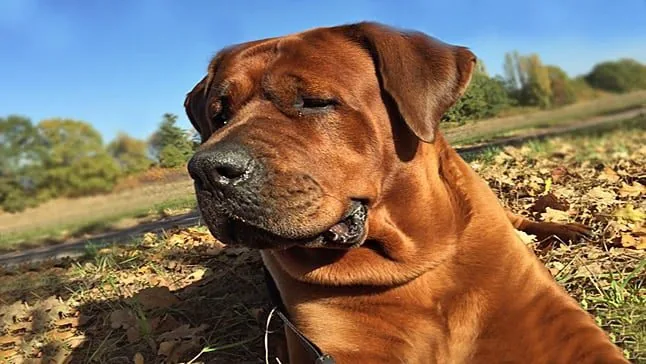
The Tosa Inu, also known as the Japanese Mastiff, is an extremely rare dog breed native to southern Japan. It's a large, strong working dog, originally used for dog fighting.
It was created in the mid-19th century through various crosses of Shikoku Inu dogs with other breeds such as the English Bulldog or the German Pointer. Its name, Tosa, refers to the old name for the city of Kochi, where it comes from. The word Inu simply means "dog" in Japanese.
Although it's been labeled a dangerous breed and banned in some countries like the United Kingdom or Australia, the Tosa Inu's bad reputation is unfair, since aside from exceptions, it has a very calm, family-oriented temperament.
Behavior and Temperament of the Tosa Inu
The fearless Tosa Inu is, at its core, a peaceful, calm dog, extremely loyal, with a well-developed protective instinct toward its family. That said, it needs an owner who shows authority and is capable of handling it; otherwise, the dog could develop aggressive behavior toward other dogs, pets, or even humans.
Its temperament is naturally stubborn and dominant, inclined to do things its own way. It also takes a long time to mature, showing puppy-like attitudes even up to four years of age.
- We recommend reading: How to Establish Leadership With My Dog
Despite all this, a well-trained Tosa Inu is always affectionate with its owner and very loving and patient with the children in the household, quite similar to the Akita's temperament. It's reserved with strangers and isn't a barky dog.
Although it prefers the outdoors, the Tosa Inu has no trouble adapting to life in a flat or apartment, as long as it gets a good daily dose of exercise and walks.
Physical Characteristics of the Breed
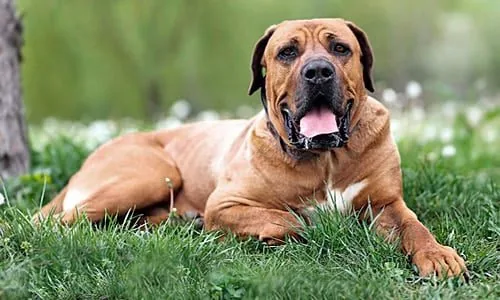
The Tosa Inu's overall look is imposing: a large, sturdy, dignified dog, with a natural stance that exudes authority. It has a powerful chest and muscular legs, with a thick tail that tapers toward the tip.
Due to its origins as a fighting dog (it's even been described as "the sumo wrestler of the dog world"), the Tosa Inu has a very high pain tolerance.
Males stand around 60 cm at the withers, somewhat less in females. Weight can vary considerably depending on whether we're talking about purebred Japanese dogs or varieties bred in other countries, where these dogs are generally bulkier and heavier.
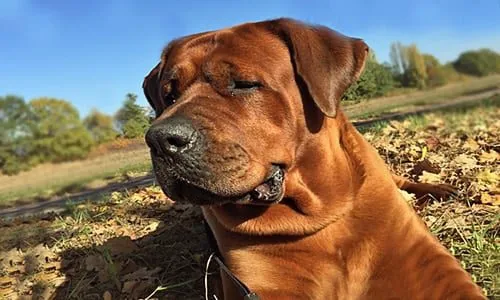
Among the Tosa Inu's traits, its large, wide head stands out, with strong jaws and a pair of medium-sized, always-dropped ears. It has small brown eyes, an elongated muzzle, and a black nose. It shows loose jowls, similar to the Bulldog's.
Its coat is short, coarse, and very hardy. Common colors are red, fawn, black, and brindle.
Training the Tosa Inu
Ideally, training and socialization for our Tosa Inu should start very early, while it's still just a puppy. It's a good idea to have friends and family visit while the dog is still small so it gradually gets used to strangers and doesn't react badly to these situations later on.
The Tosa Inu's natural instinct drives it to try to be the alpha of its group, which is why it's very important that we take the lead and make our dominant position clear from the very start.
Training should be active and demanding, but always using positive reinforcement. It's essential to avoid being too harsh or cruel with it, since despite its appearance, the Tosa Inu is a dog with great sensitivity that reacts very poorly to punishment and mistreatment.
Recommended Care for Tosa Inu Dogs
Physical exercise is vital for this breed of brave, fighting-bred dogs. They need to release a lot of energy to maintain good physical and mental balance. This doesn't mean we have to put our Tosa Inu through exhausting heavy exercise sessions; a moderate amount of daily activity is enough, three or four long walks a day. The Tosa Inu is an excellent companion for people who enjoy walking or running.
Its short, very hardy coat doesn't require much care. Occasional brushing is enough. What does need more attention is the hygiene of the skin folds on the face, where food residue and dirt can build up. Otherwise, this is a breed that tends to enjoy good health and doesn't show a strong tendency toward hereditary diseases.
The Tosa Inu's average lifespan, when well cared for and fed, is around 12 years.
IMPORTANT: This article is for informational purposes only and does not constitute veterinary, nutritional or behavioural advice. Every dog is different, and only your trusted vet can advise you on its specific needs.