 Care
Care
Warts in Dogs — Why Do They Appear and How to Remove Them?
It's not unusual for a dog to have warts, and it's common for our first reaction to be wanting to remove them. But first, we need to know why they've appeared — they're generally linked to canine papilloma, although only a vet can give us a diagnosis.
Warts are benign, superficial tumors, but they don't always need to be removed. Normally, this is only necessary if they're bothering the dog, and only a vet can remove them.
What Are Warts?
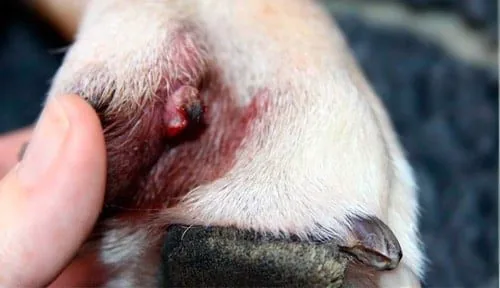
Warts fall under the category of benign, non-painful tumors. They're superficial, located on the skin, appear in different parts of the body, and aren't serious. They can cause discomfort depending on where they're located or their size, since it's normal for them to grow. It's common for them to bleed. Their origin is linked to the canine papillomavirus.
Papillomaviruses are small and belong to the Papovaviridae family. Three of them can affect dogs. These viruses are transmitted through direct contact or via fomites, meaning any substance that can become contaminated and transmit the virus. Insects may also be able to spread them.
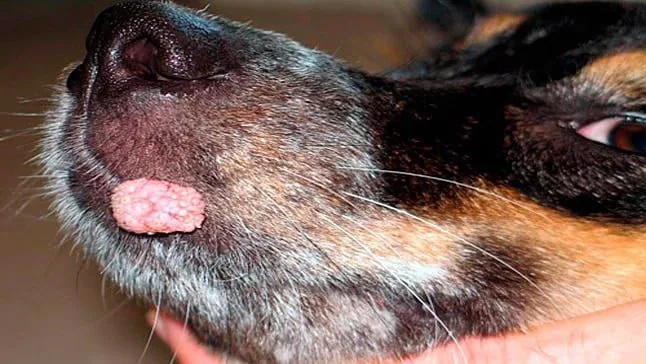
Warts appear externally as bumps of varying size. Their cauliflower-like appearance stands out, making them easily recognizable. Besides warts, dogs can develop other benign tumors that, although not viral in origin, look identical to warts.
Canine Oral Papillomatosis
Warts resulting from the canine papillomavirus mainly appear in the mouth, on the lips, or on the feet. The dogs most affected are those under two years old and older dogs.
These warts are pink, but grow and change color, turning gray. They eventually fall off spontaneously. In cases where they bleed, we'll see them turn blackish, since a scab forms with the dried blood. These situations can make veterinary intervention necessary.
Other Tumors That Look Like Warts
- Sebaceous adenoma: this is a lump that, although it looks like a wart, isn't viral in origin. It's very common on the eyelids of older dogs. It appears in sebaceous glands, such as the Meibomian glands, located in the eyelids. It can cause eye discomfort. Some are malignant.
- Squamous cell carcinoma: this is a tumor linked to sun exposure. It appears in the least pigmented areas of the body, such as the abdomen or the nasal plane. Some are mistaken for warts due to their cauliflower-like appearance. It's malignant and can spread.
- Transmissible venereal tumor: these are wart-like lumps that appear in the genital area of both males and females. This tumor is contagious between dogs through mating, licking, or bites. It can spread to areas like the face or legs, and metastasis is possible, though uncommon.
Which Dogs Get Warts Most Often?
Warts more commonly appear in older dogs. But they can occur at any point in a dog's life. In fact, their viral origin means younger dogs, with a more immature immune system, are also fairly often affected.
In addition, dogs with a weakened immune system, such as those already suffering from another disease, especially if it's chronic, will also be more prone to developing warts.
What Do I Do If My Dog Has a Wart?
There are several products sold that are marketed as effective for removing warts. These are formulated for humans, and it's not a good idea to apply them to our dog's warts. The right thing to do, always, is to see the vet, since they're the professional qualified to find the cause of the warts and decide on treatment.
Are Warts Contagious?
Since they're the manifestation of a virus, warts can indeed be contagious between dogs. So, we should pay attention to contact with other dogs. Papillomaviruses affect other species, but they're specialized, meaning those affecting dogs won't be transmitted to people or other animals.
How to Treat Warts
In principle, since warts are benign and don't pose any problem for the dog, no treatment is required. In fact, they can disappear on their own. Most warts won't interfere with the dog's quality of life or daily activities.
The exception would be cases where the wart causes the dog considerable discomfort. This discomfort is usually due to friction or bleeding. In the mouth, this can easily happen while eating. If a wart needs to be removed, the most suitable option is surgery.
On the other hand, since a wart results from the presence of a virus, it's telling us the dog's immune system is weakened. It's a good idea to review its living conditions, including diet, in case any change needs to be made.
Bibliography Carlson and Giffin. 2002. Manual práctico de veterinaria canina. Madrid. Editorial el Drac. Lange, C., Zollinger, S., Tobler, K., Ackermann, M., and Favrot, C. Clinically Healthy Skin of Dogs Is a Potential Reservoir for Canine Papillomaviruses. J. Clin. Microbiol. 49: 707.
IMPORTANT: This article is for informational purposes only and does not constitute veterinary, nutritional or behavioural advice. Every dog is different, and only your trusted vet can advise you on its specific needs.