 Care
Care
What Do Dogs Dream About When They Sleep?
The data available today suggests dogs do dream. But confirming this possibility, while it helps humanize them even more, doesn't give us any information on a topic as interesting as the nature of their dreams.
We say they dream because it's been shown they go through the well-known REM phase, which is associated with the ability to dream. Careful, though, since this is a period when the dog will move around, which can worry some owners.
Do Dogs Dream While Sleeping?
The close relationship we've built with dogs over thousands of years easily leads us to humanize them. In other words, we often attribute to them abilities that might be exclusively human. For example, we say they feel regret when we catch them in some mischief.
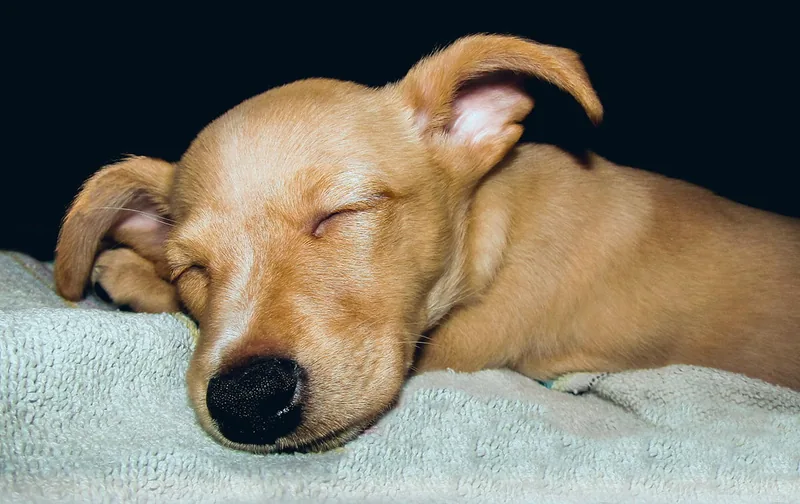
Similarly, we're convinced they're dreaming when we see them move while asleep. Although we interpret these situations through our own lens, which usually has little to do with canine reality, when it comes to dreaming, science has actually given us some certainty: dogs do dream. We know this because their brains function similarly to ours.
They have a rapid eye movement phase, or REM, linked to the occurrence of dreams. Dogs experience the same electrical changes in the brain recorded in humans while dreaming. But having this certainty doesn't tell us anything about the type of dreams they might have.
How to Know If My Dog Is Dreaming?
Sleep, in both dogs and humans, isn't uniform throughout the hours we dedicate to it. It's divided into different phases with distinct characteristics — duration and depth vary. The phase we're interested in is known as REM, from the English "Rapid Eye Movement." This is a period of deep sleep.
During it, the dog won't wake up easily, even if there's noise or movement around it. We can identify it perfectly, since various movements occur during it, very visible in dogs. It lasts only a few minutes. Your dog is going through the REM phase if you see it doing this while asleep:
- Its body twitches or spasms, especially noticeable in the legs, since the dog seems to be running. That's why many owners think it's dreaming about chasing prey or toys.
- The eyes can also move under the eyelids, and may even open, even though the dog stays asleep.
- It vocalizes, meaning it whimpers, huffs, moves its lips, or even howls or barks — a sound that sometimes wakes it up.
- Breathing becomes faster and more agitated.
What Is a Dog's Sleep Like?
Normally, during canine sleep, the REM phase we just explained alternates with a much calmer, longer one, where breathing and heart rate are slower.
There's also a general relaxation of the body, and sleep is much lighter. This is a common phase during the day, without entering REM, when the dog is resting but still keeps a certain degree of alertness that makes it easy to wake up.
Theories About Dogs' Dreams
We can't know exactly what our dogs dream about, but just as we assume their sleep mechanism is similar to humans', it's also reasonable to think they dream in a similar way.
So, they might dream about events they've experienced during the day, or, for example, about us or people and other animals they know. Dreams capture all these everyday events, and we could say they help settle and fix them in the brain, giving them an interpretation or meaning.
But there's an important nuance to keep in mind. Dogs base their perceptions on their most developed sense, which is smell. So, since their world revolves around scents, it's likely their dreams are much more olfactory than visual.
What Do I Do If My Dog Is Having a Nightmare?
When we see our dog moving a lot in its sleep, or hear it whine or shift around, it's easy to think it's having a nightmare rather than a regular dream. But as we've seen, this is normal behavior within the REM phase, and there's no way for us to know what content canine dreams actually have.
That's why, although our first instinct might be to wake it up so it stops moving or whining, the truth is this isn't recommended. The REM phase is normal and desirable, and there's no reason to interrupt it. The movements that occur are physiological, meaning they don't correspond to any illness.
Waking the dog up at that moment can backfire. This situation has nothing to do with the spasms that conditions like epilepsy or poisoning can cause, which, of course, are reasons for concern and a quick vet visit.
Bibliography Fogle, Bruce (1999). Dogs Talk About Their Owners. Madrid: Ateles Editores.
IMPORTANT: This article is for informational purposes only and does not constitute veterinary, nutritional or behavioural advice. Every dog is different, and only your trusted vet can advise you on its specific needs.