 Care
Care
What Does Your Dog Feel When You Leave It Alone at Home?
None of us like leaving our dog home alone, but sometimes it's necessary because we need to go places they can't join us, like work, shopping, or the doctor. Even if it's just for a few hours, we always wonder: will it be okay? Calm? Sleeping?
Knowing what a dog feels when left alone is tricky, but we can get an idea by understanding its behavior during our absence. If you're wondering what your dog feels when left alone at home, here are the options to consider.
Do They Get Sad When We Leave?
First, they get a bit nervous, since they always know when we're about to leave the house and leave them alone. The same way they know when it's mealtime and when we're about to go for a walk, they know our routines.
Once they confirm we're leaving without them, yes, they also feel sad, the same way we get sad about not being able to bring them along. That's why it's not recommended to say goodbye to them, or talk to them right before leaving without them, since we'll unintentionally increase their sadness.
It's best to leave the house as if nothing's happening, even if we feel sad. We can even leave the TV or radio on at a low volume if we'll be away for several hours. Hearing voices or TV/radio noise will keep them from feeling so alone.

What Do Dogs Do When Left Alone?
Every dog is different, and how it behaves can vary a lot, especially if they're puppies, since they have a ton of energy and need more play and attention than adult or elderly dogs.
Let's look at what a dog typically does during the time it's left alone at home. Your dog will surely do the same, so pay close attention to all these phases so next time you leave the house, you'll know what it's up to.
Resting and Sleeping
Although they'll stare fixedly at us as we leave, looking sad, after a few minutes they'll realize they're completely alone and take the chance to rest and sleep a bit.
Unless you've taught it otherwise, they'll generally climb onto the couch or our bed, since they like resting while smelling our scent. It's a way to cope with loneliness. If, on the other hand, you never let them do that, they'll likely lie down for a while in their bed or a cool spot in the house.
Playing and Burning Energy
After a restful nap where they've recovered their energy, it's time to burn that energy off — and what better way than playing? If they have chew toys or a ball, they'll likely spend a while chewing and playing.
They might also get up to mischief, since boredom and excess energy can give your dog some slightly naughty ideas, like chewing on furniture, tearing up a cushion, or even running around the whole house nonstop until they tire out.
Also, if they hear a noise from the street or a neighbor, they'll likely start barking to try to scare off potential intruders (they don't know if it's a neighbor or not, so they try to scare them off anyway). Barking is another common thing dogs do when left alone — it's their way of getting attention or keeping strangers from coming in.
They Wait for Us to Come Home
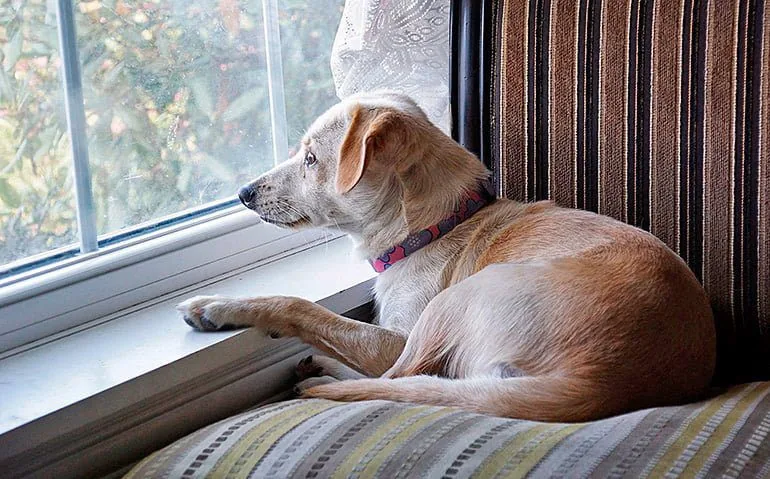
Have you ever seen your dog looking out the window or waiting by the door? When they think it's about time for us to get home, what they do is wait as close as possible to the entrance, so they can welcome us joyfully.
Sometimes they miscalculate how long we'll take to get back and get tired of waiting or watching the window, going back to the earlier stage of sleeping or continuing to play/get into mischief.
No matter how long we took to get back, they'll always welcome us with tons of love and joy, because they simply love us and want to always be by our side. To them, we're their whole family.
Tips for Leaving Your Dog Alone
It's been shown that dogs who exercise or go for a walk before being left alone get less nervous and sad from our absence. So here are some tips to put into practice.
- Take it on a long walk or exercise it — this is ideal before leaving it alone at home, so it'll be tired without excess energy. It'll most likely use this alone time to rest with a long nap.
- Let it relieve itself, so it doesn't feel the urge to pee or poop. Dogs that don't relieve themselves before being left alone get much more nervous, since sometimes they really need to go and don't know when you'll be back.
- Feed it and always leave fresh water — if it's been fed, it'll most likely take the chance to sleep. Also, a hungry dog might keep barking for a long time, demanding food — something that could bother neighbors. Always leave clean, fresh water within its reach.
- Interactive food — you've surely heard of dog bones, dried beef or bull tendons, or even Kong toys you can fill with food. It'll love spending a good while chewing on these bones or tendons while you're away.
- Turn on the radio, since many dogs feel like they have company, or feel even better, if they hear music or a human voice while we're away. That said, keep the volume low in case they want to sleep.
- Leave your terrace open — if you have a terrace or balcony, it's a good idea to leave it open so your dog can go out to sunbathe or spy on the neighbors. It's a very healthy way for it to entertain itself.
Things You Should Never Do When Leaving It Alone
Similarly, there are things we should never do when leaving our dog alone at home, since they backfire. Take note, and never make these mistakes.
- Saying goodbye to the dog is a very common mistake that'll only make our dog even sadder. Don't say goodbye when you leave — simply give it love when you get back.
- Locking it up or tying it up — let the dog move freely around the house, never tie it to a chain or leave it locked in a room, since it'll get very anxious.
- Leaving it without water — this can cost it its life, especially in the hottest months. Always leave water available for your dog.
Now that you know what your dog feels when left alone at home, and what it does in your absence, will you feel more at ease next time you have to leave the house?
IMPORTANT: This article is for informational purposes only and does not constitute veterinary, nutritional or behavioural advice. Every dog is different, and only your trusted vet can advise you on its specific needs.